

How Endpoint Security Technologies Improve Threat Detection and Response
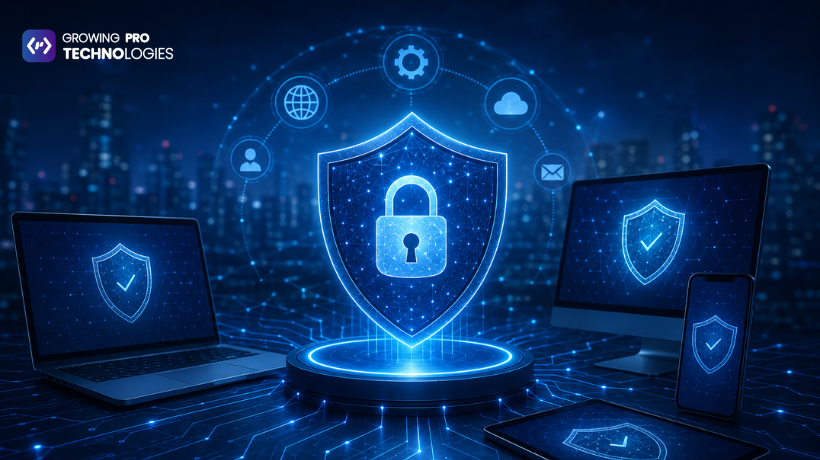
Businesses today operate in highly connected digital environments where employees access company systems from offices, homes, and mobile devices. While this flexibility improves productivity, it also increases cybersecurity risks. Cybercriminals continuously target laptops, smartphones, servers, and cloud-connected devices to gain unauthorized access to business data. This is why modern organizations rely on advanced endpoint security technologies to improve threat detection and response capabilities.
Endpoint devices are among the most common entry points for cyberattacks. Without proper protection, organizations become vulnerable to ransomware, phishing attacks, malware infections, and data breaches. Modern endpoint protection solutions provide real-time monitoring, automated threat detection, and rapid incident response to reduce security risks and maintain operational continuity.
Growing Pro Technologies offers advanced endpoint protection solutions designed to help businesses strengthen cybersecurity defenses, monitor threats proactively, and secure distributed work environments.
Understanding Endpoint Security Technologies
Endpoint security technologies refer to cybersecurity tools and systems designed to protect endpoint devices connected to business networks. These devices include desktops, laptops, smartphones, tablets, servers, and IoT devices.
Traditional antivirus software is no longer enough to stop modern cyber threats. Today’s attackers use sophisticated techniques such as fileless malware, zero-day exploits, credential theft, and advanced persistent threats (APTs). Modern endpoint security technologies combine artificial intelligence, behavioral analysis, threat intelligence, and automation to detect suspicious activities before damage occurs.
Organizations that implement advanced endpoint protection can identify malicious behavior quickly and respond to attacks in real time.
Why Businesses Need Advanced Endpoint Protection
Cyberattacks continue to evolve rapidly, making endpoint security a critical component of every organization’s cybersecurity strategy. Businesses across industries face challenges such as:
-
Remote workforce vulnerabilities
-
Increased phishing and ransomware attacks
-
Cloud application security risks
-
Insider threats
-
Unpatched software vulnerabilities
-
Device management complexity
Modern endpoint security technologies help businesses reduce these risks while improving visibility across their entire IT environment.
For organizations managing hybrid or remote workforces, endpoint protection ensures employees can securely access company systems without exposing sensitive information to attackers.
Real-Time Threat Detection Capabilities
One of the biggest advantages of modern endpoint security technologies is real-time threat detection. Traditional security tools often rely on signature-based detection, which only identifies known malware. However, advanced endpoint solutions use machine learning and behavioral analysis to identify suspicious activities instantly.
These technologies continuously monitor endpoint behavior to detect:
-
Unusual login attempts
-
Unauthorized file access
-
Suspicious network traffic
-
Malware execution patterns
-
Privilege escalation attempts
-
Abnormal application behavior
By identifying these indicators early, businesses can stop attacks before they spread throughout the network.
Real-time monitoring also improves visibility for security teams, enabling faster investigation and remediation.
Artificial Intelligence and Machine Learning in Endpoint Security
Artificial intelligence (AI) plays a major role in enhancing endpoint security technologies. AI-powered systems analyze massive volumes of security data to identify patterns associated with cyber threats.
Machine learning algorithms can:
-
Detect unknown malware variants
-
Identify zero-day attacks
-
Reduce false positives
-
Automate threat classification
-
Improve incident response speed
Unlike traditional tools, AI-driven endpoint security adapts continuously to new attack methods. This proactive approach helps organizations stay ahead of evolving cybersecurity threats.
Businesses that integrate AI-based endpoint protection often experience improved detection accuracy and reduced response times.
Endpoint Detection and Response (EDR)
Endpoint Detection and Response (EDR) has become one of the most important endpoint security technologies for modern organizations. EDR solutions provide continuous monitoring and advanced analytics to identify malicious activities across endpoint devices.
EDR systems help security teams:
-
Investigate suspicious incidents
-
Track attack timelines
-
Isolate compromised devices
-
Collect forensic evidence
-
Respond to threats automatically
For example, if ransomware activity is detected on a device, the EDR platform can isolate the endpoint from the network immediately to prevent further infection.
This rapid containment capability significantly reduces the impact of cyberattacks and minimizes downtime.
Threat Intelligence Integration
Modern endpoint security technologies often integrate with global threat intelligence networks. Threat intelligence provides updated information about known attack methods, malicious IP addresses, malware signatures, and emerging cyber threats.
By leveraging threat intelligence, endpoint protection systems can:
-
Block known malicious websites
-
Identify suspicious file hashes
-
Detect command-and-control communications
-
Prevent phishing attempts
-
Improve malware analysis
This integration enables businesses to strengthen proactive defense strategies and respond more effectively to evolving threats.
Automated Incident Response
Manual threat response processes can delay remediation efforts and increase security risks. Advanced endpoint security technologies use automation to accelerate incident response and reduce human error.
Automated response capabilities include:
-
Device isolation
-
Malware removal
-
User account lockdown
-
Threat quarantine
-
Security policy enforcement
-
Alert prioritization
Automation helps organizations contain attacks quickly while allowing security teams to focus on higher-level investigations.
Businesses with automated endpoint protection can reduce incident response times significantly and improve overall operational resilience.
Protecting Remote and Hybrid Workforces
The rise of remote work has expanded the attack surface for many businesses. Employees often access company resources using personal devices, unsecured Wi-Fi networks, and cloud applications.
Endpoint security technologies help organizations secure remote environments by:
-
Monitoring endpoint activity continuously
-
Enforcing access controls
-
Encrypting sensitive data
-
Detecting suspicious user behavior
-
Securing cloud-connected devices
With centralized management dashboards, IT teams can monitor and protect endpoints regardless of employee location.
This flexibility is essential for businesses operating in hybrid work environments where security visibility is critical.
Reducing Ransomware Risks
Ransomware attacks remain one of the most damaging cybersecurity threats for businesses. Attackers encrypt critical files and demand payment to restore access.
Modern endpoint security technologies help prevent ransomware by:
-
Detecting abnormal encryption activity
-
Blocking malicious processes
-
Isolating infected systems
-
Monitoring file behavior patterns
-
Preventing unauthorized access
Advanced solutions can stop ransomware attacks before encryption spreads across the network.
This proactive protection reduces financial losses, downtime, and reputational damage for businesses.
Centralized Security Management
Managing multiple devices across an organization can be challenging without centralized visibility. Endpoint security technologies provide unified dashboards that simplify security management.
Centralized platforms allow businesses to:
-
Monitor endpoint health
-
Deploy security updates
-
Enforce compliance policies
-
Track incidents in real time
-
Generate security reports
This streamlined management improves operational efficiency while helping organizations maintain stronger cybersecurity controls.
Compliance and Data Protection
Many industries must comply with cybersecurity and data protection regulations such as HIPAA, GDPR, and PCI DSS. Endpoint security technologies help organizations meet compliance requirements by protecting sensitive data and monitoring security activities.
Features supporting compliance include:
-
Data encryption
-
Access control management
-
Audit logging
-
Threat monitoring
-
Vulnerability detection
Maintaining compliance not only reduces legal risks but also strengthens customer trust.
Choosing the Right Endpoint Security Partner
Selecting the right endpoint protection provider is essential for maintaining strong cybersecurity defenses. Businesses should look for solutions that offer:
-
Real-time threat monitoring
-
AI-powered detection
-
Automated response capabilities
-
Scalable security management
-
Cloud and remote workforce support
-
24/7 threat visibility
Growing Pro Technologies delivers advanced endpoint protection solutions tailored to modern business environments. Their cybersecurity experts help organizations strengthen threat detection, improve response strategies, and reduce cyber risks effectively.
Conclusion
Cyber threats continue to evolve, making advanced endpoint security technologies essential for organizations of all sizes. Modern endpoint protection solutions provide real-time monitoring, AI-driven threat detection, automated incident response, and centralized security management to help businesses stay protected against sophisticated attacks.
As remote work, cloud computing, and connected devices continue to expand, businesses must adopt proactive cybersecurity strategies to secure endpoint devices and sensitive data.
Growing Pro Technologies provides reliable endpoint protection solutions that help organizations improve threat detection and response while maintaining strong cybersecurity resilience in today’s rapidly changing digital landscape.

 English
 Arabic
 French
 Spanish
 Portuguese
 Deutsch
 Turkish
 Dutch
Dutch
 Italiano
 Russian
 Romaian
 Greek
Greek