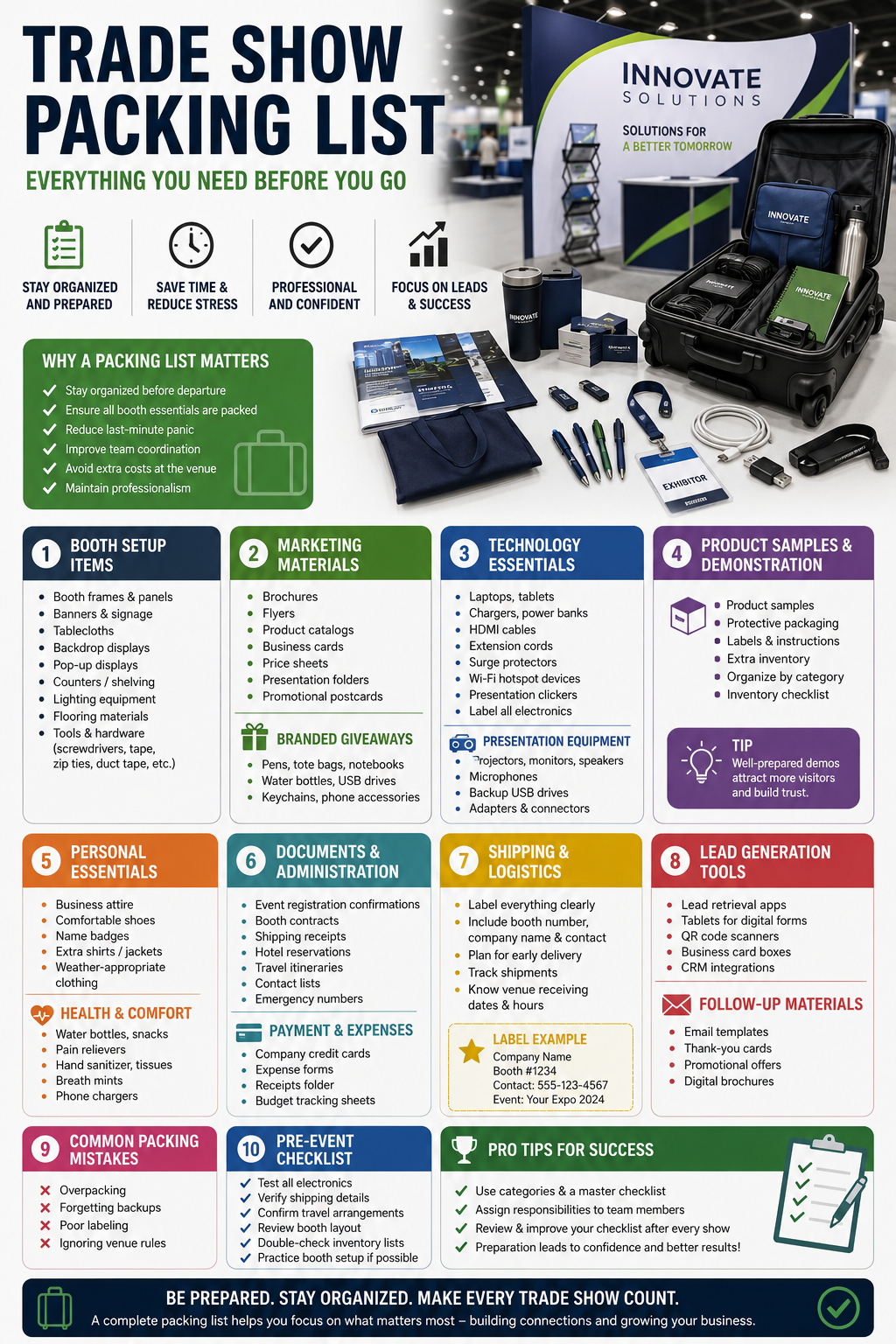
Last-minute panic is one of the biggest reasons exhibitors fail at trade shows. From missing marketing materials to poorly trained staff, rushed preparation often leads to wasted opportunities and low ROI. That’s why following a structured system like the Trade Show Preparation Guide: 8 Weeks to Show-Ready is essential for businesses that want to stay organized, confident, and competitive on the show floor. This Trade Show Preparation Guide: 8 Weeks to Show-Ready helps exhibitors eliminate chaos by breaking the entire preparation process into a clear, manageable timeline.
Instead of scrambling at the last minute, companies that follow an 8-week strategy can systematically plan their booth design, marketing campaigns, logistics, and staff training. This approach ensures every detail is handled properly, reducing stress and increasing performance at the event.
Why Last-Minute Trade Show Preparation Fails
Many businesses underestimate how complex trade show planning actually is. They assume booth setup and travel arrangements are enough, but successful exhibitions require far more coordination.
Common issues caused by poor planning:
- Delayed booth fabrication and shipping problems
- Incomplete or outdated marketing materials
- Untrained or underprepared booth staff
- Lack of pre-show audience engagement
- Missed networking and meeting opportunities
These issues directly impact lead generation and brand visibility. The Trade Show Preparation Guide: 8 Weeks to Show-Ready is designed specifically to prevent these failures by giving teams enough time to execute each step properly.
Week 1: Establishing Clear Objectives and Budget
The first step in avoiding last-minute chaos is setting clear goals. Without direction, every decision becomes reactive rather than strategic.
Key actions in Week 1:
- Define primary objectives (sales, leads, branding, product launch)
- Identify target audience segments
- Establish a realistic budget
- Assign responsibilities to team members
A strong foundation ensures that every decision made during the Trade Show Preparation Guide: 8 Weeks to Show-Ready aligns with business goals.
Week 2: Researching the Right Trade Show
Not all trade shows deliver equal value. Choosing the right event is critical for maximizing ROI.
What to evaluate:
- Industry relevance of the event
- Expected visitor demographics
- Competitor participation
- Historical attendance and engagement levels
Selecting the wrong trade show can lead to wasted investment, no matter how well you prepare. This is why early research is a key part of avoiding chaos later.
Week 3: Designing Your Booth Strategy Early
Booth design should never be rushed. It is the visual and experiential representation of your brand.
Focus areas:
- Booth structure and layout planning
- Brand messaging and visual identity
- Interactive display elements
- Space optimization for visitor flow
A well-designed booth ensures that visitors stop, engage, and remember your brand. Early design planning also prevents production delays later in the timeline.
Week 4: Marketing and Pre-Event Promotion
By week four, your focus should shift toward attracting attendees before the event begins. Without promotion, even the best booth may go unnoticed.
Effective strategies include:
- Email campaigns targeting existing customers
- Social media teasers and countdown posts
- LinkedIn outreach to industry professionals
- Press releases for announcements or product launches
Pre-show marketing builds anticipation and ensures that visitors already know your booth location and offerings.
Week 5: Booth Production and Logistics Planning
Logistics is one of the most critical aspects of trade show preparation—and also one of the most common sources of last-minute stress.
Key tasks:
- Finalizing booth fabrication and printing
- Coordinating shipping and delivery timelines
- Preparing installation schedules
- Confirming venue requirements
Delays in logistics can completely disrupt your event experience. The Trade Show Preparation Guide: 8 Weeks to Show-Ready ensures all production tasks are completed well in advance.
Week 6: Training Your Team for Performance
Your booth staff represents your brand directly. Even the best booth design will fail without a well-prepared team.
Training should include:
- Product and service knowledge
- Lead qualification techniques
- Communication and engagement skills
- Handling objections and questions
Assigning roles such as greeters, presenters, and lead collectors ensures smooth booth operations.
Week 7: Final Preparations and Dry Runs
Week seven is all about ensuring everything works perfectly before the event begins.
Important tasks:
- Booth setup simulation and walkthrough
- Testing digital tools and displays
- Reviewing meeting schedules and appointments
- Preparing backup materials
A dry run helps identify missing elements and reduces the chances of on-site surprises.
Week 8: On-Site Execution and Real-Time Management
The final week is execution time. Everything prepared over the past seven weeks comes together at the event.
Key focus areas:
- Engaging visitors actively at the booth
- Capturing and qualifying leads efficiently
- Hosting product demonstrations
- Networking with industry professionals
Flexibility is important during this phase because trade shows are dynamic environments where quick adjustments may be needed.
How Structured Preparation Prevents Chaos
The biggest advantage of following the Trade Show Preparation Guide: 8 Weeks to Show-Ready is eliminating uncertainty. When every week has defined goals, teams can work proactively instead of reactively.
Benefits include:
- Reduced stress and confusion
- Better coordination among teams
- Improved booth performance
- Higher quality leads
- Stronger brand impression
Structured planning transforms trade show participation from a stressful event into a strategic growth opportunity.
Mistakes That Lead to Last-Minute Chaos
Even experienced exhibitors fall into common traps when they fail to plan properly.
Avoid these mistakes:
- Starting preparation less than a month before the event
- Ignoring marketing and pre-event outreach
- Poor coordination between design and logistics teams
- Lack of clear communication among staff
- No contingency planning for delays
The Trade Show Preparation Guide: 8 Weeks to Show-Ready is specifically designed to eliminate these risks.
The Role of Consistency in Trade Show Success
Consistency is the secret behind successful trade show execution. Every week in your preparation timeline builds upon the previous one.
When businesses follow the Trade Show Preparation Guide: 8 Weeks to Show-Ready, they create momentum that leads to better execution, stronger engagement, and higher ROI.
Measuring Success After the Event
Preparation doesn’t end when the event starts. Post-show analysis is essential for understanding performance.
Key metrics to evaluate:
- Number of leads generated
- Conversion rate from leads to sales
- Booth traffic and engagement levels
- Return on investment (ROI)
Analyzing these results helps refine future trade show strategies.
Final Thoughts
Avoiding last-minute chaos in trade show preparation is not about working harder—it’s about working smarter. With a structured timeline, businesses can eliminate stress, improve coordination, and achieve better results.
The Trade Show Preparation Guide: 8 Weeks to Show-Ready provides a clear, actionable roadmap that ensures every stage of preparation is handled efficiently, from planning and design to execution and follow-up.
In conclusion, businesses that adopt the Trade Show Preparation Guide: 8 Weeks to Show-Ready gain a significant competitive advantage by staying organized, avoiding costly mistakes, and maximizing their impact on the trade show floor.



 English
 Arabic
 French
 Spanish
 Portuguese
 Turkish
 Dutch
Dutch
 Italiano
 Russian
 Romaian
 Portuguese (Brazil)
 Greek
Greek