

Why You Shouldn't Throw Sneakers in The Trash
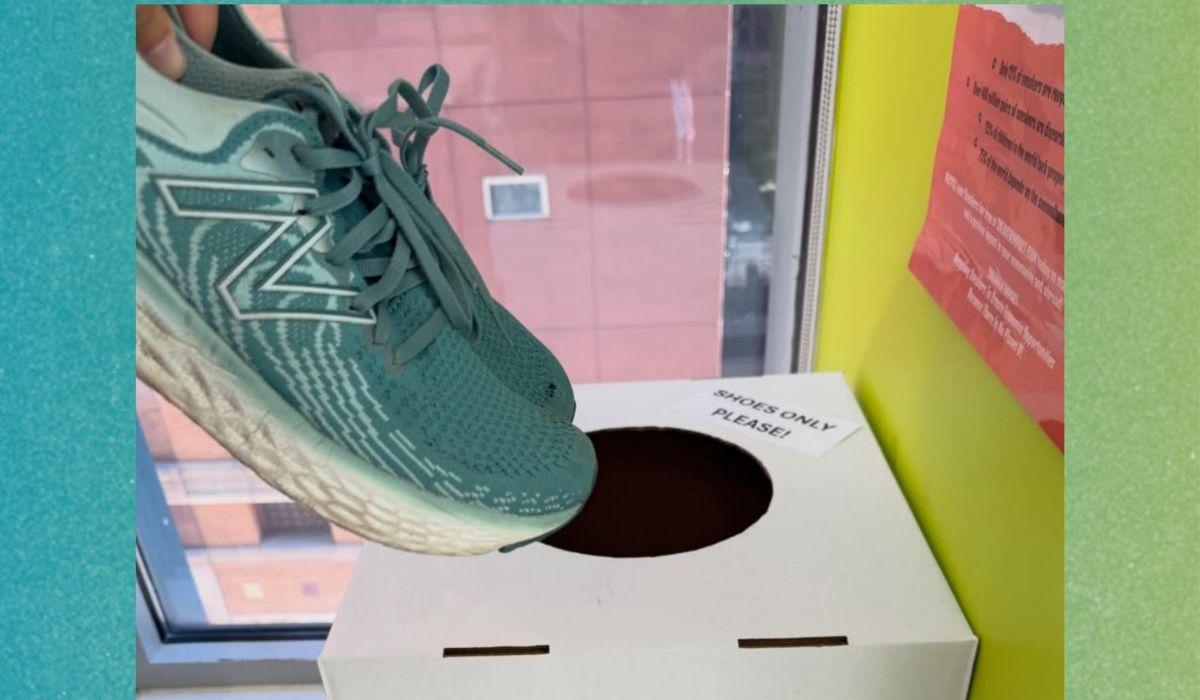
Most people think tossing old shoes into the garbage is completely harmless. In reality, it is not. Even just one pair of sneakers has rubber soles, synthetic foam, fabric uppers, metal eyelets, and chemical adhesives, and these things do not break down easily once they end up in a landfill. When millions of people discard shoes this way every year, the materials pile up, and the environmental impact becomes significant.
Shoe recycling programs were created to cut off that loop. Oddly enough, only a small number of people seem to know these programs exist, and many pairs are still shoved into garbage bins rather than recycling streams.
How Shoe Recycling Programs Function
It helps to understand the steps, so you can feel confident they are legit.
Step 1: Drop-Off and Collection
Many shoe recycling programs rely on in-person drop-off locations. That can mean retail stores, community centers, or bins that are clearly labeled. In most situations, shoes are gathered in bulk and then shipped to sorting facilities. You don't have to do much at all; it usually takes under 5 minutes.
Step 2: Sorting by Condition
Next, trained warehouse staff examine each pair closely. Wearable shoes are routed toward donation pathways. Those items are often directed to low-income communities or disaster relief networks. Meanwhile, shoes that are old and worn, or that have mold and broken structure, are rerouted to material processing.
Step 3: Breaking down the materials
The shoes intended for material recovery are first cut into small pieces, and the components are separated.
Rubber outsoles get transformed into granules. Foam midsoles are pressed into panels, and textile fibers are separated for industrial applications, too. Each material outlet produces a different kind of end product, kind of neat, actually.
Step 4: The Second Life
Those rubber granules are then used for running tracks, gym floors, and playground surfaces.
Foam panels serve as carpet underlay and are also useful for soundproofing. Industrial padding or compound filling is produced using fibres from fabric.
Sneaker Impact should be mentioned right here. They run shoe recycling programs that collect donated footwear that would otherwise just go to landfill. They also distribute usable shoes to communities that lack them, and they route worn-out pairs to material recovery. This is a really good example of how a well-managed collection program can support both social and environmental purposes.
Why This Matters More Than You Think
The figures really do help you understand what’s going on. A shoe recycling program that handles 10,000 pairs annually can divert between 10 and 15 tons of material from landfill, from a single collection point.
Then you multiply that by several cities, and the numbers get well, pretty staggering.
Rubber extraction and synthetic foam production are among the processes that have substantial negative environmental impacts. So the more shoes we recycle, the less “virgin” raw material we need in the first place.
Aside from minimizing waste, the positive contributions of these programs to the localities are pretty obvious. Safer cushioning playground surfaces are a nice bonus. Schools end up with sports facilities that are easier to access. In poorer areas, families are getting shoes from these initiatives that they would otherwise be unable to afford, period.
Common Misconceptions About Shoe Recycling
"Only brand-new or barely-worn shoes are accepted." No. False. Most programs accept heavily worn athletic shoes, old boots, and outgrown children's footwear.
"It's complicated to participate." Not really. It isn't. You find a local drop-off location, you leave your shoes, and you're done.
"My shoes are too old to matter." Every pair has recoverable material value, even when the shoes themselves are no longer wearable.
What Happens to Your Shoes After Recycling - Visit the link to know more.
How to Get Started Today
-
You don't need a special occasion to act.
-
Look up a shoe drop-off location near you.
-
Check whether your footwear brand has a take-back program running.
-
Collect pairs from around your home: athletic shoes, kids' sneakers, and worn boots all qualify.
-
Drop them off the next time you're passing by.
The action itself feels minor. But the effect accumulates over thousands of households making the same choice.

 English
 Arabic
 French
 Spanish
 Portuguese
 Deutsch
 Turkish
 Italiano
 Russian
 Romaian
 Portuguese (Brazil)
 Greek
Greek