

Bangalore Doesn’t Talk About AI the Way Other Cities Do
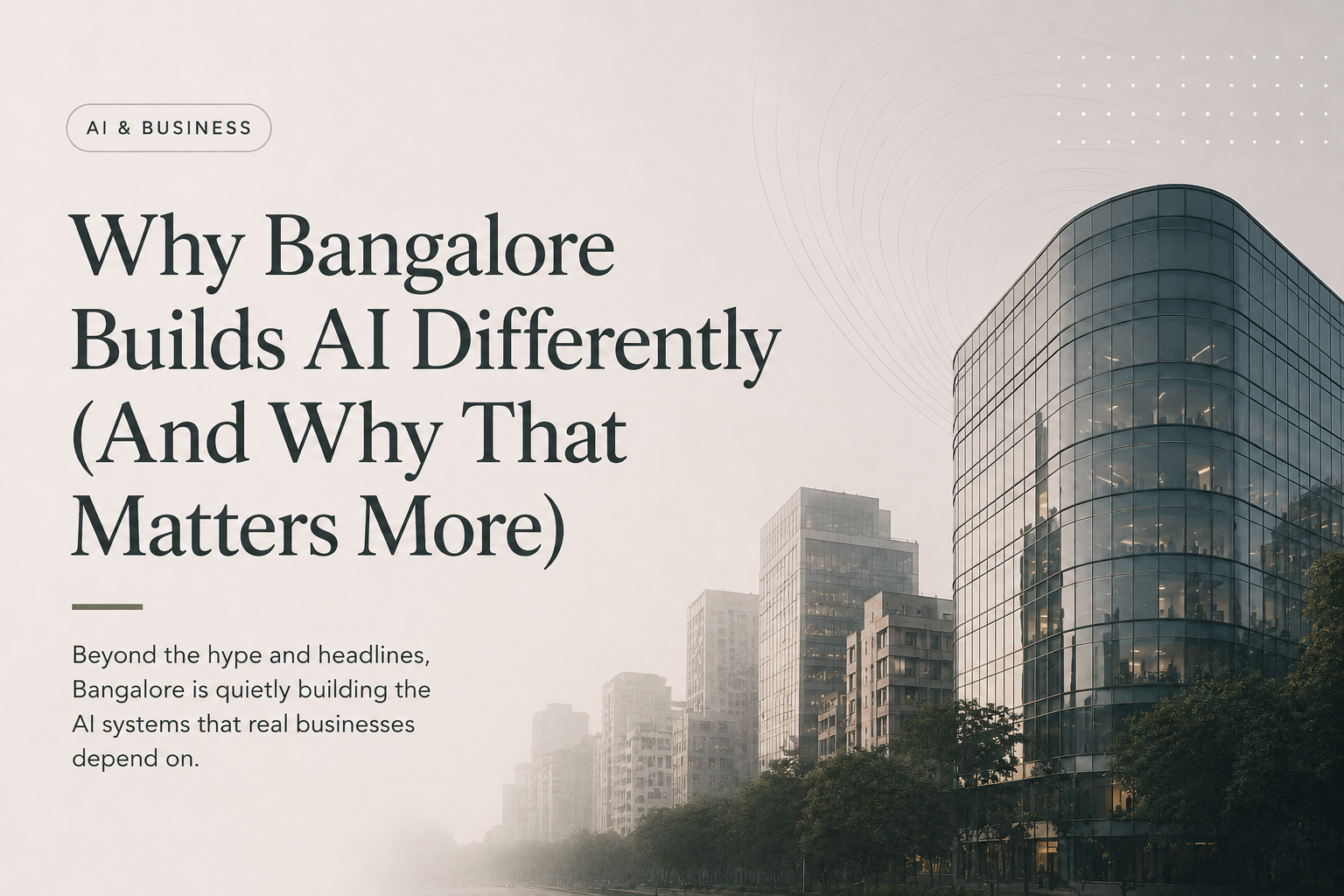
Most cities trying to become AI hubs usually market themselves loudly.
Bangalore never really did.
And somehow, that became its biggest advantage.
While other ecosystems focused on visibility, Bangalore quietly became the place where real enterprise AI systems started getting built — automation infrastructure, workforce intelligence, operational AI, cloud systems, cybersecurity layers, and scalable enterprise workflows. That is why almost every serious conversation around an AI Company in Bangalore eventually feels less like startup hype and more like operational reality.
The city does not feel obsessed with “looking futuristic.”
It feels obsessed with making systems work.
That difference matters more than people realize.
Bangalore Built the Right Kind of Chaos
Most outsiders misunderstand Bangalore completely.
They think the city’s strength comes from:
-
startups,
-
funding,
-
or tech campuses.
Those things matter. But they are not the real reason Bangalore became India’s most important AI ecosystem.
The real advantage is density.
Not population density.
Operational density.
In Bangalore, infrastructure engineers, machine learning teams, cloud architects, founders, cybersecurity specialists, and enterprise operators exist inside the same ecosystem constantly colliding with each other.
That creates a very specific kind of environment:
messy, fast, exhausting — but incredibly productive.
Ideas move quickly here because people move quickly.
An AI founder working on workflow intelligence can meet:
-
a DevOps engineer,
-
a hiring automation startup,
-
and an enterprise CTO
within the same week.
That overlap matters more than most people realize.
Companies like Rubixe are increasingly seeing businesses move toward Bangalore based AI ecosystems because the city naturally compresses experimentation and execution into the same space.
The City Thinks Operationally, Not Theatrically
One thing Bangalore does unusually well is operational thinking.
Many AI ecosystems globally still focus heavily on:
-
presentation,
-
consumer hype,
-
and visible AI products.
Bangalore tends to focus more on systems underneath the surface.
Things like:
-
automation architecture,
-
cloud orchestration,
-
AI infrastructure,
-
workflow intelligence,
-
staffing systems,
-
cybersecurity monitoring,
-
and enterprise scale integration.
None of that sounds glamorous.
But that is where the real long term value lives.
Because businesses do not actually scale through AI demos.
They scale through systems that quietly remove friction.
Friction simply means invisible inefficiencies slowing work down over time.
That is one reason AI Company in Bangalore ecosystems are becoming increasingly important globally. They are building operational intelligence, not just AI interfaces.
Bangalore Feels Less Obsessed With “AI Personalities”
This is subtle, but important.
A lot of global AI culture today revolves around personalities.
Founders becoming influencers.
Companies becoming content machines.
Everything optimized for visibility.
Bangalore still feels slightly old school in comparison.
Many of the smartest AI teams here are relatively quiet publicly.
They are too busy solving:
-
infrastructure problems,
-
enterprise bottlenecks,
-
automation complexity,
-
and scalability issues.
Scalability simply means systems continuing to work efficiently even as operations grow larger.
That changes the culture.
The ecosystem feels more engineer driven than personality driven.
And honestly, that may become Bangalore’s biggest long term advantage.
Because eventually, hype always slows down.
Infrastructure usually survives.
AI Companies in Bangalore Are Solving “Unsexy” Problems
This is another reason the ecosystem matters.
A lot of AI companies globally chase visibility through consumer products.
But some of the most valuable AI work happening in Bangalore is operationally invisible.
For example:
AI systems now quietly help businesses:
-
reduce workflow delays,
-
predict infrastructure failures,
-
improve hiring pipelines,
-
detect cybersecurity anomalies,
-
automate approvals,
-
and organize operational data.
None of those things become viral online.
But enterprises depend on them daily.
Anomaly detection simply means identifying unusual system behavior automatically before larger problems happen.
Technology focused firms like Rubixe are increasingly helping enterprises redesign operational systems because modern businesses now compete heavily on execution speed, not just ideas.
The Ecosystem Already Understands Enterprise Pain
One reason Bangalore adapted to AI faster than many ecosystems is simple:
The city already understood enterprise problems before AI became mainstream.
For years, Bangalore worked deeply inside:
-
enterprise software,
-
backend infrastructure,
-
SaaS platforms,
-
cloud systems,
-
and global operations.
SaaS means Software as a Service — software delivered online instead of installed locally.
That background matters because modern AI systems are deeply connected to operations.
AI is no longer just about generating content or answering questions.
Now businesses want AI to:
-
reduce operational waste,
-
improve decision speed,
-
automate workflows,
-
and increase visibility across systems.
Visibility means understanding operational activity clearly in real time.
This is exactly where Bangalore’s ecosystem became powerful.
Because the city already had experience building systems for complexity.
Businesses increasingly exploring AI Automation are usually trying to simplify operational overload before it slows growth internally.
Bangalore’s AI Growth Feels Structural Now
Earlier, people treated India’s AI growth like a temporary tech trend.
That mindset changed.
The ecosystem now feels structural.
Meaning:
AI is no longer sitting on top of the industry.
It is becoming part of the industry itself.
You can already see this shift happening across:
-
healthcare,
-
logistics,
-
staffing,
-
cybersecurity,
-
agriculture,
-
fintech,
-
and enterprise operations.
An AI Company in Bangalore today is often not building “AI products” in the traditional sense anymore.
Many are building:
-
workflow systems,
-
operational intelligence layers,
-
infrastructure tools,
-
and automation ecosystems businesses quietly depend on daily.
That evolution is important.
Because the future of AI probably belongs less to novelty and more to utility.
Bangalore Is Also Quietly Becoming a Workforce Intelligence Hub
Hiring became one of the biggest operational problems for modern companies.
Not because talent disappeared.
Because scale became chaotic.
Companies now hire across:
-
remote teams,
-
distributed workforces,
-
specialized technical roles,
-
and rapidly changing operational environments.
That complexity created demand for workforce intelligence systems.
Modern AI staffing ecosystems now help businesses:
-
predict hiring needs,
-
organize recruitment pipelines,
-
automate candidate workflows,
-
and reduce hiring friction.
Businesses increasingly exploring AI Staffing are usually trying to improve operational speed without creating internal recruitment overload.
Companies like Rubixe are increasingly seeing enterprises redesign workforce systems because hiring now affects scalability directly.
Bangalore Never Really Tried to “Look Futuristic”
And maybe that is the most interesting part.
The city never fully leaned into futuristic aesthetics the way many global AI ecosystems did.
Bangalore still feels:
-
imperfect,
-
crowded,
-
chaotic,
-
overworked,
-
and strangely grounded.
But underneath that chaos is one of the densest concentrations of operational technology talent anywhere in Asia.
And that matters more than polished branding.
Because eventually, every serious AI ecosystem gets tested by the same question:
Can it build systems people actually depend on?
Bangalore already does.
Organizations increasingly exploring broader Enterprise AI Services are usually trying to build connected ecosystems where:
-
automation,
-
infrastructure,
-
workforce intelligence,
-
analytics,
-
and operational AI
work together continuously.
Companies like Rubixe are increasingly seeing enterprises move toward Bangalore based ecosystems because modern businesses now depend heavily on:
-
operational speed,
-
infrastructure visibility,
-
workflow intelligence,
-
and scalable execution.
The city may never market AI the loudest.
But it may quietly become one of the places shaping how enterprise AI actually works in the real world.
FAQ Section
Which is the best AI company in Bangalore?
The best AI company in Bangalore depends on business requirements like automation, AI consulting, staffing, cybersecurity, or enterprise AI solutions. Companies like Rubixe are increasingly helping businesses with scalable AI infrastructure and operational intelligence systems.
Why is Bangalore famous for AI companies?
Bangalore is known for its strong technology ecosystem, engineering talent, startup culture, cloud infrastructure, and enterprise software industry. These factors helped the city become India’s largest AI innovation hub.
What services do AI companies in Bangalore provide?
Most AI companies in Bangalore provide services like:
-
AI automation,
-
machine learning development,
-
AI consulting,
-
AI staffing,
-
cybersecurity solutions,
-
workflow intelligence,
-
and enterprise AI systems.
Why are startups and enterprises choosing Bangalore for AI?
Bangalore offers:
-
access to skilled AI engineers,
-
startup ecosystems,
-
enterprise infrastructure,
-
investor networks,
-
and faster operational scaling opportunities.
This makes the city attractive for both startups and large enterprises.
Is Bangalore good for AI startups?
Yes. Bangalore is considered one of the best cities in India for AI startups because of its technology ecosystem, networking opportunities, cloud infrastructure expertise, and availability of technical talent.
What industries are AI companies in Bangalore working with?
AI companies in Bangalore increasingly work with:
-
healthcare,
-
agriculture,
-
logistics,
-
fintech,
-
retail,
-
cybersecurity,
-
and enterprise operations.
How does AI automation help businesses?
Businesses exploring AI Automation often use AI systems to reduce repetitive work, automate workflows, improve operational efficiency, and scale processes faster.
What is the future of AI companies in Bangalore?
The future looks strong because AI companies in Bangalore are increasingly building:
-
enterprise AI systems,
-
intelligent automation,
-
predictive analytics,
-
workforce intelligence,
-
and scalable operational infrastructure for global businesses.


 English
 Arabic
 French
 Spanish
 Portuguese
 Turkish
 Dutch
Dutch
 Italiano
 Russian
 Romaian
 Portuguese (Brazil)
 Greek
Greek