

Which Workshop Conditions Support Changhengsaws Fine Finish Blades Material Flow
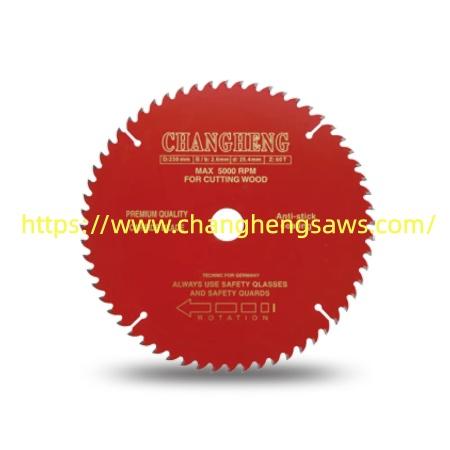
Fine Finish Blades are often part of discussions in workshops where different surfaces move through cutting stations and each one reacts in its own way. Some materials glide through with a calm, steady resistance, while others shift slightly under contact, creating a different sense of motion at the moment of entry. The sound of processing changes too, sometimes sharp, sometimes softened by the density of the sheet being handled. Workers begin to recognize these differences not by measurement alone, but through repeated exposure.
Inside a production space where Changhengsaws takes part in tool application studies, the environment carries small signs of constant use. Fine dust gathers along machine edges, and stacks of prepared panels lean against metal frames waiting for the next stage. Light from overhead fixtures spreads unevenly across surfaces, revealing subtle texture variations that might otherwise go unnoticed. The room feels active even during pauses, as materials hold the memory of previous passes.
Different workshop materials respond in distinct ways during cutting. Wood based boards often move with predictable resistance, especially when their internal structure remains consistent across the sheet. Coated panels behave differently, sometimes creating a slight change in sound as the surface layer meets the tool path. Synthetic composites may introduce brief shifts in vibration, which operators notice through both sound and machine feedback. These variations are not disruptions, but signals that guide small adjustments during ongoing work.
As production continues, attention gradually shifts from individual cuts to overall flow. The way materials feed into the station becomes part of a larger rhythm, influenced by how stable each surface remains during contact. When alignment holds steady, edges form with fewer irregularities, and the transition between sections feels smoother. When variation appears, it is often subtle, noticed through slight changes in resistance or timing.
In many workshops, experience plays a quiet but important role. Operators often rely on early contact behavior to anticipate how the rest of the cut will develop. A slight shift in tone or a brief change in vibration can indicate how the material will respond further along the pass. These observations are built over time, shaped by repeated exposure rather than formal instruction.
Production environments differ from one facility to another, yet the interaction between surface and tool follows similar patterns. Stability in feeding, consistency in material preparation, and attention to environmental conditions all contribute to the final outcome. Even small variations in stacking or humidity can influence how surfaces behave during processing, especially when multiple material types are used in the same workflow.
Changhengsaws continues to observe these conditions through real workshop applications, focusing on how different surfaces respond under continuous handling rather than isolated testing. The goal is to understand interaction patterns as they naturally appear during production cycles, where no two batches behave exactly the same.
At the end of a shift, machines slow and the workshop settles into a quieter state. Partially processed sheets rest on nearby racks, reflecting soft light that fades across their surfaces. In these moments, the relationship between material behavior and cutting interaction becomes easier to observe in memory than in motion. More details about configurations and applications can be found at https://www.changhengsaws.com/

 English
 Arabic
 Spanish
 Portuguese
 Deutsch
 Turkish
 Dutch
Dutch
 Italiano
 Russian
 Romaian
 Portuguese (Brazil)
 Greek
Greek