

Petrochemicals Market Opportunities Rise with High-Performance Material Demand
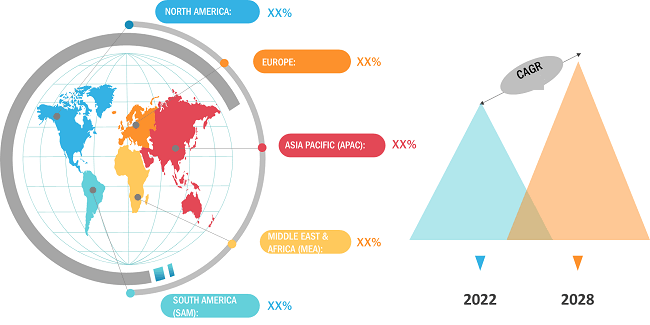
Few sectors carry the weight of global industrial output the way petrochemicals do. Plastics, synthetic rubbers, paints, adhesives, pharmaceuticals, and agricultural chemicals all trace their origins to petrochemical feedstocks, making this one of the most foundational markets in the modern economy. The Petrochemicals Market is projected to grow from US$ 457.57 billion in 2023 to US$ 685.01 billion by 2031, registering a CAGR of 5.2% during the forecast period 2024–2031, according to research published by The Insight Partners.
What Is Petrochemicals?
Petrochemicals are chemical compounds derived from petroleum and natural gas through refining and processing operations. They form the raw material base for an extraordinarily wide range of industrial and consumer products, from polyethylene packaging films and polypropylene automotive parts to benzene-derived pharmaceuticals and xylene-based polyester fibres. Their versatility, combined with the scale of global hydrocarbon production, makes them indispensable to virtually every major manufacturing sector.
Request a Sample Copy of the Report: https://www.theinsightpartners.com/sample/TIPRE00008125
What Is Driving Demand for Petrochemicals Across Global Industries?
Packaging remains the single largest application driving petrochemicals consumption, and its growth shows no sign of plateauing. E-commerce expansion, food safety requirements, pharmaceutical packaging standards, and the relentless consumer demand for lightweight, durable materials are all pushing polyethylene and polypropylene volumes upward. Even as sustainability debates intensify around single-use plastics, the practical reality is that alternative materials cannot yet match the cost-performance profile of petrochemical-derived polymers at global scale. This tension is fuelling innovation in recyclable and bio-compatible polymer formulations rather than displacing demand entirely.
Automotive manufacturing is the second major demand pillar, and its relationship with petrochemicals is becoming more complex rather than simpler. Vehicle lightweighting programmes, driven by fuel efficiency and emissions targets, are actually increasing polymer content per vehicle even as internal combustion engine production stabilises. Electric vehicle platforms require high-performance plastics for battery enclosures, thermal management components, and interior trim systems. Beyond that, synthetic rubbers for tyres and adhesives for composite body panels add further petrochemical content throughout the vehicle assembly process.
Construction activity across Asia, the Middle East, and Africa is another engine running at significant speed. PVC pipes, insulation foams, waterproofing membranes, and architectural coatings all depend on petrochemical feedstocks. As urbanisation accelerates and governments invest in infrastructure, the upstream demand for ethylene, propylene, and benzene derivatives follows. China and India together account for a substantial share of global construction-related petrochemicals demand, and both countries have ambitious infrastructure pipelines extending well into the next decade.
The energy transition is reshaping the feedstock picture in ways that are still unfolding. Natural gas liquids, particularly ethane from US shale operations, have become highly competitive petrochemical feedstocks, enabling a significant wave of cracker investment in North America. Meanwhile, Middle Eastern producers are deepening their downstream integration, moving from crude oil export toward finished chemicals and polymer production to capture greater value. These supply-side shifts are altering trade flows and competitive dynamics across the global market.
Segmentation Overview
By Type: Ethylene is the highest-volume petrochemical globally, serving as the building block for polyethylene, ethylene oxide, and vinyl chloride among many other derivatives. Propylene follows closely, feeding polypropylene production that spans packaging, automotive, and textiles. Benzene underpins styrene, phenol, and nylon production chains, while xylene is the key feedstock for polyester fibres and PET resins. Other aromatic and aliphatic derivatives collectively serve specialised but high-value application segments.
By Application: Polymers dominate consumption by volume, reflecting the scale of plastics production across packaging, construction, and durable goods manufacturing. Paints and coatings represent a significant downstream application for styrene, acrylics, and alkyd resins. Solvents, surfactants, and adhesives each serve distinct but high-demand industrial and consumer markets. Rubber applications, covering both synthetic elastomers for tyres and industrial components, contribute meaningfully to overall petrochemical demand.
By End-use Industry: Packaging is the leading end-use sector, followed by automotive and construction. Electrical and electronics manufacturing relies on high-purity polymer compounds for insulation and structural components. Healthcare applications, from medical device polymers to pharmaceutical intermediates, represent a fast-growing and margin-rich segment. Agriculture draws on petrochemical derivatives for crop protection products, mulch films, and irrigation systems. Aerospace and defence demand specialised, high-performance materials that justify premium pricing.
Key Market Players
· Shell International BV
· China Petroleum Corporation
· LyondellBasell Industries Holdings BV
· Chevron Phillips Chemical Company LLC
· SABIC
· BASF SE
· BP Plc
· INEOS
· DOW Inc
· Mitsubishi Chemical Corp.
These players compete across an integrated value chain stretching from crude oil and natural gas processing through to finished chemical and polymer production. Scale, feedstock access, and downstream integration are the primary competitive differentiators, with innovation in sustainable chemistry and circular economy solutions becoming an increasingly important dimension of strategy.
Sustainability and Innovation Trends
Chemical recycling of post-consumer plastics back into petrochemical feedstocks is gaining commercial momentum, with multiple players commissioning pyrolysis and depolymerisation units at industrial scale. Bio-based feedstock pathways, including bio-naphtha and bio-ethanol-to-ethylene routes, are attracting investment as carbon pricing and extended producer responsibility schemes reshape the economics of virgin petrochemical production. Digital process optimisation, including AI-driven cracker yield management and predictive maintenance, is improving margins and reducing energy intensity across large-scale chemical plants.
Buy Premium Report: https://www.theinsightpartners.com/buy/TIPRE00008125
Regional Outlook
Asia-Pacific is the dominant regional market, accounting for the majority of global petrochemicals consumption and a growing share of production capacity. China operates the world's largest and fastest-expanding petrochemical industry, with massive integrated refinery-chemical complexes driving both domestic supply and export ambitions. India is rapidly building out its downstream chemicals sector, supported by government industrial policy and strong domestic demand from packaging, automotive, and construction sectors.
North America has re-emerged as a competitive production hub, backed by abundant and low-cost ethane feedstock from shale gas operations. The United States is a major exporter of polyethylene and other ethylene derivatives, supplying markets across Latin America and Asia. Europe faces the most challenging environment, with high energy costs, carbon pricing pressure, and regulatory scrutiny of plastics creating headwinds for incumbents. Middle Eastern producers continue to expand downstream capacity, leveraging advantaged feedstock positions to compete aggressively in global polymer and chemical markets.
Related Reports:
About The Insight Partners
The Insight Partners is among the leading market research and consulting firms in the world. We take pride in delivering exclusive reports along with sophisticated strategic and tactical insights into the industry. Reports are generated through a combination of primary and secondary research, solely aimed at giving our clientele a knowledge-based insight into the market and domain. This is done to assist clients in making wiser business decisions. A holistic perspective in every study undertaken forms an integral part of our research methodology and makes the report unique and reliable.
Contact Us:
If you have any queries about this report or if you would like further information, please contact us:
Phone: +1-646-491-9876
E-mail: sales@theinsightpartners.com
Also Available in: Korean German Japanese French Chinese Italian Spanish

 English
 Arabic
 French
 Portuguese
 Deutsch
 Turkish
 Dutch
Dutch
 Italiano
 Russian
 Romaian
 Portuguese (Brazil)
 Greek
Greek