

FRP Composites Market Opportunities Rise with Lightweight Mobility Demand
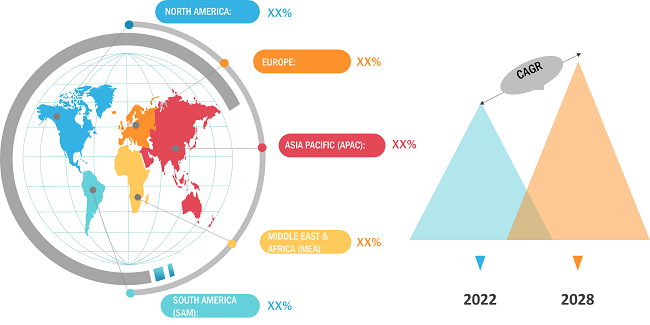
Across industries where strength-to-weight ratio is mission-critical, one material category has been steadily displacing steel, aluminium, and conventional polymers alike. The Fiber Reinforced Polymer (FRP) Composites Market is forecast to reach US$ 168.25 billion by 2031, advancing at a CAGR of 6.8% during the forecast period 2025–2031, according to new research published by The Insight Partners. That trajectory reflects not just growing demand, but a fundamental rethinking of how engineers design structures under load.
What Is Fiber Reinforced Polymer (FRP) Composites?
Fiber reinforced polymer composites are engineered materials formed by embedding high-strength fibres, such as glass, carbon, basalt, or aramid, within a polymer matrix resin to create a material that outperforms either constituent alone. The resulting combination delivers exceptional tensile strength, corrosion resistance, and dimensional stability at a fraction of the weight of traditional metals. These properties have made FRP composites a material of choice across aerospace, automotive, construction, and electronics manufacturing, wherever performance requirements cannot be met by conventional materials.
Request a Sample Copy of the Report: https://www.theinsightpartners.com/sample/TIPRE00004493
What Is Driving Demand for FRP Composites Across High-Performance Industries?
Lightweighting is the most powerful single force driving FRP composites adoption, and its influence spans multiple end-use industries simultaneously. In automotive manufacturing, every kilogram removed from a vehicle's structure directly reduces fuel consumption or extends the range of an electric vehicle battery pack. Original equipment manufacturers are responding to increasingly stringent emissions regulations by replacing metal stampings with glass fibre and carbon fibre composite panels, structural beams, and underbody shields. What makes this shift particularly significant is that the cost gap between composite and metal components has been narrowing steadily as manufacturing technologies mature and production volumes scale.
Aerospace and defence programmes have long been the proving ground for advanced composites, and the knowledge developed there continues to filter into commercial applications. Modern commercial aircraft rely on carbon fibre reinforced polymer for fuselage sections, wing skins, and interior structural components, delivering fuel savings that are economically material over an aircraft's operational lifespan. Defence platforms, from unmanned aerial vehicles to next-generation fighter aircraft, are raising the bar further on composite performance requirements, pushing fibre and resin technology into new territory. The pipeline of defence procurement programmes across North America, Europe, and Asia is providing sustained demand that insulates the high-performance composites segment from cyclical commercial downturns.
Building and construction represents a perhaps less obvious but increasingly important growth frontier. Ageing infrastructure across North America and Europe is creating substantial demand for FRP rebar, bridge decking, structural panels, and façade systems, all of which offer corrosion immunity that steel cannot match in chemically aggressive environments. The US has seen growing adoption of FRP composites in bridge rehabilitation programmes, where the combination of low maintenance cost and rapid installation offsets the higher upfront material price. In Asia, rapid urbanisation is driving demand for lightweight, prefabricated construction components where FRP's formability and durability offer real logistical and performance advantages.
The electrical and electronics sector adds another demand dimension that is easy to underestimate. Printed circuit board substrates, electrical enclosures, transformer components, and antenna housings all benefit from FRP's dielectric properties and dimensional stability under thermal cycling. As 5G infrastructure deployment accelerates globally and consumer electronics demand continues to grow, this segment is producing consistent incremental volume for glass fibre composite producers.
Segmentation Overview
By Fiber Type: Glass fiber dominates the FRP composites market by volume, prized for its cost efficiency, versatility, and solid mechanical performance across a wide range of applications from construction panels to automotive body components. Carbon fiber commands a premium position, delivering superior stiffness and strength-to-weight performance that justifies its higher cost in aerospace, motorsport, and high-end automotive applications. Aramid fiber, best known under the Kevlar brand, serves niche but critical applications in ballistic protection, pressure vessels, and marine structures where impact resistance is paramount. Basalt fiber is an emerging category, attracting interest for its combination of thermal stability, corrosion resistance, and competitive pricing relative to carbon fibre in certain structural applications.
By End-Use Industry: Automotive is the fastest-growing end-use segment, driven by lightweighting mandates and the accelerating shift to electric vehicles that amplifies the performance benefit of every kilogram saved. Aerospace and defence sustains the highest-value demand, with premium carbon fibre composites at the core of structural applications. Building and construction is a volume-driven segment with growing adoption of FRP rebar, decking, and cladding systems. Electrical and electronics contributes steady demand for glass fibre substrates and precision composite components.
Key Market Players
- Aegion Corporation
- American Grating LLC
- B&B FRP Manufacturing Inc.
- DowAksa
- Engineered Composites Ltd
- Hyosung Corporation
- Mitsubishi Chemical Corporation
- SGL Carbon SE
- TenCate Advanced Composites Holding B.V.
- Toray Industries, Inc.
These companies compete across fibre production, resin formulation, composite manufacturing, and end-use application engineering. Vertical integration, proprietary fibre technology, and long-term supply agreements with aerospace and automotive OEMs are the primary competitive advantages that separate market leaders from mid-tier players. Innovation investment is concentrated in automated manufacturing processes, out-of-autoclave curing technologies, and recyclable thermoset and thermoplastic composite systems.
Sustainability and Innovation Trends
Recyclability has become the central sustainability challenge for the composites industry. Traditional thermoset FRP composites are notoriously difficult to recycle at end of life, a growing concern as regulatory pressure on waste management intensifies across Europe and North America. Thermoplastic matrix composites, which can be remelted and reprocessed, are gaining traction as an alternative that preserves performance while enabling recycling. Chemical recycling routes for carbon fibre recovery from cured laminates are reaching commercial viability, with several dedicated recycling operations now processing production waste and end-of-life aerospace components. Bio-based resin matrices and natural fibre reinforcements are also attracting R&D investment for applications where absolute mechanical performance requirements can accommodate some compromise in exchange for improved environmental credentials.
Buy Premium Report: https://www.theinsightpartners.com/buy/TIPRE00004493
Regional Outlook
North America holds a leading share of the global FRP composites market, underpinned by the largest aerospace and defence manufacturing base in the world and a mature automotive composite supply chain. The United States is both the primary consumer and a significant technology exporter, with domestic programmes at Boeing, Lockheed Martin, and major automotive OEMs setting the pace for composite adoption. Europe follows closely, with Germany, France, and the United Kingdom driving aerospace composite demand while Scandinavian wind energy programmes generate substantial glass fibre consumption.
The EU's infrastructure investment agenda is also stimulating FRP adoption in construction rehabilitation projects. Asia-Pacific is the fastest-growing regional market, with China, Japan, and South Korea all investing aggressively in domestic composite manufacturing capability. China's aerospace ambitions, combined with its dominant position in solar panel and wind turbine production, are creating structural long-term demand for both glass and carbon fibre composites. South and Central America represent an emerging market with particular potential in wind energy and oil and gas infrastructure applications.
Related Reports:
Fiber Reinforced Polymer (FRP) Panels and Sheets Market
High Temperature Composite Resin Market
About The Insight Partners
The Insight Partners is among the leading market research and consulting firms in the world. We take pride in delivering exclusive reports along with sophisticated strategic and tactical insights into the industry. Reports are generated through a combination of primary and secondary research, solely aimed at giving our clientele a knowledge-based insight into the market and domain. This is done to assist clients in making wiser business decisions. A holistic perspective in every study undertaken forms an integral part of our research methodology and makes the report unique and reliable.
Contact Us:
If you have any queries about this report or if you would like further information, please contact us:
Phone: +1-646-491-9876
E-mail: sales@theinsightpartners.com
Also Available in: Korean German Japanese French Chinese Italian Spanish

 English
 Arabic
 French
 Spanish
 Portuguese
 Turkish
 Dutch
Dutch
 Italiano
 Russian
 Romaian
 Portuguese (Brazil)
 Greek
Greek