• Propylene Carbonate Price Trend Report: Key Influences from Feedstock Costs, Regulatory Changes, and End-Use Sector Demand

    Propylene carbonate is a chemical that quietly supports many industries, even though most people never hear its name. It is commonly used in lithium-ion batteries, paints, coatings, cosmetics, and as a solvent in various industrial processes. Because of its wide usage, changes in its price often reflect bigger movements in energy markets, manufacturing activity, and global demand. Understanding the propylene carbonate price trend helps businesses plan better and gives a clear picture of how market forces work in everyday terms.

    Please Submit Your Query for Propylene Carbonate Price Trend, demand-supply, suppliers, market analysis:https://www.price-watch.ai/book-a-demo/

    Factors That Influence Propylene Carbonate Prices

    The price of propylene carbonate is closely linked to the cost of its raw materials. Propylene carbonate is mainly produced from propylene oxide and carbon dioxide. When propylene oxide prices rise due to higher crude oil costs or supply issues, propylene carbonate prices usually follow the same direction. Energy costs also play an important role because manufacturing this chemical requires stable electricity and heat supply. When fuel or power prices increase, production becomes more expensive, pushing prices upward.
    Demand from end-use industries also shapes the propylene carbonate price trend. In recent years, the growth of electric vehicles and renewable energy storage has increased demand for lithium-ion batteries, where propylene carbonate is widely used as an electrolyte solvent. When battery production rises, manufacturers compete for supply, which can lift prices. On the other hand, when industrial activity slows down, demand weakens and prices tend to soften.

    Impact of Supply Chain and Production Capacity

    Supply chain conditions strongly affect propylene carbonate pricing. Disruptions such as plant shutdowns, maintenance issues, or transportation delays can reduce supply in the market. Even short-term disruptions often lead to noticeable price changes because buyers want to secure material quickly. When production facilities operate smoothly and inventories are sufficient, prices usually remain stable or move slowly.
    Expansion of production capacity can also influence the price trend. When new plants come online or existing manufacturers increase output, supply improves. This often balances demand and helps control price increases. However, if capacity additions lag behind growing demand, especially from fast-growing sectors like batteries, prices may stay firm or rise over time.

    Regional Differences in Propylene Carbonate Prices

    Propylene carbonate prices are not the same everywhere. Regional trends depend on local production, raw material availability, and industrial demand. In regions with strong chemical manufacturing bases and easy access to raw materials, prices are often more competitive. In contrast, areas that rely heavily on imports may see higher prices due to shipping costs, duties, and currency fluctuations.

    Conclusion

    The propylene carbonate price trend reflects a balance between raw material costs, energy prices, industrial demand, and supply chain conditions. Its growing role in batteries and sustainable applications adds long-term strength to the market. By understanding these everyday factors, businesses and buyers can better anticipate price movements and make informed decisions. While short-term fluctuations are part of any chemical market, propylene carbonate continues to show a stable and reliable trend shaped by real-world industrial needs.

    Please Submit Your Query for Propylene Carbonate Price Trend, demand-supply, suppliers, market analysis:https://www.price-watch.ai/book-a-demo/

    About Price Watch™ AI

    Price-Watch AI is an India-based, independent raw material price reporting agency that provides real-time price forecasts and data-driven insights into global raw material markets. Price-Watch AI specializes in tracking raw material prices, analyzing market trends, and delivering timely updates on plant shutdowns, supply disruptions, capacity expansions, and demand-supply dynamics. The Price-Watch AI platform empowers manufacturers, traders, and procurement professionals to make faster, smarter decisions. Leveraging AI-powered forecasting and over a decade of historical data, Price-Watch AI transforms market volatility into actionable opportunity.

    Futura Tech Park,
    C Block, 8th floor 334,
    Old Mahabalipuram Road,
    Sholinganallur, Chennai,
    Tamil Nadu, Pincode - 600119.

    LinkedIn: https://www.linkedin.com/company/price-watch-ai/
    Facebook: https://www.facebook.com/people/Price-Watch/61568490385598/
    Twitter: https://x.com/pricewatchai
    Website: https://www.price-watch.ai/
    Propylene Carbonate Price Trend Report: Key Influences from Feedstock Costs, Regulatory Changes, and End-Use Sector Demand Propylene carbonate is a chemical that quietly supports many industries, even though most people never hear its name. It is commonly used in lithium-ion batteries, paints, coatings, cosmetics, and as a solvent in various industrial processes. Because of its wide usage, changes in its price often reflect bigger movements in energy markets, manufacturing activity, and global demand. Understanding the propylene carbonate price trend helps businesses plan better and gives a clear picture of how market forces work in everyday terms. 👉 👉 👉 Please Submit Your Query for Propylene Carbonate Price Trend, demand-supply, suppliers, market analysis:https://www.price-watch.ai/book-a-demo/ Factors That Influence Propylene Carbonate Prices The price of propylene carbonate is closely linked to the cost of its raw materials. Propylene carbonate is mainly produced from propylene oxide and carbon dioxide. When propylene oxide prices rise due to higher crude oil costs or supply issues, propylene carbonate prices usually follow the same direction. Energy costs also play an important role because manufacturing this chemical requires stable electricity and heat supply. When fuel or power prices increase, production becomes more expensive, pushing prices upward. Demand from end-use industries also shapes the propylene carbonate price trend. In recent years, the growth of electric vehicles and renewable energy storage has increased demand for lithium-ion batteries, where propylene carbonate is widely used as an electrolyte solvent. When battery production rises, manufacturers compete for supply, which can lift prices. On the other hand, when industrial activity slows down, demand weakens and prices tend to soften. Impact of Supply Chain and Production Capacity Supply chain conditions strongly affect propylene carbonate pricing. Disruptions such as plant shutdowns, maintenance issues, or transportation delays can reduce supply in the market. Even short-term disruptions often lead to noticeable price changes because buyers want to secure material quickly. When production facilities operate smoothly and inventories are sufficient, prices usually remain stable or move slowly. Expansion of production capacity can also influence the price trend. When new plants come online or existing manufacturers increase output, supply improves. This often balances demand and helps control price increases. However, if capacity additions lag behind growing demand, especially from fast-growing sectors like batteries, prices may stay firm or rise over time. Regional Differences in Propylene Carbonate Prices Propylene carbonate prices are not the same everywhere. Regional trends depend on local production, raw material availability, and industrial demand. In regions with strong chemical manufacturing bases and easy access to raw materials, prices are often more competitive. In contrast, areas that rely heavily on imports may see higher prices due to shipping costs, duties, and currency fluctuations. Conclusion The propylene carbonate price trend reflects a balance between raw material costs, energy prices, industrial demand, and supply chain conditions. Its growing role in batteries and sustainable applications adds long-term strength to the market. By understanding these everyday factors, businesses and buyers can better anticipate price movements and make informed decisions. While short-term fluctuations are part of any chemical market, propylene carbonate continues to show a stable and reliable trend shaped by real-world industrial needs. 👉 👉 👉 Please Submit Your Query for Propylene Carbonate Price Trend, demand-supply, suppliers, market analysis:https://www.price-watch.ai/book-a-demo/ About Price Watch™ AI Price-Watch AI is an India-based, independent raw material price reporting agency that provides real-time price forecasts and data-driven insights into global raw material markets. Price-Watch AI specializes in tracking raw material prices, analyzing market trends, and delivering timely updates on plant shutdowns, supply disruptions, capacity expansions, and demand-supply dynamics. The Price-Watch AI platform empowers manufacturers, traders, and procurement professionals to make faster, smarter decisions. Leveraging AI-powered forecasting and over a decade of historical data, Price-Watch AI transforms market volatility into actionable opportunity. Futura Tech Park, C Block, 8th floor 334, Old Mahabalipuram Road, Sholinganallur, Chennai, Tamil Nadu, Pincode - 600119. LinkedIn: https://www.linkedin.com/company/price-watch-ai/ Facebook: https://www.facebook.com/people/Price-Watch/61568490385598/ Twitter: https://x.com/pricewatchai Website: https://www.price-watch.ai/
    0 Комментарии 0 Поделились 70 Просмотры 0 предпросмотр
  • Thermal Interface Pad Market: Strategic Growth, Trends & Forecast (2025–2031)

    The Thermal Interface Pad Market is becoming a focal point within the broader thermal management ecosystem as demand for efficient heat dissipation solutions continues to rise across electronics, automotive, telecommunications, and industrial sectors. With rapid adoption of high-performance devices and electric vehicles, thermal interface pads play a critical role in lowering temperatures between heat-generating components and heat sinks.
    Thermal Interface Pad Market: Strategic Growth, Trends & Forecast (2025–2031) The Thermal Interface Pad Market is becoming a focal point within the broader thermal management ecosystem as demand for efficient heat dissipation solutions continues to rise across electronics, automotive, telecommunications, and industrial sectors. With rapid adoption of high-performance devices and electric vehicles, thermal interface pads play a critical role in lowering temperatures between heat-generating components and heat sinks.
    0 Комментарии 0 Поделились 67 Просмотры 0 предпросмотр
  • Lithium Price Trend: A Simple Look at Market Movements and Future Direction

    The lithium price trend has become an important topic in recent years as the world slowly shifts toward cleaner energy and electric mobility. Lithium is widely known as a key material used in batteries, especially for electric vehicles, smartphones, laptops, and energy storage systems. Because these products are now part of everyday life, changes in lithium prices are closely watched by industries, traders, and even common consumers. Understanding how and why lithium prices move does not require complex data. In simple terms, it is mainly about demand, supply, and global market confidence.

    Read More: https://www.price-watch.ai/lithium-prices/
    Lithium Price Trend: A Simple Look at Market Movements and Future Direction The lithium price trend has become an important topic in recent years as the world slowly shifts toward cleaner energy and electric mobility. Lithium is widely known as a key material used in batteries, especially for electric vehicles, smartphones, laptops, and energy storage systems. Because these products are now part of everyday life, changes in lithium prices are closely watched by industries, traders, and even common consumers. Understanding how and why lithium prices move does not require complex data. In simple terms, it is mainly about demand, supply, and global market confidence. Read More: https://www.price-watch.ai/lithium-prices/
    0 Комментарии 0 Поделились 266 Просмотры 0 предпросмотр
  • Graphite Price Trend: A Simple and Practical View of Market Movement

    The Graphite Price Trend has gained more attention in recent years because graphite is no longer limited to traditional industries. It is now an important material for batteries, electric vehicles, electronics, and renewable energy storage, along with its long-standing use in steelmaking and lubricants. Because of this wide range of uses, changes in graphite prices reflect both industrial growth and shifts in modern technology. This article explains the graphite price trend in a simple and natural way, based on general market experience.

    Click to Read More: https://www.price-watch.ai/graphite-prices/
    Graphite Price Trend: A Simple and Practical View of Market Movement The Graphite Price Trend has gained more attention in recent years because graphite is no longer limited to traditional industries. It is now an important material for batteries, electric vehicles, electronics, and renewable energy storage, along with its long-standing use in steelmaking and lubricants. Because of this wide range of uses, changes in graphite prices reflect both industrial growth and shifts in modern technology. This article explains the graphite price trend in a simple and natural way, based on general market experience. Click to Read More: https://www.price-watch.ai/graphite-prices/
    0 Комментарии 0 Поделились 310 Просмотры 0 предпросмотр
  • Rising Adoption in Manufacturing and Healthcare Fuels Laser Technology Market Expansion

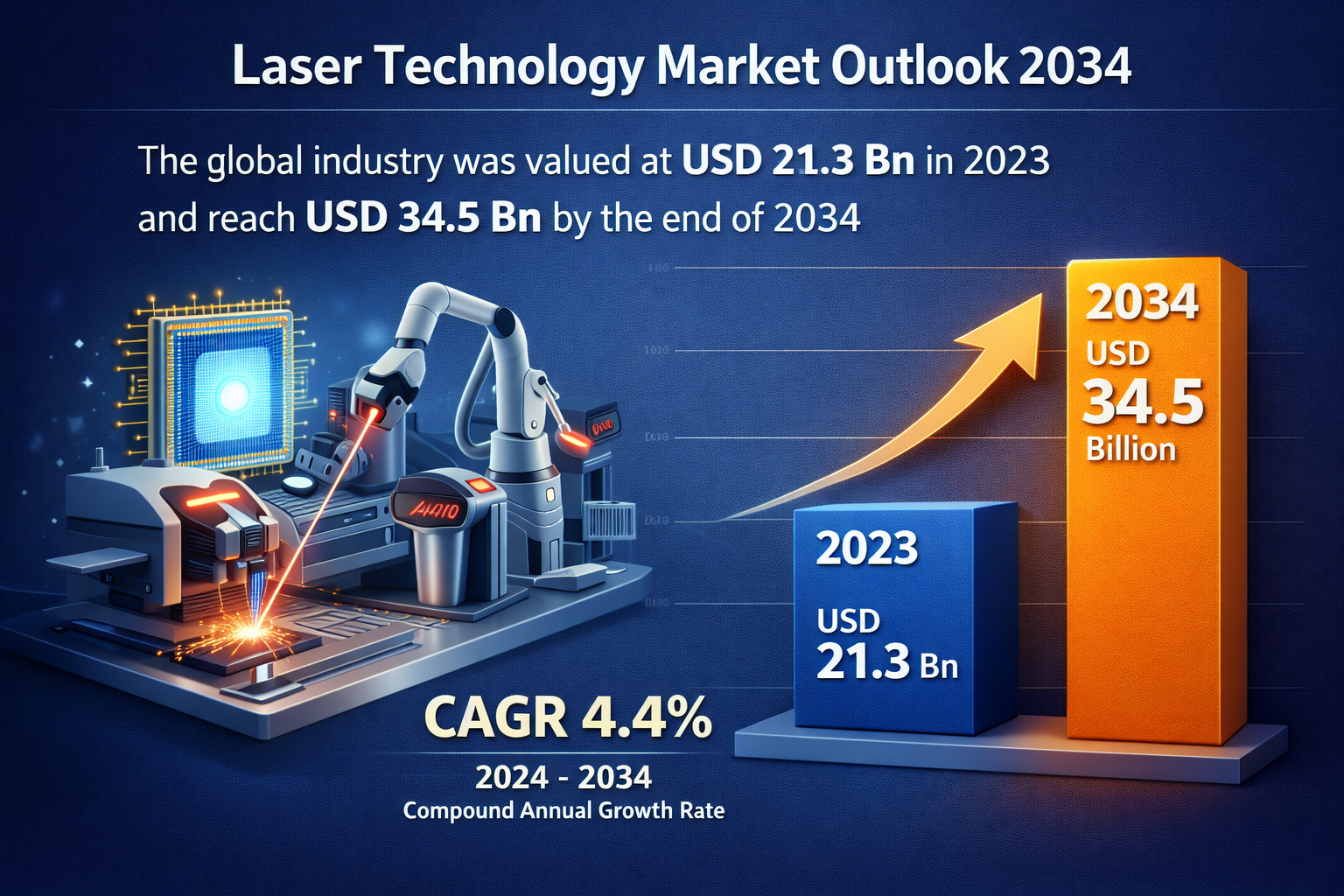
    The Laser Technology Market was valued at USD 21.3 billion in 2023 and is expected to register steady growth over the forecast period. Driven by increasing adoption across manufacturing, healthcare, electronics, and defense applications, the market is projected to reach USD 34.5 billion by 2034, expanding at a CAGR of 4.4% from 2024 to 2034.

    Increase in adoption of laser systems in the medical sector and surge in government initiatives to modernize defense technologies are key factors driving the global laser technology market size. Laser technology is a dynamic field that provides high-precision cuts and is ideal for cutting complex shapes.

    Transform Your Strategy: Explore In-Depth Data – Sample Available! https://www.transparencymarketresearch.com/sample/sample.php?flag=S&rep_id=36371

    Laser technology entails the usage of lasers, which are devices that generate a beam of light. Laser emits light through a process of optical amplification based on the stimulated emission of electromagnetic radiation.

    Unlike normal light, which emits in several directions and is made up of many wavelengths (colors), laser light is coherent. It travels in a straight line, with all the light waves moving in phase with each other and at a single wavelength (color). This gives laser its characteristic brightness and precision.

    Market Segmentation

    Segment

    Primary Categories

    By Service Type

    Installation & Integration, Maintenance & Repair, Training & Consulting.

    By Sourcing Type

    In-house (OEM manufacturing), Outsource (Laser-as-a-Service/Job shops).

    By Application

    Laser Processing (Cutting, Welding, Marking), Optical Communications, Medical, R&D.

    By Industry Vertical

    Telecommunications, Automotive, Healthcare, Aerospace & Defense, Semiconductor.

    By Region

    North America, Europe, Asia Pacific, Latin America, Middle East & Africa.


    Regional Analysis

    Asia Pacific (Largest Market): Dominates with over 40% market share. Driven by China, Japan, and South Korea’s massive semiconductor and automotive manufacturing hubs.
    North America: Leads in high-end R&D and military laser applications. It is a hub for medical laser innovation and quantum computing integration.
    Europe (Fastest Growth): Predicted to see rapid adoption in the medical sector and "Green Manufacturing" initiatives, specifically in Germany and the UK.
    Market Drivers and Challenges

    Drivers

    Rise of Electric Vehicles (EVs): High-power blue and fiber lasers are essential for welding copper components in EV batteries.
    Precision Healthcare: Increasing demand for non-invasive surgeries and diagnostic tools like Optical Coherence Tomography (OCT).
    5G and 6G Infrastructure: The need for Vertical-Cavity Surface-Emitting Lasers (VCSELs) in high-speed data centers.
    Challenges

    High Initial Investment: Advanced femtosecond and high-power systems remain expensive for Small-to-Medium Enterprises (SMEs).
    Technical Complexity: A shortage of skilled technicians capable of maintaining complex laser-robotic integrated systems.
    Regulatory Hurdles: Stringent safety standards (Class 4 laser protocols) vary significantly across international borders.
    Market Trends

    AI Integration: Real-time monitoring and "self-healing" laser systems that use AI to adjust beam parameters during the cutting process to minimize waste.
    Ultrafast Lasers: Transitioning from lab environments to industrial floors for "cold" micromachining (processing without heat damage).
    Sustainability: Development of "Green Lasers" that consume up to 30% less energy compared to traditional CO2 systems.
    Future Outlook (2025-2034)

    The next decade will see lasers move into Quantum Technology, where they will be used to cool atoms for quantum sensing and computing. Furthermore, the deployment of Directed Energy Weapons (DEW) in defense and the use of lasers for Space Debris Mitigation are expected to move from experimental phases to operational reality.

    Rising Adoption in Manufacturing and Healthcare Fuels Laser Technology Market Expansion The Laser Technology Market was valued at USD 21.3 billion in 2023 and is expected to register steady growth over the forecast period. Driven by increasing adoption across manufacturing, healthcare, electronics, and defense applications, the market is projected to reach USD 34.5 billion by 2034, expanding at a CAGR of 4.4% from 2024 to 2034. Increase in adoption of laser systems in the medical sector and surge in government initiatives to modernize defense technologies are key factors driving the global laser technology market size. Laser technology is a dynamic field that provides high-precision cuts and is ideal for cutting complex shapes. Transform Your Strategy: Explore In-Depth Data – Sample Available! https://www.transparencymarketresearch.com/sample/sample.php?flag=S&rep_id=36371 Laser technology entails the usage of lasers, which are devices that generate a beam of light. Laser emits light through a process of optical amplification based on the stimulated emission of electromagnetic radiation. Unlike normal light, which emits in several directions and is made up of many wavelengths (colors), laser light is coherent. It travels in a straight line, with all the light waves moving in phase with each other and at a single wavelength (color). This gives laser its characteristic brightness and precision. Market Segmentation Segment Primary Categories By Service Type Installation & Integration, Maintenance & Repair, Training & Consulting. By Sourcing Type In-house (OEM manufacturing), Outsource (Laser-as-a-Service/Job shops). By Application Laser Processing (Cutting, Welding, Marking), Optical Communications, Medical, R&D. By Industry Vertical Telecommunications, Automotive, Healthcare, Aerospace & Defense, Semiconductor. By Region North America, Europe, Asia Pacific, Latin America, Middle East & Africa. Regional Analysis Asia Pacific (Largest Market): Dominates with over 40% market share. Driven by China, Japan, and South Korea’s massive semiconductor and automotive manufacturing hubs. North America: Leads in high-end R&D and military laser applications. It is a hub for medical laser innovation and quantum computing integration. Europe (Fastest Growth): Predicted to see rapid adoption in the medical sector and "Green Manufacturing" initiatives, specifically in Germany and the UK. Market Drivers and Challenges Drivers Rise of Electric Vehicles (EVs): High-power blue and fiber lasers are essential for welding copper components in EV batteries. Precision Healthcare: Increasing demand for non-invasive surgeries and diagnostic tools like Optical Coherence Tomography (OCT). 5G and 6G Infrastructure: The need for Vertical-Cavity Surface-Emitting Lasers (VCSELs) in high-speed data centers. Challenges High Initial Investment: Advanced femtosecond and high-power systems remain expensive for Small-to-Medium Enterprises (SMEs). Technical Complexity: A shortage of skilled technicians capable of maintaining complex laser-robotic integrated systems. Regulatory Hurdles: Stringent safety standards (Class 4 laser protocols) vary significantly across international borders. Market Trends AI Integration: Real-time monitoring and "self-healing" laser systems that use AI to adjust beam parameters during the cutting process to minimize waste. Ultrafast Lasers: Transitioning from lab environments to industrial floors for "cold" micromachining (processing without heat damage). Sustainability: Development of "Green Lasers" that consume up to 30% less energy compared to traditional CO2 systems. Future Outlook (2025-2034) The next decade will see lasers move into Quantum Technology, where they will be used to cool atoms for quantum sensing and computing. Furthermore, the deployment of Directed Energy Weapons (DEW) in defense and the use of lasers for Space Debris Mitigation are expected to move from experimental phases to operational reality.
    0 Комментарии 0 Поделились 736 Просмотры 0 предпросмотр
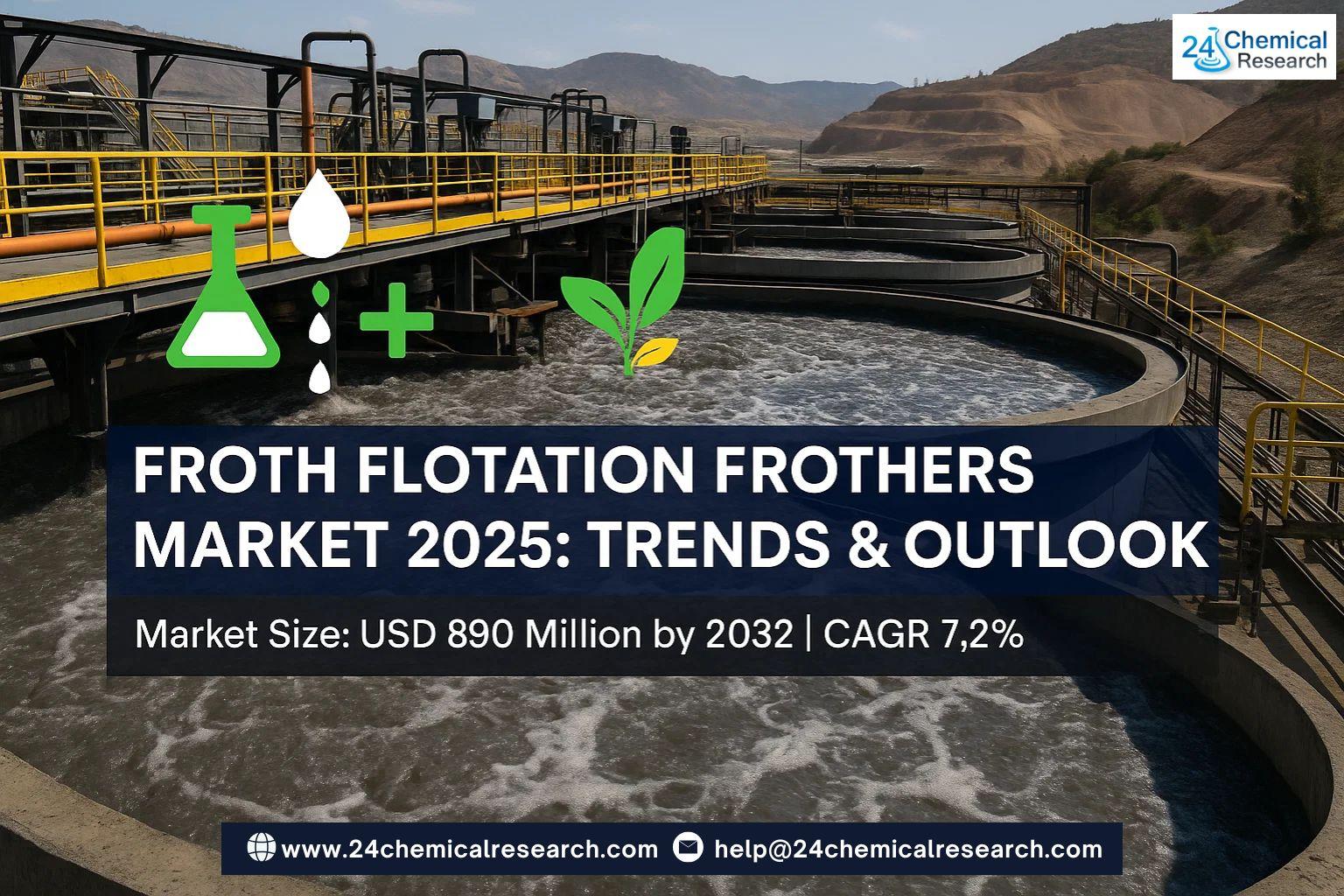
  • Global Froth Flotation Frothers market size was valued at USD 512 million in 2024. The market is projected to grow from USD 545 million in 2025 to USD 890 million by 2032, exhibiting a CAGR of 7.2% during the forecast period.

    Froth flotation frothers are the cornerstone of efficient mineral processing, enabling precise separation of valuable minerals from unwanted gangue. These dynamic chemical reagents lower surface tension to create a stable froth, allowing hydrophobic minerals to bind to air bubbles and float to the surface for collection. Crafted from surface-active agents like alcohols and glycols or nonsurfactants such as pine oils and cresylic acids, frothers are customized to optimize performance for diverse ore types and flotation environments, ensuring exceptional recovery and driving productivity in mining operations worldwide.

    The frother market is thriving, propelled by booming demand for non-ferrous and precious metals, as well as coal and non-metallic mineral processing. As sustainability takes center stage, industry giants like AkzoNobel, Clariant, Cytec Solvay Group, and Chevron Phillips Chemical are leading the charge with innovative, eco-friendly solutions
    Download FREE Sample Report: https://www.24chemicalresearch.com/download-sample/272798/global-froth-flotation-frothers-market


    Market Overview & Regional Analysis

    The global mining industry is transforming rapidly, fueled by rising demand for non-ferrous metals like copper, lithium, and nickel, critical for electric vehicles, renewable energy, and electronics.

    Technological advancements, such as automation and real-time monitoring, are enhancing froth flotation efficiency. Supportive policies for green mining are driving innovation, with increased 2024 funding for eco-friendly frother R&D. Strategic joint ventures and regulatory advancements for cleaner extraction methods are fostering profitable growth.
    In the Asia-Pacific region, regulatory frameworks differ significantly, with China enforcing stringent environmental controls on mining effluents and chemical usage to curb pollution from flotation processes. These regulations drive the adoption of eco-friendly frothers, such as biodegradable alternatives, to meet national water quality and waste management standards.

    China leads the regional frother market, driven by its expansive mining sector and integrated supply chains. Local manufacturers like Tieling Flotation Reagent and QiXia TongDa offer cost-effective solutions, while global players such as Clariant and Cytec Solvay Group trengthen their presence through strategic partnerships. These collaborations enhance product availability, particularly for large-scale copper and gold mining operations, solidifying China's dominance in frother demand across the region.


    Key Market Drivers and Opportunities

    The global mining industry is undergoing a significant transformation, due to demand for non-ferrous metals such as copper, lithium, and nickel, which are essential for electric vehicles (EVs), renewable energy infrastructure, and electronics. Technological advancements in froth flotation processes, including automation and real-time monitoring systems, are revolutionizing mineral processing operations worldwide.

    Supportive policies for green mining technologies are paving the way for innovation in the froth flotation frothers market. In 2024, governments boosted funding for R&D into low-impact flotation reagents, spurring opportunities for market players. Strategic initiatives, such as joint ventures in emerging markets and regulatory advancements for cleaner extraction, are driving profitable expansion. These trends promise significant growth for the industry in the coming years.


    Challenges & Restraints
    • High costs & volatile raw material prices slow froth flotation frothers market growth.
    • Strict environmental and safety regulations limit the use of certain frothers in mining.
    • Concerns about ecological impacts, like water contamination from frother residues, shape market trends.

    Market Segmentation by Type
    • Alcohol-based
    • Glycol-based
    • Polyglycol-based
    • Oil-based
    • Specialty blends

    Market Segmentation by Application
    • Non-ferrous Metal
    • Fossil Fuels
    • Non-metallic
    • Precious Metals
    • Others

    Market Segmentation and Key Players
    • AkzoNobe
    • Chevron Phillips Chemical
    • Orica
    • Kao Chemicals
    • Huntsman
    • Arkema
    • Ekofole Reagents

    Report Scope
    This report presents a analysis of the global markets for Froth Flotation Frothers, covering the period from 2024 to 2032, with specific focus on:
    • Company profiles
    • Product specifications
    • Production capacity and sales
    • Revenue, pricing, gross margins
    • Sales performance
    • Revenue and demand trendss


    #AlcoholBasedFrothers #GlycolBasedFrothers #PolyglycolBasedFrothers #OilBasedFrothers #SpecialtyBlends #NonFerrousMetal #FossilFuels

    Global Froth Flotation Frothers market size was valued at USD 512 million in 2024. The market is projected to grow from USD 545 million in 2025 to USD 890 million by 2032, exhibiting a CAGR of 7.2% during the forecast period. Froth flotation frothers are the cornerstone of efficient mineral processing, enabling precise separation of valuable minerals from unwanted gangue. These dynamic chemical reagents lower surface tension to create a stable froth, allowing hydrophobic minerals to bind to air bubbles and float to the surface for collection. Crafted from surface-active agents like alcohols and glycols or nonsurfactants such as pine oils and cresylic acids, frothers are customized to optimize performance for diverse ore types and flotation environments, ensuring exceptional recovery and driving productivity in mining operations worldwide. The frother market is thriving, propelled by booming demand for non-ferrous and precious metals, as well as coal and non-metallic mineral processing. As sustainability takes center stage, industry giants like AkzoNobel, Clariant, Cytec Solvay Group, and Chevron Phillips Chemical are leading the charge with innovative, eco-friendly solutions Download FREE Sample Report: https://www.24chemicalresearch.com/download-sample/272798/global-froth-flotation-frothers-market Market Overview & Regional Analysis The global mining industry is transforming rapidly, fueled by rising demand for non-ferrous metals like copper, lithium, and nickel, critical for electric vehicles, renewable energy, and electronics. Technological advancements, such as automation and real-time monitoring, are enhancing froth flotation efficiency. Supportive policies for green mining are driving innovation, with increased 2024 funding for eco-friendly frother R&D. Strategic joint ventures and regulatory advancements for cleaner extraction methods are fostering profitable growth. In the Asia-Pacific region, regulatory frameworks differ significantly, with China enforcing stringent environmental controls on mining effluents and chemical usage to curb pollution from flotation processes. These regulations drive the adoption of eco-friendly frothers, such as biodegradable alternatives, to meet national water quality and waste management standards. China leads the regional frother market, driven by its expansive mining sector and integrated supply chains. Local manufacturers like Tieling Flotation Reagent and QiXia TongDa offer cost-effective solutions, while global players such as Clariant and Cytec Solvay Group trengthen their presence through strategic partnerships. These collaborations enhance product availability, particularly for large-scale copper and gold mining operations, solidifying China's dominance in frother demand across the region. Key Market Drivers and Opportunities The global mining industry is undergoing a significant transformation, due to demand for non-ferrous metals such as copper, lithium, and nickel, which are essential for electric vehicles (EVs), renewable energy infrastructure, and electronics. Technological advancements in froth flotation processes, including automation and real-time monitoring systems, are revolutionizing mineral processing operations worldwide. Supportive policies for green mining technologies are paving the way for innovation in the froth flotation frothers market. In 2024, governments boosted funding for R&D into low-impact flotation reagents, spurring opportunities for market players. Strategic initiatives, such as joint ventures in emerging markets and regulatory advancements for cleaner extraction, are driving profitable expansion. These trends promise significant growth for the industry in the coming years. Challenges & Restraints • High costs & volatile raw material prices slow froth flotation frothers market growth. • Strict environmental and safety regulations limit the use of certain frothers in mining. • Concerns about ecological impacts, like water contamination from frother residues, shape market trends. Market Segmentation by Type • Alcohol-based • Glycol-based • Polyglycol-based • Oil-based • Specialty blends Market Segmentation by Application • Non-ferrous Metal • Fossil Fuels • Non-metallic • Precious Metals • Others Market Segmentation and Key Players • AkzoNobe • Chevron Phillips Chemical • Orica • Kao Chemicals • Huntsman • Arkema • Ekofole Reagents Report Scope This report presents a analysis of the global markets for Froth Flotation Frothers, covering the period from 2024 to 2032, with specific focus on: • Company profiles • Product specifications • Production capacity and sales • Revenue, pricing, gross margins • Sales performance • Revenue and demand trendss #AlcoholBasedFrothers #GlycolBasedFrothers #PolyglycolBasedFrothers #OilBasedFrothers #SpecialtyBlends #NonFerrousMetal #FossilFuels

    0 Комментарии 0 Поделились 2Кб Просмотры 0 предпросмотр
Спонсоры
Спонсоры