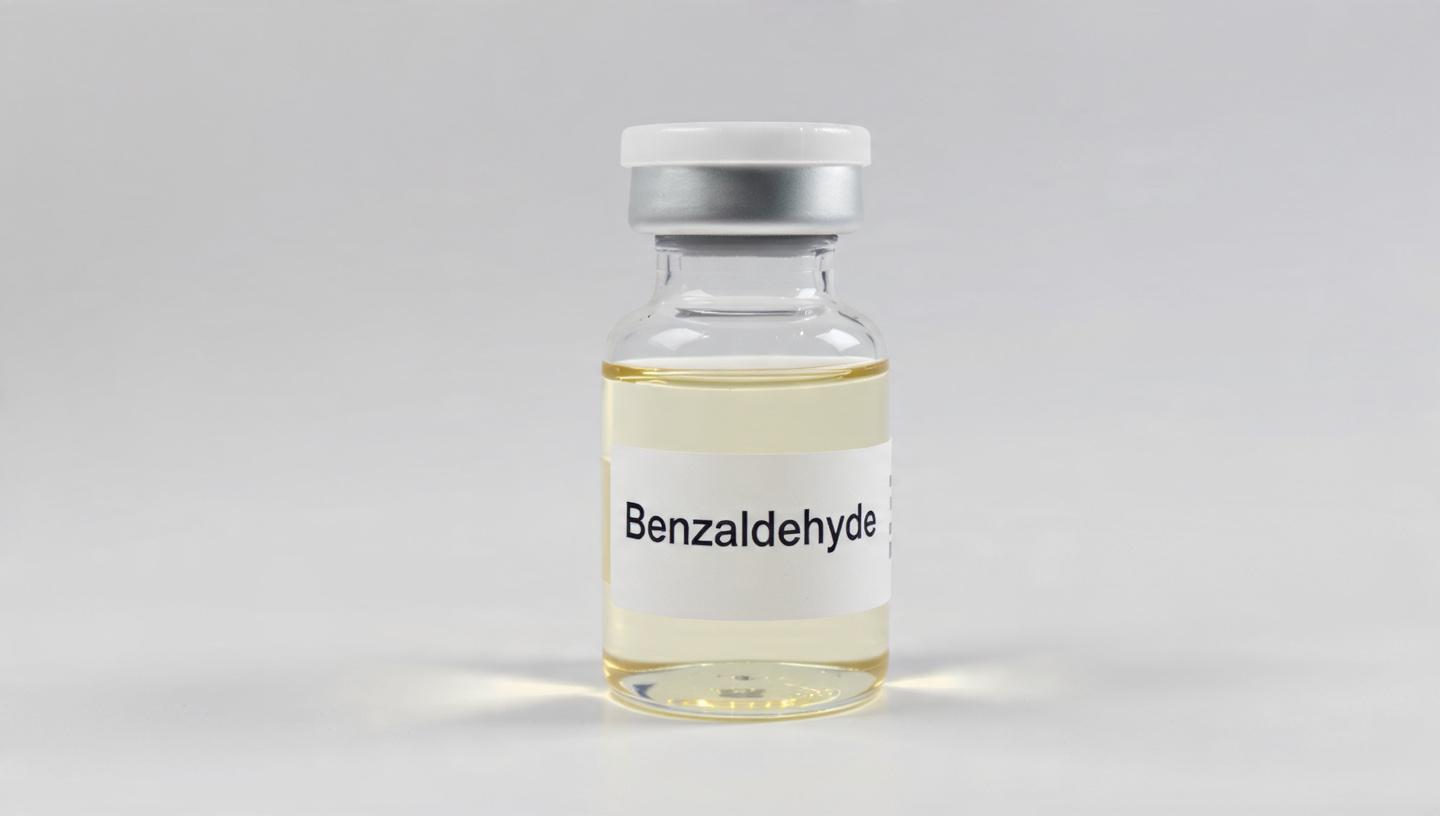
• Benzaldehyde Prices Overview: Understanding Market Movement and Demand

    Benzaldehyde Prices are an important part of the specialty chemicals market because benzaldehyde is widely used in fragrances, flavoring agents, pharmaceuticals, agrochemicals, and dyes. It is known for its almond-like aroma, but beyond that, it serves as a key intermediate in many chemical processes. Since it connects with both consumer goods and industrial production, changes in benzaldehyde prices often reflect broader supply and demand conditions.


    Read More about it- https://www.price-watch.ai/benzaldehyde-prices/
    Benzaldehyde Prices Overview: Understanding Market Movement and Demand Benzaldehyde Prices are an important part of the specialty chemicals market because benzaldehyde is widely used in fragrances, flavoring agents, pharmaceuticals, agrochemicals, and dyes. It is known for its almond-like aroma, but beyond that, it serves as a key intermediate in many chemical processes. Since it connects with both consumer goods and industrial production, changes in benzaldehyde prices often reflect broader supply and demand conditions. Read More about it- https://www.price-watch.ai/benzaldehyde-prices/
    0 Σχόλια 0 Μοιράστηκε 389 Views 0 Προεπισκόπηση
  • Methyl Tert-Butyl Ether (MTBE) Price Trend and Forecast: Impact of Crude Oil Prices, Production Costs, Trade Flows, and Regulatory Factors

    Methyl Tert Butyl Ether Price Trend commonly known as MTBE, is a chemical mainly used as a fuel additive in petrol. Its primary role is to improve fuel quality by increasing octane levels and helping engines run more smoothly. Over the years, MTBE has become closely linked to the energy and fuel sector, which means its price trend often moves in line with changes in oil markets, refinery operations, and fuel demand. Understanding the Methyl Tert Butyl Ether price trend is important for manufacturers, fuel blenders, traders, and even policymakers who track fuel economics.

    Please Submit Your Query for Methyl Tert Butyl Ether Price Trend, demand-supply, suppliers, market analysis:https://www.price-watch.ai/book-a-demo/

    Key Factors Influencing the Methyl Tert Butyl Ether Price Trend

    The price of MTBE is shaped by a mix of raw material costs, energy prices, and market demand. One of the biggest influences is crude oil, as MTBE is derived from petrochemical processes. When crude oil prices rise, production costs tend to increase, which usually pushes MTBE prices upward. On the other hand, when oil prices fall, MTBE often becomes cheaper, provided demand remains stable.
    Another important factor is refinery activity. MTBE is often produced in integrated refinery and petrochemical complexes. If refineries reduce output due to maintenance, shutdowns, or lower fuel demand, the supply of MTBE can tighten. This supply pressure can cause prices to rise even if raw material costs remain unchanged. Seasonal fuel demand, especially during peak driving months, also plays a role in shaping price movements.

    Role of Fuel Demand and Blending Requirements

    Fuel consumption patterns have a direct impact on the Methyl Tert Butyl Ether price trend. During periods of high fuel usage, such as summer travel seasons or times of economic growth, demand for fuel additives like MTBE tends to increase. Fuel blenders rely on MTBE to meet octane requirements efficiently, which boosts buying interest and supports higher prices.
    In contrast, during economic slowdowns or periods of reduced vehicle usage, fuel demand weakens. This often leads to lower MTBE consumption, creating excess supply in the market. When this happens, prices usually soften as producers and sellers try to clear inventories. These demand-driven cycles are a regular feature of the MTBE market and explain many short-term price fluctuations.

    Impact of Environmental Policies and Regulations

    Environmental regulations have played a significant role in shaping the long-term Methyl Tert Butyl Ether price trend. In some regions, concerns about groundwater contamination have led to restrictions or reduced usage of MTBE. When such regulations are announced or tightened, demand can drop suddenly, putting downward pressure on prices.
    However, in regions where MTBE is still widely accepted and used, stable regulatory frameworks help support consistent demand. Changes in fuel standards, blending mandates, or environmental rules often create uncertainty in the market, and this uncertainty itself can influence prices as buyers and sellers adjust their strategies.

    Conclusion

    The Methyl Tert Butyl Ether price trend reflects a complex mix of oil prices, fuel demand, refinery operations, regulations, and global trade factors. While short-term movements can be influenced by seasonal and operational changes, long-term trends depend on broader energy market developments. By understanding these basic drivers, businesses and industry observers can better interpret price changes and make more informed decisions in the MTBE market.

    Please Submit Your Query for Methyl Tert Butyl Ether Price Trend, demand-supply, suppliers, market analysis:https://www.price-watch.ai/book-a-demo/

    About Price Watch™ AI

    Price-Watch AI is an India-based, independent raw material price reporting agency that provides real-time price forecasts and data-driven insights into global raw material markets. Price-Watch AI specializes in tracking raw material prices, analyzing market trends, and delivering timely updates on plant shutdowns, supply disruptions, capacity expansions, and demand-supply dynamics. The Price-Watch AI platform empowers manufacturers, traders, and procurement professionals to make faster, smarter decisions. Leveraging AI-powered forecasting and over a decade of historical data, Price-Watch AI transforms market volatility into actionable opportunity.

    Futura Tech Park,
    C Block, 8th floor 334,
    Old Mahabalipuram Road,
    Sholinganallur, Chennai,
    Tamil Nadu, Pincode - 600119.

    LinkedIn: https://www.linkedin.com/company/price-watch-ai/
    Facebook: https://www.facebook.com/people/Price-Watch/61568490385598/
    Twitter: https://x.com/pricewatchai
    Website: https://www.price-watch.ai/

    Methyl Tert-Butyl Ether (MTBE) Price Trend and Forecast: Impact of Crude Oil Prices, Production Costs, Trade Flows, and Regulatory Factors Methyl Tert Butyl Ether Price Trend commonly known as MTBE, is a chemical mainly used as a fuel additive in petrol. Its primary role is to improve fuel quality by increasing octane levels and helping engines run more smoothly. Over the years, MTBE has become closely linked to the energy and fuel sector, which means its price trend often moves in line with changes in oil markets, refinery operations, and fuel demand. Understanding the Methyl Tert Butyl Ether price trend is important for manufacturers, fuel blenders, traders, and even policymakers who track fuel economics. 👉 👉 👉 Please Submit Your Query for Methyl Tert Butyl Ether Price Trend, demand-supply, suppliers, market analysis:https://www.price-watch.ai/book-a-demo/ Key Factors Influencing the Methyl Tert Butyl Ether Price Trend The price of MTBE is shaped by a mix of raw material costs, energy prices, and market demand. One of the biggest influences is crude oil, as MTBE is derived from petrochemical processes. When crude oil prices rise, production costs tend to increase, which usually pushes MTBE prices upward. On the other hand, when oil prices fall, MTBE often becomes cheaper, provided demand remains stable. Another important factor is refinery activity. MTBE is often produced in integrated refinery and petrochemical complexes. If refineries reduce output due to maintenance, shutdowns, or lower fuel demand, the supply of MTBE can tighten. This supply pressure can cause prices to rise even if raw material costs remain unchanged. Seasonal fuel demand, especially during peak driving months, also plays a role in shaping price movements. Role of Fuel Demand and Blending Requirements Fuel consumption patterns have a direct impact on the Methyl Tert Butyl Ether price trend. During periods of high fuel usage, such as summer travel seasons or times of economic growth, demand for fuel additives like MTBE tends to increase. Fuel blenders rely on MTBE to meet octane requirements efficiently, which boosts buying interest and supports higher prices. In contrast, during economic slowdowns or periods of reduced vehicle usage, fuel demand weakens. This often leads to lower MTBE consumption, creating excess supply in the market. When this happens, prices usually soften as producers and sellers try to clear inventories. These demand-driven cycles are a regular feature of the MTBE market and explain many short-term price fluctuations. Impact of Environmental Policies and Regulations Environmental regulations have played a significant role in shaping the long-term Methyl Tert Butyl Ether price trend. In some regions, concerns about groundwater contamination have led to restrictions or reduced usage of MTBE. When such regulations are announced or tightened, demand can drop suddenly, putting downward pressure on prices. However, in regions where MTBE is still widely accepted and used, stable regulatory frameworks help support consistent demand. Changes in fuel standards, blending mandates, or environmental rules often create uncertainty in the market, and this uncertainty itself can influence prices as buyers and sellers adjust their strategies. Conclusion The Methyl Tert Butyl Ether price trend reflects a complex mix of oil prices, fuel demand, refinery operations, regulations, and global trade factors. While short-term movements can be influenced by seasonal and operational changes, long-term trends depend on broader energy market developments. By understanding these basic drivers, businesses and industry observers can better interpret price changes and make more informed decisions in the MTBE market. 👉 👉 👉 Please Submit Your Query for Methyl Tert Butyl Ether Price Trend, demand-supply, suppliers, market analysis:https://www.price-watch.ai/book-a-demo/ About Price Watch™ AI Price-Watch AI is an India-based, independent raw material price reporting agency that provides real-time price forecasts and data-driven insights into global raw material markets. Price-Watch AI specializes in tracking raw material prices, analyzing market trends, and delivering timely updates on plant shutdowns, supply disruptions, capacity expansions, and demand-supply dynamics. The Price-Watch AI platform empowers manufacturers, traders, and procurement professionals to make faster, smarter decisions. Leveraging AI-powered forecasting and over a decade of historical data, Price-Watch AI transforms market volatility into actionable opportunity. Futura Tech Park, C Block, 8th floor 334, Old Mahabalipuram Road, Sholinganallur, Chennai, Tamil Nadu, Pincode - 600119. LinkedIn: https://www.linkedin.com/company/price-watch-ai/ Facebook: https://www.facebook.com/people/Price-Watch/61568490385598/ Twitter: https://x.com/pricewatchai Website: https://www.price-watch.ai/

    0 Σχόλια 0 Μοιράστηκε 377 Views 0 Προεπισκόπηση
  • Long-Term Price Trend Review and Forecast of Methyl Isobutyl Ketone: Historical Data, Regional Variations, Industrial Demand Impact, and Strategic Insights for Stakeholders

    The Methyl Isobutyl Ketone price trend is something many people across manufacturing, coatings, and chemical industries keep an eye on, even if they do not track prices every day. Methyl Isobutyl Ketone, often called MIBK, is widely used as a solvent, especially in paints, rubber processing, and surface coatings. Because it is so closely linked to industrial activity, its price tends to move in ways that reflect broader market behavior and real-world demand.
    When industries are active and production lines are running at full speed, the demand for MIBK usually increases. This often leads to firm or rising prices. On the other hand, when factories slow down or projects are delayed, buyers become cautious, and prices may soften. These movements are not sudden in most cases but happen gradually, following the overall mood of the market.

    Please Submit Your Query for Methyl Isobutyl Ketone Price Trend, demand-supply, suppliers, market analysis:https://www.price-watch.ai/book-a-demo/

    Key Factors Influencing Methyl Isobutyl Ketone Price Trend

    One of the strongest influences on the Methyl Isobutyl Ketone price trend is the cost of raw materials. MIBK is derived from petrochemical processes, so any changes in crude oil prices or feedstock availability can directly affect production costs. When energy prices rise, manufacturers often face higher operating expenses, which can push MIBK prices upward.
    Supply conditions also play a big role. If production plants face maintenance shutdowns or unexpected disruptions, supply can tighten. Even a short-term reduction in availability may lead to higher prices, especially if demand remains stable. On the other hand, when production is smooth and inventories are comfortable, prices tend to stay steady or move slightly downward.

    Demand Patterns and Market Behavior

    Demand is another important piece of the Methyl Isobutyl Ketone price trend story. Industries such as automotive coatings, construction, and electronics rely on MIBK for various applications. When these sectors grow, the demand for solvents usually rises along with them. Seasonal demand can also influence prices, as construction and painting activities often increase during certain times of the year.
    Buyer behavior matters as well. When buyers expect prices to rise, they may place larger orders in advance, which can tighten supply in the short term. When expectations are weak, buyers often delay purchases, leading to lower demand pressure and more stable pricing.

    Regional Differences in Methyl Isobutyl Ketone Price Trend

    The Methyl Isobutyl Ketone price trend can vary from one region to another. Local production capacity, import dependence, and transportation costs all affect regional pricing. In areas with strong domestic production, prices may be more stable and less affected by global supply disruptions. In contrast, regions that rely heavily on imports may see sharper price movements due to shipping costs or trade-related issues.
    Currency fluctuations also play a role in international markets. A weaker local currency can make imports more expensive, pushing prices higher even if global market conditions remain unchanged. This is often felt by small and medium buyers who depend on imported material.

    Please Submit Your Query for Methyl Isobutyl Ketone Price Trend, demand-supply, suppliers, market analysis:https://www.price-watch.ai/book-a-demo/

    About Price Watch™ AI

    Price-Watch AI is an India-based, independent raw material price reporting agency that provides real-time price forecasts and data-driven insights into global raw material markets. Price-Watch AI specializes in tracking raw material prices, analyzing market trends, and delivering timely updates on plant shutdowns, supply disruptions, capacity expansions, and demand-supply dynamics. The Price-Watch AI platform empowers manufacturers, traders, and procurement professionals to make faster, smarter decisions. Leveraging AI-powered forecasting and over a decade of historical data, Price-Watch AI transforms market volatility into actionable opportunity.

    Futura Tech Park,
    C Block, 8th floor 334,
    Old Mahabalipuram Road,
    Sholinganallur, Chennai,
    Tamil Nadu, Pincode - 600119.

    LinkedIn: https://www.linkedin.com/company/price-watch-ai/
    Facebook: https://www.facebook.com/people/Price-Watch/61568490385598/
    Twitter: https://x.com/pricewatchai
    Website: https://www.price-watch.ai/

    Long-Term Price Trend Review and Forecast of Methyl Isobutyl Ketone: Historical Data, Regional Variations, Industrial Demand Impact, and Strategic Insights for Stakeholders The Methyl Isobutyl Ketone price trend is something many people across manufacturing, coatings, and chemical industries keep an eye on, even if they do not track prices every day. Methyl Isobutyl Ketone, often called MIBK, is widely used as a solvent, especially in paints, rubber processing, and surface coatings. Because it is so closely linked to industrial activity, its price tends to move in ways that reflect broader market behavior and real-world demand. When industries are active and production lines are running at full speed, the demand for MIBK usually increases. This often leads to firm or rising prices. On the other hand, when factories slow down or projects are delayed, buyers become cautious, and prices may soften. These movements are not sudden in most cases but happen gradually, following the overall mood of the market. 👉 👉 👉 Please Submit Your Query for Methyl Isobutyl Ketone Price Trend, demand-supply, suppliers, market analysis:https://www.price-watch.ai/book-a-demo/ Key Factors Influencing Methyl Isobutyl Ketone Price Trend One of the strongest influences on the Methyl Isobutyl Ketone price trend is the cost of raw materials. MIBK is derived from petrochemical processes, so any changes in crude oil prices or feedstock availability can directly affect production costs. When energy prices rise, manufacturers often face higher operating expenses, which can push MIBK prices upward. Supply conditions also play a big role. If production plants face maintenance shutdowns or unexpected disruptions, supply can tighten. Even a short-term reduction in availability may lead to higher prices, especially if demand remains stable. On the other hand, when production is smooth and inventories are comfortable, prices tend to stay steady or move slightly downward. Demand Patterns and Market Behavior Demand is another important piece of the Methyl Isobutyl Ketone price trend story. Industries such as automotive coatings, construction, and electronics rely on MIBK for various applications. When these sectors grow, the demand for solvents usually rises along with them. Seasonal demand can also influence prices, as construction and painting activities often increase during certain times of the year. Buyer behavior matters as well. When buyers expect prices to rise, they may place larger orders in advance, which can tighten supply in the short term. When expectations are weak, buyers often delay purchases, leading to lower demand pressure and more stable pricing. Regional Differences in Methyl Isobutyl Ketone Price Trend The Methyl Isobutyl Ketone price trend can vary from one region to another. Local production capacity, import dependence, and transportation costs all affect regional pricing. In areas with strong domestic production, prices may be more stable and less affected by global supply disruptions. In contrast, regions that rely heavily on imports may see sharper price movements due to shipping costs or trade-related issues. Currency fluctuations also play a role in international markets. A weaker local currency can make imports more expensive, pushing prices higher even if global market conditions remain unchanged. This is often felt by small and medium buyers who depend on imported material. 👉 👉 👉 Please Submit Your Query for Methyl Isobutyl Ketone Price Trend, demand-supply, suppliers, market analysis:https://www.price-watch.ai/book-a-demo/ About Price Watch™ AI Price-Watch AI is an India-based, independent raw material price reporting agency that provides real-time price forecasts and data-driven insights into global raw material markets. Price-Watch AI specializes in tracking raw material prices, analyzing market trends, and delivering timely updates on plant shutdowns, supply disruptions, capacity expansions, and demand-supply dynamics. The Price-Watch AI platform empowers manufacturers, traders, and procurement professionals to make faster, smarter decisions. Leveraging AI-powered forecasting and over a decade of historical data, Price-Watch AI transforms market volatility into actionable opportunity. Futura Tech Park, C Block, 8th floor 334, Old Mahabalipuram Road, Sholinganallur, Chennai, Tamil Nadu, Pincode - 600119. LinkedIn: https://www.linkedin.com/company/price-watch-ai/ Facebook: https://www.facebook.com/people/Price-Watch/61568490385598/ Twitter: https://x.com/pricewatchai Website: https://www.price-watch.ai/
    0 Σχόλια 0 Μοιράστηκε 346 Views 0 Προεπισκόπηση
  • Understanding the Calcium Carbide Price Trend in the Global Market

    The calcium carbide price trend has gained attention in recent years as industries continue to depend on this important chemical compound. Calcium carbide is mainly used to produce acetylene gas, which plays a key role in metal cutting, welding, and various chemical processes.

    Read More- https://www.price-watch.ai/calcium-carbide-prices/
    Understanding the Calcium Carbide Price Trend in the Global Market The calcium carbide price trend has gained attention in recent years as industries continue to depend on this important chemical compound. Calcium carbide is mainly used to produce acetylene gas, which plays a key role in metal cutting, welding, and various chemical processes. Read More- https://www.price-watch.ai/calcium-carbide-prices/
    0 Σχόλια 0 Μοιράστηκε 118 Views 0 Προεπισκόπηση
  • H Acid Price Trend and Market Intelligence: Raw Material Costs, Industry Demand, Trade Analysis, and Price Forecast


    H Acid is a well-known chemical intermediate that plays an important role in the dyes and pigments industry. It is mainly used in the production of reactive dyes, acid dyes, and some specialty pigments. Because these dyes are widely used in textiles, leather, paper, and inks, the demand for H Acid is closely linked to everyday industries that touch daily life. Over time, the H Acid price trend has shown noticeable ups and downs, influenced by a mix of raw material availability, production costs, regulations, and overall market demand.

    Please Submit Your Query for H Acid Price Trend, demand-supply, suppliers, market analysis:https://www.price-watch.ai/book-a-demo/

    Understanding the H Acid Price Trend

    The price trend of H Acid does not move in a straight line. Instead, it reflects changing market conditions throughout the year. In some periods, prices remain stable due to balanced supply and demand. In other periods, prices rise or fall sharply because of sudden changes in costs or consumption patterns. These movements are common in chemical markets, where even small shifts in raw materials or energy prices can have a visible impact on final product pricing.

    Raw Material and Production Cost Influence

    One of the strongest factors affecting the H Acid price trend is the cost of raw materials. H Acid is produced through chemical processes that rely on specific intermediates, acids, and energy-intensive steps. When raw material prices increase, manufacturers often face higher production costs. This usually leads to an upward pressure on H Acid prices. On the other hand, when raw materials become easily available at lower prices, producers may reduce their selling prices to stay competitive.
    Energy costs also play an important role. Chemical manufacturing depends heavily on electricity, steam, and fuel. Any rise in energy prices directly affects overall production expenses, which then reflects in the market price of H Acid.

    Demand from the Textile and Dye Industry

    Demand patterns strongly shape the H Acid price trend. The textile industry is one of the largest consumers of dyes made from H Acid. During periods of strong textile production, such as before festive seasons or export-driven growth phases, demand for dyes increases. This leads to higher consumption of H Acid and often results in price increases.
    In contrast, when textile production slows due to weak consumer demand, economic uncertainty, or reduced exports, the demand for H Acid also declines. During such times, suppliers may lower prices to clear inventories and attract buyers.

    Impact of Environmental Regulations

    Environmental regulations have become increasingly important in shaping chemical price trends, including H Acid. The production of dye intermediates involves strict waste treatment and emission control requirements. When environmental rules become tighter, manufacturers may need to invest more in pollution control equipment and cleaner technologies. These additional costs often push H Acid prices upward.
    In some cases, regulatory actions can also lead to temporary shutdowns of production units. Such disruptions reduce supply in the market, creating short-term price spikes until production normalizes again.

    Please Submit Your Query for H Acid Price Trend, demand-supply, suppliers, market analysis:https://www.price-watch.ai/book-a-demo/

    𝐀𝐛𝐨𝐮𝐭 𝐏𝐫𝐢𝐜𝐞-𝐖𝐚𝐭𝐜𝐡 𝐀𝐈

    Price-Watch AI is an independent raw material price reporting agency that provides real-time price forecasts and data-driven insights into global raw material markets. Price-Watch AI specializes in tracking raw material prices, analyzing market trends, and delivering timely updates on plant shutdowns, supply disruptions, capacity expansions, and demand-supply dynamics. The Price-Watch AI platform empowers manufacturers, traders, and procurement professionals to make faster, smarter decisions. Leveraging AI-powered forecasting and over a decade of historical data, Price-Watch AI transforms market volatility into actionable opportunity.

    Futura Tech Park,


    C Block, 8th floor 334,


    Old Mahabalipuram Road,


    Sholinganallur, Chennai, Tamil Nadu, Pincode - 600119.

    𝐋𝐢𝐧𝐤𝐞𝐝𝐈𝐧: https://www.linkedin.com/company/price-watch-ai/


    𝐅𝐚𝐜𝐞𝐛𝐨𝐨𝐤: https://www.facebook.com/people/PriceWatch/61568490385598/


    𝐓𝐰𝐢𝐭𝐭𝐞𝐫: https://x.com/pricewatchai


    𝐖𝐞𝐛𝐬𝐢𝐭𝐞: https://www.price-watch.ai/
    H Acid Price Trend and Market Intelligence: Raw Material Costs, Industry Demand, Trade Analysis, and Price Forecast H Acid is a well-known chemical intermediate that plays an important role in the dyes and pigments industry. It is mainly used in the production of reactive dyes, acid dyes, and some specialty pigments. Because these dyes are widely used in textiles, leather, paper, and inks, the demand for H Acid is closely linked to everyday industries that touch daily life. Over time, the H Acid price trend has shown noticeable ups and downs, influenced by a mix of raw material availability, production costs, regulations, and overall market demand. 👉 👉 👉 Please Submit Your Query for H Acid Price Trend, demand-supply, suppliers, market analysis:https://www.price-watch.ai/book-a-demo/ Understanding the H Acid Price Trend The price trend of H Acid does not move in a straight line. Instead, it reflects changing market conditions throughout the year. In some periods, prices remain stable due to balanced supply and demand. In other periods, prices rise or fall sharply because of sudden changes in costs or consumption patterns. These movements are common in chemical markets, where even small shifts in raw materials or energy prices can have a visible impact on final product pricing. Raw Material and Production Cost Influence One of the strongest factors affecting the H Acid price trend is the cost of raw materials. H Acid is produced through chemical processes that rely on specific intermediates, acids, and energy-intensive steps. When raw material prices increase, manufacturers often face higher production costs. This usually leads to an upward pressure on H Acid prices. On the other hand, when raw materials become easily available at lower prices, producers may reduce their selling prices to stay competitive. Energy costs also play an important role. Chemical manufacturing depends heavily on electricity, steam, and fuel. Any rise in energy prices directly affects overall production expenses, which then reflects in the market price of H Acid. Demand from the Textile and Dye Industry Demand patterns strongly shape the H Acid price trend. The textile industry is one of the largest consumers of dyes made from H Acid. During periods of strong textile production, such as before festive seasons or export-driven growth phases, demand for dyes increases. This leads to higher consumption of H Acid and often results in price increases. In contrast, when textile production slows due to weak consumer demand, economic uncertainty, or reduced exports, the demand for H Acid also declines. During such times, suppliers may lower prices to clear inventories and attract buyers. Impact of Environmental Regulations Environmental regulations have become increasingly important in shaping chemical price trends, including H Acid. The production of dye intermediates involves strict waste treatment and emission control requirements. When environmental rules become tighter, manufacturers may need to invest more in pollution control equipment and cleaner technologies. These additional costs often push H Acid prices upward. In some cases, regulatory actions can also lead to temporary shutdowns of production units. Such disruptions reduce supply in the market, creating short-term price spikes until production normalizes again. 👉 👉 👉 Please Submit Your Query for H Acid Price Trend, demand-supply, suppliers, market analysis:https://www.price-watch.ai/book-a-demo/ 𝐀𝐛𝐨𝐮𝐭 𝐏𝐫𝐢𝐜𝐞-𝐖𝐚𝐭𝐜𝐡 𝐀𝐈 Price-Watch AI is an independent raw material price reporting agency that provides real-time price forecasts and data-driven insights into global raw material markets. Price-Watch AI specializes in tracking raw material prices, analyzing market trends, and delivering timely updates on plant shutdowns, supply disruptions, capacity expansions, and demand-supply dynamics. The Price-Watch AI platform empowers manufacturers, traders, and procurement professionals to make faster, smarter decisions. Leveraging AI-powered forecasting and over a decade of historical data, Price-Watch AI transforms market volatility into actionable opportunity. Futura Tech Park, C Block, 8th floor 334, Old Mahabalipuram Road, Sholinganallur, Chennai, Tamil Nadu, Pincode - 600119. 𝐋𝐢𝐧𝐤𝐞𝐝𝐈𝐧: https://www.linkedin.com/company/price-watch-ai/ 𝐅𝐚𝐜𝐞𝐛𝐨𝐨𝐤: https://www.facebook.com/people/PriceWatch/61568490385598/ 𝐓𝐰𝐢𝐭𝐭𝐞𝐫: https://x.com/pricewatchai 𝐖𝐞𝐛𝐬𝐢𝐭𝐞: https://www.price-watch.ai/
    0 Σχόλια 0 Μοιράστηκε 463 Views 0 Προεπισκόπηση
Προωθημένο
Προωθημένο