• CBD Gummies Market Growth Accelerates Amid Rising Plant-Based Wellness Demand

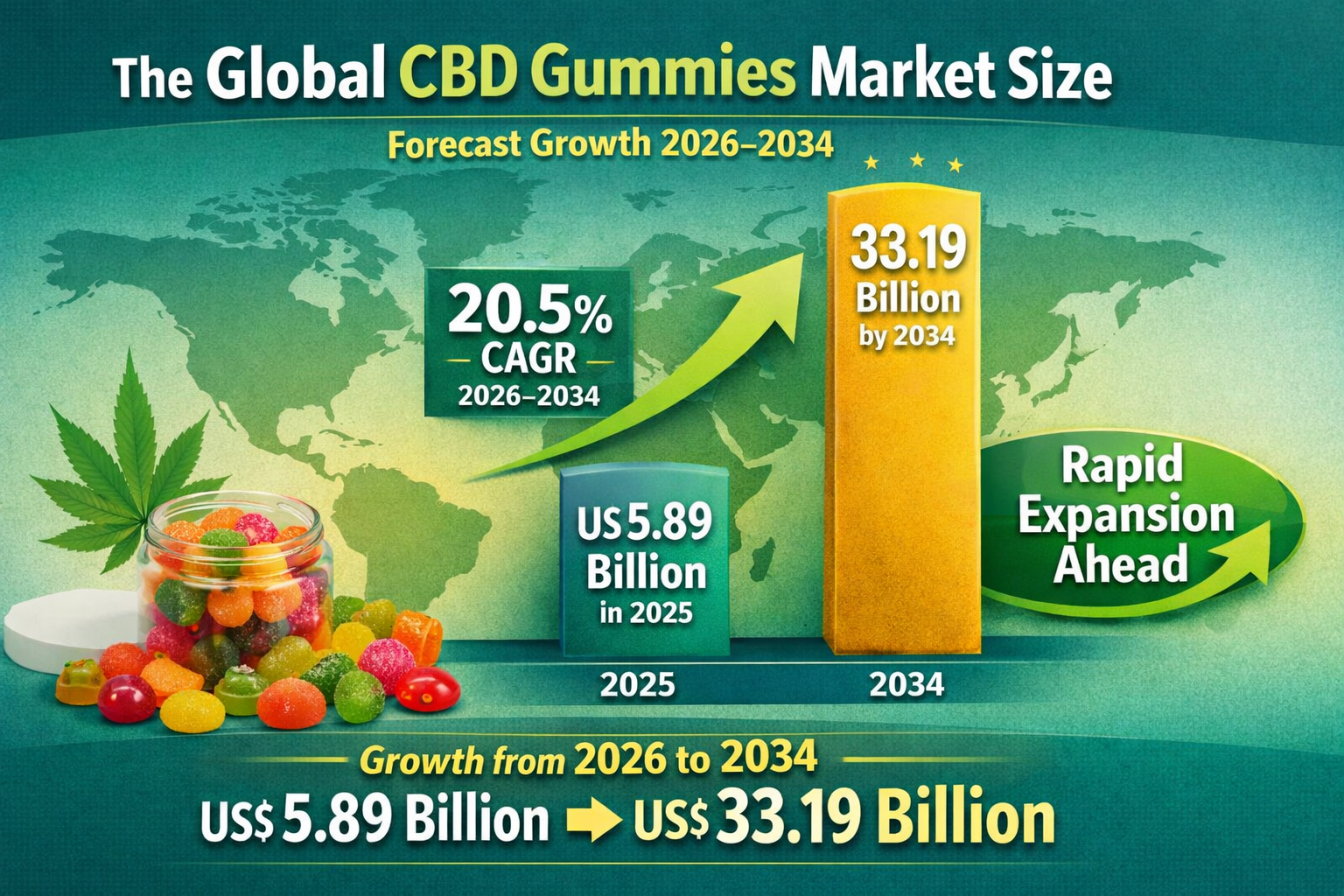
    The global CBD gummies market is experiencing extraordinary expansion, evolving from a niche supplement category to a mainstream wellness phenomenon driven by widening legal acceptance of hemp-derived products, massive consumer shifts toward non-combustible CBD consumption methods, and rising prevalence of anxiety and sleep disorders worldwide. According to comprehensive market research by The Insight Partners, the CBD gummies market was valued at US$ 5.89 billion in 2025 and is projected to reach an impressive US$ 33.19 billion by 2034, registering a remarkable compound annual growth rate (CAGR) of 20.5% during the forecast period from 2026 to 2034.

    Understanding CBD Gummies

    CBD gummies are cannabidiol-infused edible confections offering a familiar, candy-like consumption experience that eliminates the stigma and complexity associated with tinctures, vapes, or topicals. These products provide pre-measured, consistent CBD dosages in discreet formats appealing to "canna-curious" consumers hesitant about traditional cannabis delivery methods. The market encompasses both conventional formulations utilizing standard sweeteners and gelatin with traditional textures and flavor profiles, alongside rapidly expanding sugar-free variants catering to health-conscious consumers, diabetics, and those following specific dietary regimens who seek CBD benefits without caloric intake of traditional confectionery.

    Market Segmentation and Distribution Dynamics

    By category, conventional CBD gummies currently drive primary market volume, leveraging traditional confectionery formats with wide flavor variety and familiar textures. However, sugar-free formulations represent the fastest-growing segment, targeting health-conscious demographics through high-quality sugar substitutes while maintaining therapeutic CBD benefits. This segmentation reflects broader wellness industry trends toward "clean-label" products free from artificial ingredients and excessive sweeteners.

    Request Sample Pages of this Research Study @ https://www.theinsightpartners.com/sample/TIPRE00017402/

    Key Market Drivers and Consumer Trends

    Three primary forces propel CBD gummies market expansion. First, convenience and discreet consumption advantages position gummies as socially acceptable wellness products consumable anywhere without stigma, appealing to general wellness populations seeking stress management and sleep support. Second, diversification of functional formulations incorporating minor cannabinoids including CBN for nighttime recovery and CBG for stress management expands total addressable markets through targeted health outcome positioning. Third, mainstream retail integration through major drugstore chains and grocery outlets significantly lowers purchase barriers through increased visibility and perceived legitimacy, transforming CBD from specialty wellness products to everyday health supplements.

    Regional Market Dynamics

    North America holds the largest global market share, supported by the 2018 Farm Bill establishing federal hemp legality and creating mature producer and retailer ecosystems. The region benefits from high consumer spending power, strong cultural wellness trends, and continuous product innovation in flavors, potencies, and minor cannabinoid blends. Europe represents a significant growing market though constrained by varying Novel Food regulations across EU and UK jurisdictions, with consumer interest rising in stress and anxiety management applications.

    Market Opportunities and Strategic Innovations

    Significant opportunities exist in professional sports and fitness niches positioning CBD gummies as natural recovery aids emphasizing anti-inflammatory benefits and pain management. Cross-border expansion into emerging legal markets in Europe and Latin America offers first-mover advantages as global trade barriers lower. Advanced functional integration combining CBD with vitamins, minerals, and adaptogens creates comprehensive wellness solutions differentiating premium product tiers.

    Key Market Players and Recent Developments

    Leading companies include Dixie Brands, Aurora Cannabis Inc., Canopy Growth Corporation, Sunday Scaries, Diamond CBD, CBD American Shaman, CV Sciences Inc., Medix CBD, and CBDFx. Notable recent developments include CV Sciences' November 2024 acquisition of Extract Labs integrating diverse CBD product lines and GMP-certified facilities, and Cronos Group's November 2025 Lord Jones brand expansion into Canadian markets with premium edible and inhalable innovations.

    CBD Gummies Market Growth Accelerates Amid Rising Plant-Based Wellness Demand The global CBD gummies market is experiencing extraordinary expansion, evolving from a niche supplement category to a mainstream wellness phenomenon driven by widening legal acceptance of hemp-derived products, massive consumer shifts toward non-combustible CBD consumption methods, and rising prevalence of anxiety and sleep disorders worldwide. According to comprehensive market research by The Insight Partners, the CBD gummies market was valued at US$ 5.89 billion in 2025 and is projected to reach an impressive US$ 33.19 billion by 2034, registering a remarkable compound annual growth rate (CAGR) of 20.5% during the forecast period from 2026 to 2034. Understanding CBD Gummies CBD gummies are cannabidiol-infused edible confections offering a familiar, candy-like consumption experience that eliminates the stigma and complexity associated with tinctures, vapes, or topicals. These products provide pre-measured, consistent CBD dosages in discreet formats appealing to "canna-curious" consumers hesitant about traditional cannabis delivery methods. The market encompasses both conventional formulations utilizing standard sweeteners and gelatin with traditional textures and flavor profiles, alongside rapidly expanding sugar-free variants catering to health-conscious consumers, diabetics, and those following specific dietary regimens who seek CBD benefits without caloric intake of traditional confectionery. Market Segmentation and Distribution Dynamics By category, conventional CBD gummies currently drive primary market volume, leveraging traditional confectionery formats with wide flavor variety and familiar textures. However, sugar-free formulations represent the fastest-growing segment, targeting health-conscious demographics through high-quality sugar substitutes while maintaining therapeutic CBD benefits. This segmentation reflects broader wellness industry trends toward "clean-label" products free from artificial ingredients and excessive sweeteners. Request Sample Pages of this Research Study @ https://www.theinsightpartners.com/sample/TIPRE00017402/ Key Market Drivers and Consumer Trends Three primary forces propel CBD gummies market expansion. First, convenience and discreet consumption advantages position gummies as socially acceptable wellness products consumable anywhere without stigma, appealing to general wellness populations seeking stress management and sleep support. Second, diversification of functional formulations incorporating minor cannabinoids including CBN for nighttime recovery and CBG for stress management expands total addressable markets through targeted health outcome positioning. Third, mainstream retail integration through major drugstore chains and grocery outlets significantly lowers purchase barriers through increased visibility and perceived legitimacy, transforming CBD from specialty wellness products to everyday health supplements. Regional Market Dynamics North America holds the largest global market share, supported by the 2018 Farm Bill establishing federal hemp legality and creating mature producer and retailer ecosystems. The region benefits from high consumer spending power, strong cultural wellness trends, and continuous product innovation in flavors, potencies, and minor cannabinoid blends. Europe represents a significant growing market though constrained by varying Novel Food regulations across EU and UK jurisdictions, with consumer interest rising in stress and anxiety management applications. Market Opportunities and Strategic Innovations Significant opportunities exist in professional sports and fitness niches positioning CBD gummies as natural recovery aids emphasizing anti-inflammatory benefits and pain management. Cross-border expansion into emerging legal markets in Europe and Latin America offers first-mover advantages as global trade barriers lower. Advanced functional integration combining CBD with vitamins, minerals, and adaptogens creates comprehensive wellness solutions differentiating premium product tiers. Key Market Players and Recent Developments Leading companies include Dixie Brands, Aurora Cannabis Inc., Canopy Growth Corporation, Sunday Scaries, Diamond CBD, CBD American Shaman, CV Sciences Inc., Medix CBD, and CBDFx. Notable recent developments include CV Sciences' November 2024 acquisition of Extract Labs integrating diverse CBD product lines and GMP-certified facilities, and Cronos Group's November 2025 Lord Jones brand expansion into Canadian markets with premium edible and inhalable innovations.

    Love
    1
    0 Σχόλια 0 Μοιράστηκε 21 Views 0 Προεπισκόπηση
  • Comprehensive Analysis of Global Naphthalene Price Trends: Drivers, Historical Movements, Forecasts, and Market Dynamics Across Key Regions and End-Use Industries

    Naphthalene Price Trend is a familiar chemical for many people, often remembered by its strong smell and use in mothballs. Beyond households, it plays an important role in industries like chemicals, dyes, resins, construction materials, and pharmaceuticals. Because it is widely used across different sectors, changes in the naphthalene price trend attract attention from manufacturers, traders, and buyers alike. Understanding how and why prices move can help businesses plan better and manage costs more effectively.

    Please Submit Your Query for Naphthalene Price Trend, demand-supply, suppliers, market analysis:https://www.price-watch.ai/book-a-demo/

    What Is Naphthalene and Why It Matters

    Naphthalene is mainly derived from coal tar and petroleum-based processes. Its demand depends heavily on industrial activity, especially in construction, textiles, and chemical manufacturing. When these industries grow, the need for naphthalene rises, and when they slow down, demand weakens. This close link between naphthalene prices and overall economic activity makes its price trend a useful indicator of broader market conditions.

    Key Factors Influencing Naphthalene Price Trend

    One of the most important factors affecting the naphthalene price trend is the cost and availability of raw materials. Since coal tar is a major source, fluctuations in coal prices or changes in steel production, where coal tar is a by-product, can directly impact naphthalene supply. If coal tar availability drops, naphthalene production becomes more expensive, pushing prices upward.
    Energy costs also play a big role. Producing and processing naphthalene requires heat and power, so rising electricity or fuel prices often translate into higher production costs. When energy prices fall, producers may have more flexibility to offer competitive pricing.
    Demand from end-use industries is another major driver. For example, strong construction activity increases the use of naphthalene-based products like plasticizers and resins. Similarly, growth in textile and dye industries supports steady demand. When these sectors perform well, prices tend to remain firm or rise. On the other hand, during economic slowdowns or periods of reduced industrial output, naphthalene prices often soften.

    Regional Market Dynamics

    The naphthalene price trend can vary from one region to another due to differences in production capacity, regulations, and consumption patterns. In regions with strong coal-based industries, local supply may be more stable, helping keep prices relatively balanced. In contrast, areas that rely on imports may see more price volatility due to shipping costs, currency fluctuations, and global supply disruptions.
    Environmental regulations also influence regional pricing. Stricter rules on emissions and waste management can increase production costs, especially in countries tightening environmental standards. While these measures are important for sustainability, they can lead to higher naphthalene prices in the short to medium term.

    Conclusion

    The naphthalene price trend is shaped by a mix of raw material availability, energy costs, industrial demand, regional factors, and global trade conditions. While short-term fluctuations are common, understanding these underlying drivers helps explain why prices move the way they do. For businesses that depend on naphthalene, keeping an eye on these trends can support smarter purchasing decisions and better long-term planning.

    Please Submit Your Query for Naphthalene Price Trend, demand-supply, suppliers, market analysis:https://www.price-watch.ai/book-a-demo/

    About Price Watch™ AI

    Price-Watch AI is an India-based, independent raw material price reporting agency that provides real-time price forecasts and data-driven insights into global raw material markets. Price-Watch AI specializes in tracking raw material prices, analyzing market trends, and delivering timely updates on plant shutdowns, supply disruptions, capacity expansions, and demand-supply dynamics. The Price-Watch AI platform empowers manufacturers, traders, and procurement professionals to make faster, smarter decisions. Leveraging AI-powered forecasting and over a decade of historical data, Price-Watch AI transforms market volatility into actionable opportunity.

    Futura Tech Park,
    C Block, 8th floor 334,
    Old Mahabalipuram Road,
    Sholinganallur, Chennai,
    Tamil Nadu, Pincode - 600119.

    LinkedIn: https://www.linkedin.com/company/price-watch-ai/
    Facebook: https://www.facebook.com/people/Price-Watch/61568490385598/
    Twitter: https://x.com/pricewatchai
    Website: https://www.price-watch.ai/
    Comprehensive Analysis of Global Naphthalene Price Trends: Drivers, Historical Movements, Forecasts, and Market Dynamics Across Key Regions and End-Use Industries Naphthalene Price Trend is a familiar chemical for many people, often remembered by its strong smell and use in mothballs. Beyond households, it plays an important role in industries like chemicals, dyes, resins, construction materials, and pharmaceuticals. Because it is widely used across different sectors, changes in the naphthalene price trend attract attention from manufacturers, traders, and buyers alike. Understanding how and why prices move can help businesses plan better and manage costs more effectively. 👉 👉 👉 Please Submit Your Query for Naphthalene Price Trend, demand-supply, suppliers, market analysis:https://www.price-watch.ai/book-a-demo/ What Is Naphthalene and Why It Matters Naphthalene is mainly derived from coal tar and petroleum-based processes. Its demand depends heavily on industrial activity, especially in construction, textiles, and chemical manufacturing. When these industries grow, the need for naphthalene rises, and when they slow down, demand weakens. This close link between naphthalene prices and overall economic activity makes its price trend a useful indicator of broader market conditions. Key Factors Influencing Naphthalene Price Trend One of the most important factors affecting the naphthalene price trend is the cost and availability of raw materials. Since coal tar is a major source, fluctuations in coal prices or changes in steel production, where coal tar is a by-product, can directly impact naphthalene supply. If coal tar availability drops, naphthalene production becomes more expensive, pushing prices upward. Energy costs also play a big role. Producing and processing naphthalene requires heat and power, so rising electricity or fuel prices often translate into higher production costs. When energy prices fall, producers may have more flexibility to offer competitive pricing. Demand from end-use industries is another major driver. For example, strong construction activity increases the use of naphthalene-based products like plasticizers and resins. Similarly, growth in textile and dye industries supports steady demand. When these sectors perform well, prices tend to remain firm or rise. On the other hand, during economic slowdowns or periods of reduced industrial output, naphthalene prices often soften. Regional Market Dynamics The naphthalene price trend can vary from one region to another due to differences in production capacity, regulations, and consumption patterns. In regions with strong coal-based industries, local supply may be more stable, helping keep prices relatively balanced. In contrast, areas that rely on imports may see more price volatility due to shipping costs, currency fluctuations, and global supply disruptions. Environmental regulations also influence regional pricing. Stricter rules on emissions and waste management can increase production costs, especially in countries tightening environmental standards. While these measures are important for sustainability, they can lead to higher naphthalene prices in the short to medium term. Conclusion The naphthalene price trend is shaped by a mix of raw material availability, energy costs, industrial demand, regional factors, and global trade conditions. While short-term fluctuations are common, understanding these underlying drivers helps explain why prices move the way they do. For businesses that depend on naphthalene, keeping an eye on these trends can support smarter purchasing decisions and better long-term planning. 👉 👉 👉 Please Submit Your Query for Naphthalene Price Trend, demand-supply, suppliers, market analysis:https://www.price-watch.ai/book-a-demo/ About Price Watch™ AI Price-Watch AI is an India-based, independent raw material price reporting agency that provides real-time price forecasts and data-driven insights into global raw material markets. Price-Watch AI specializes in tracking raw material prices, analyzing market trends, and delivering timely updates on plant shutdowns, supply disruptions, capacity expansions, and demand-supply dynamics. The Price-Watch AI platform empowers manufacturers, traders, and procurement professionals to make faster, smarter decisions. Leveraging AI-powered forecasting and over a decade of historical data, Price-Watch AI transforms market volatility into actionable opportunity. Futura Tech Park, C Block, 8th floor 334, Old Mahabalipuram Road, Sholinganallur, Chennai, Tamil Nadu, Pincode - 600119. LinkedIn: https://www.linkedin.com/company/price-watch-ai/ Facebook: https://www.facebook.com/people/Price-Watch/61568490385598/ Twitter: https://x.com/pricewatchai Website: https://www.price-watch.ai/
    0 Σχόλια 0 Μοιράστηκε 318 Views 0 Προεπισκόπηση
  • Comprehensive Analysis of N Heptane Price Trends: Historical Patterns, Market Drivers, and Future Forecasts

    N Heptane Price Trend is an important chemical used widely in laboratories, industries, and as a reference solvent in fuel testing. It plays a key role in determining the octane rating of gasoline and is also utilized in chemical synthesis and cleaning applications. Over the years, the price of N-Heptane has seen fluctuations influenced by various market and economic factors. Understanding its price trend can help businesses, investors, and consumers make informed decisions.

    Please Submit Your Query for N-Heptane Price Trend, demand-supply, suppliers, market analysis:https://www.price-watch.ai/book-a-demo/

    Factors Influencing N-Heptane Prices

    Several factors impact the price of N-Heptane. One major factor is crude oil prices. Since N-Heptane is derived from petroleum, any significant change in crude oil prices can directly affect its production cost and market price. When crude oil prices rise, the cost of producing N-Heptane also increases, leading to higher market prices. On the other hand, a drop in crude oil prices can reduce the cost, making N-Heptane more affordable.
    Global demand and supply also play an essential role in determining the price. Industrial growth, especially in the chemical, automotive, and laboratory sectors, increases the demand for N-Heptane. If production cannot meet this growing demand, prices tend to rise. Conversely, if production exceeds demand, prices may drop. Seasonal factors can also influence supply, as maintenance shutdowns in refineries or transportation issues may temporarily limit availability.
    Another important factor is the cost of transportation and logistics. N-Heptane is a flammable and sensitive chemical, so special handling is required during shipping. Any increase in transportation costs due to fuel price hikes or regulatory restrictions can impact the overall price in the market.

    Historical Price Trend

    Looking at the past few years, N-Heptane prices have experienced both upward and downward movements. Typically, periods of higher crude oil prices are associated with rising N-Heptane prices. For example, during times when oil-producing countries faced production cuts or geopolitical tensions affected crude oil supply, N-Heptane prices also increased.

    Conclusion

    The N-Heptane price trend reflects the combined effects of crude oil prices, supply and demand balance, industrial growth, and global trade dynamics. While prices have fluctuated in the past, recent trends show a relatively stable market with moderate upward pressure due to increasing demand. For industries and businesses that rely on N-Heptane, staying informed about these trends is crucial for effective planning and cost management. As the global economy evolves, N-Heptane prices will likely continue to respond to both market conditions and technological advancements in production.

    Please Submit Your Query for N-Heptane Price Trend, demand-supply, suppliers, market analysis:https://www.price-watch.ai/book-a-demo/

    About Price Watch™ AI

    Price-Watch AI is an India-based, independent raw material price reporting agency that provides real-time price forecasts and data-driven insights into global raw material markets. Price-Watch AI specializes in tracking raw material prices, analyzing market trends, and delivering timely updates on plant shutdowns, supply disruptions, capacity expansions, and demand-supply dynamics. The Price-Watch AI platform empowers manufacturers, traders, and procurement professionals to make faster, smarter decisions. Leveraging AI-powered forecasting and over a decade of historical data, Price-Watch AI transforms market volatility into actionable opportunity.

    Futura Tech Park,
    C Block, 8th floor 334,
    Old Mahabalipuram Road,
    Sholinganallur, Chennai,
    Tamil Nadu, Pincode - 600119.

    LinkedIn: https://www.linkedin.com/company/price-watch-ai/
    Facebook: https://www.facebook.com/people/Price-Watch/61568490385598/
    Twitter: https://x.com/pricewatchai
    Website: https://www.price-watch.ai/
    Comprehensive Analysis of N Heptane Price Trends: Historical Patterns, Market Drivers, and Future Forecasts N Heptane Price Trend is an important chemical used widely in laboratories, industries, and as a reference solvent in fuel testing. It plays a key role in determining the octane rating of gasoline and is also utilized in chemical synthesis and cleaning applications. Over the years, the price of N-Heptane has seen fluctuations influenced by various market and economic factors. Understanding its price trend can help businesses, investors, and consumers make informed decisions. 👉 👉 👉 Please Submit Your Query for N-Heptane Price Trend, demand-supply, suppliers, market analysis:https://www.price-watch.ai/book-a-demo/ Factors Influencing N-Heptane Prices Several factors impact the price of N-Heptane. One major factor is crude oil prices. Since N-Heptane is derived from petroleum, any significant change in crude oil prices can directly affect its production cost and market price. When crude oil prices rise, the cost of producing N-Heptane also increases, leading to higher market prices. On the other hand, a drop in crude oil prices can reduce the cost, making N-Heptane more affordable. Global demand and supply also play an essential role in determining the price. Industrial growth, especially in the chemical, automotive, and laboratory sectors, increases the demand for N-Heptane. If production cannot meet this growing demand, prices tend to rise. Conversely, if production exceeds demand, prices may drop. Seasonal factors can also influence supply, as maintenance shutdowns in refineries or transportation issues may temporarily limit availability. Another important factor is the cost of transportation and logistics. N-Heptane is a flammable and sensitive chemical, so special handling is required during shipping. Any increase in transportation costs due to fuel price hikes or regulatory restrictions can impact the overall price in the market. Historical Price Trend Looking at the past few years, N-Heptane prices have experienced both upward and downward movements. Typically, periods of higher crude oil prices are associated with rising N-Heptane prices. For example, during times when oil-producing countries faced production cuts or geopolitical tensions affected crude oil supply, N-Heptane prices also increased. Conclusion The N-Heptane price trend reflects the combined effects of crude oil prices, supply and demand balance, industrial growth, and global trade dynamics. While prices have fluctuated in the past, recent trends show a relatively stable market with moderate upward pressure due to increasing demand. For industries and businesses that rely on N-Heptane, staying informed about these trends is crucial for effective planning and cost management. As the global economy evolves, N-Heptane prices will likely continue to respond to both market conditions and technological advancements in production. 👉 👉 👉 Please Submit Your Query for N-Heptane Price Trend, demand-supply, suppliers, market analysis:https://www.price-watch.ai/book-a-demo/ About Price Watch™ AI Price-Watch AI is an India-based, independent raw material price reporting agency that provides real-time price forecasts and data-driven insights into global raw material markets. Price-Watch AI specializes in tracking raw material prices, analyzing market trends, and delivering timely updates on plant shutdowns, supply disruptions, capacity expansions, and demand-supply dynamics. The Price-Watch AI platform empowers manufacturers, traders, and procurement professionals to make faster, smarter decisions. Leveraging AI-powered forecasting and over a decade of historical data, Price-Watch AI transforms market volatility into actionable opportunity. Futura Tech Park, C Block, 8th floor 334, Old Mahabalipuram Road, Sholinganallur, Chennai, Tamil Nadu, Pincode - 600119. LinkedIn: https://www.linkedin.com/company/price-watch-ai/ Facebook: https://www.facebook.com/people/Price-Watch/61568490385598/ Twitter: https://x.com/pricewatchai Website: https://www.price-watch.ai/
    0 Σχόλια 0 Μοιράστηκε 138 Views 0 Προεπισκόπηση
  • Methyl Tert-Butyl Ether (MTBE) Price Trend and Forecast: Impact of Crude Oil Prices, Production Costs, Trade Flows, and Regulatory Factors

    Methyl Tert Butyl Ether Price Trend commonly known as MTBE, is a chemical mainly used as a fuel additive in petrol. Its primary role is to improve fuel quality by increasing octane levels and helping engines run more smoothly. Over the years, MTBE has become closely linked to the energy and fuel sector, which means its price trend often moves in line with changes in oil markets, refinery operations, and fuel demand. Understanding the Methyl Tert Butyl Ether price trend is important for manufacturers, fuel blenders, traders, and even policymakers who track fuel economics.

    Please Submit Your Query for Methyl Tert Butyl Ether Price Trend, demand-supply, suppliers, market analysis:https://www.price-watch.ai/book-a-demo/

    Key Factors Influencing the Methyl Tert Butyl Ether Price Trend

    The price of MTBE is shaped by a mix of raw material costs, energy prices, and market demand. One of the biggest influences is crude oil, as MTBE is derived from petrochemical processes. When crude oil prices rise, production costs tend to increase, which usually pushes MTBE prices upward. On the other hand, when oil prices fall, MTBE often becomes cheaper, provided demand remains stable.
    Another important factor is refinery activity. MTBE is often produced in integrated refinery and petrochemical complexes. If refineries reduce output due to maintenance, shutdowns, or lower fuel demand, the supply of MTBE can tighten. This supply pressure can cause prices to rise even if raw material costs remain unchanged. Seasonal fuel demand, especially during peak driving months, also plays a role in shaping price movements.

    Role of Fuel Demand and Blending Requirements

    Fuel consumption patterns have a direct impact on the Methyl Tert Butyl Ether price trend. During periods of high fuel usage, such as summer travel seasons or times of economic growth, demand for fuel additives like MTBE tends to increase. Fuel blenders rely on MTBE to meet octane requirements efficiently, which boosts buying interest and supports higher prices.
    In contrast, during economic slowdowns or periods of reduced vehicle usage, fuel demand weakens. This often leads to lower MTBE consumption, creating excess supply in the market. When this happens, prices usually soften as producers and sellers try to clear inventories. These demand-driven cycles are a regular feature of the MTBE market and explain many short-term price fluctuations.

    Impact of Environmental Policies and Regulations

    Environmental regulations have played a significant role in shaping the long-term Methyl Tert Butyl Ether price trend. In some regions, concerns about groundwater contamination have led to restrictions or reduced usage of MTBE. When such regulations are announced or tightened, demand can drop suddenly, putting downward pressure on prices.
    However, in regions where MTBE is still widely accepted and used, stable regulatory frameworks help support consistent demand. Changes in fuel standards, blending mandates, or environmental rules often create uncertainty in the market, and this uncertainty itself can influence prices as buyers and sellers adjust their strategies.

    Conclusion

    The Methyl Tert Butyl Ether price trend reflects a complex mix of oil prices, fuel demand, refinery operations, regulations, and global trade factors. While short-term movements can be influenced by seasonal and operational changes, long-term trends depend on broader energy market developments. By understanding these basic drivers, businesses and industry observers can better interpret price changes and make more informed decisions in the MTBE market.

    Please Submit Your Query for Methyl Tert Butyl Ether Price Trend, demand-supply, suppliers, market analysis:https://www.price-watch.ai/book-a-demo/

    About Price Watch™ AI

    Price-Watch AI is an India-based, independent raw material price reporting agency that provides real-time price forecasts and data-driven insights into global raw material markets. Price-Watch AI specializes in tracking raw material prices, analyzing market trends, and delivering timely updates on plant shutdowns, supply disruptions, capacity expansions, and demand-supply dynamics. The Price-Watch AI platform empowers manufacturers, traders, and procurement professionals to make faster, smarter decisions. Leveraging AI-powered forecasting and over a decade of historical data, Price-Watch AI transforms market volatility into actionable opportunity.

    Futura Tech Park,
    C Block, 8th floor 334,
    Old Mahabalipuram Road,
    Sholinganallur, Chennai,
    Tamil Nadu, Pincode - 600119.

    LinkedIn: https://www.linkedin.com/company/price-watch-ai/
    Facebook: https://www.facebook.com/people/Price-Watch/61568490385598/
    Twitter: https://x.com/pricewatchai
    Website: https://www.price-watch.ai/
    Methyl Tert-Butyl Ether (MTBE) Price Trend and Forecast: Impact of Crude Oil Prices, Production Costs, Trade Flows, and Regulatory Factors Methyl Tert Butyl Ether Price Trend commonly known as MTBE, is a chemical mainly used as a fuel additive in petrol. Its primary role is to improve fuel quality by increasing octane levels and helping engines run more smoothly. Over the years, MTBE has become closely linked to the energy and fuel sector, which means its price trend often moves in line with changes in oil markets, refinery operations, and fuel demand. Understanding the Methyl Tert Butyl Ether price trend is important for manufacturers, fuel blenders, traders, and even policymakers who track fuel economics. 👉 👉 👉 Please Submit Your Query for Methyl Tert Butyl Ether Price Trend, demand-supply, suppliers, market analysis:https://www.price-watch.ai/book-a-demo/ Key Factors Influencing the Methyl Tert Butyl Ether Price Trend The price of MTBE is shaped by a mix of raw material costs, energy prices, and market demand. One of the biggest influences is crude oil, as MTBE is derived from petrochemical processes. When crude oil prices rise, production costs tend to increase, which usually pushes MTBE prices upward. On the other hand, when oil prices fall, MTBE often becomes cheaper, provided demand remains stable. Another important factor is refinery activity. MTBE is often produced in integrated refinery and petrochemical complexes. If refineries reduce output due to maintenance, shutdowns, or lower fuel demand, the supply of MTBE can tighten. This supply pressure can cause prices to rise even if raw material costs remain unchanged. Seasonal fuel demand, especially during peak driving months, also plays a role in shaping price movements. Role of Fuel Demand and Blending Requirements Fuel consumption patterns have a direct impact on the Methyl Tert Butyl Ether price trend. During periods of high fuel usage, such as summer travel seasons or times of economic growth, demand for fuel additives like MTBE tends to increase. Fuel blenders rely on MTBE to meet octane requirements efficiently, which boosts buying interest and supports higher prices. In contrast, during economic slowdowns or periods of reduced vehicle usage, fuel demand weakens. This often leads to lower MTBE consumption, creating excess supply in the market. When this happens, prices usually soften as producers and sellers try to clear inventories. These demand-driven cycles are a regular feature of the MTBE market and explain many short-term price fluctuations. Impact of Environmental Policies and Regulations Environmental regulations have played a significant role in shaping the long-term Methyl Tert Butyl Ether price trend. In some regions, concerns about groundwater contamination have led to restrictions or reduced usage of MTBE. When such regulations are announced or tightened, demand can drop suddenly, putting downward pressure on prices. However, in regions where MTBE is still widely accepted and used, stable regulatory frameworks help support consistent demand. Changes in fuel standards, blending mandates, or environmental rules often create uncertainty in the market, and this uncertainty itself can influence prices as buyers and sellers adjust their strategies. Conclusion The Methyl Tert Butyl Ether price trend reflects a complex mix of oil prices, fuel demand, refinery operations, regulations, and global trade factors. While short-term movements can be influenced by seasonal and operational changes, long-term trends depend on broader energy market developments. By understanding these basic drivers, businesses and industry observers can better interpret price changes and make more informed decisions in the MTBE market. 👉 👉 👉 Please Submit Your Query for Methyl Tert Butyl Ether Price Trend, demand-supply, suppliers, market analysis:https://www.price-watch.ai/book-a-demo/ About Price Watch™ AI Price-Watch AI is an India-based, independent raw material price reporting agency that provides real-time price forecasts and data-driven insights into global raw material markets. Price-Watch AI specializes in tracking raw material prices, analyzing market trends, and delivering timely updates on plant shutdowns, supply disruptions, capacity expansions, and demand-supply dynamics. The Price-Watch AI platform empowers manufacturers, traders, and procurement professionals to make faster, smarter decisions. Leveraging AI-powered forecasting and over a decade of historical data, Price-Watch AI transforms market volatility into actionable opportunity. Futura Tech Park, C Block, 8th floor 334, Old Mahabalipuram Road, Sholinganallur, Chennai, Tamil Nadu, Pincode - 600119. LinkedIn: https://www.linkedin.com/company/price-watch-ai/ Facebook: https://www.facebook.com/people/Price-Watch/61568490385598/ Twitter: https://x.com/pricewatchai Website: https://www.price-watch.ai/
    0 Σχόλια 0 Μοιράστηκε 123 Views 0 Προεπισκόπηση
  • Global Methyl N-Amyl Ketone Price Trend Report: Analysis of Pricing Fluctuations, Key Market Drivers, Raw Material Cost Inputs, and Strategic Insights for Producers and Buyers

    Methyl N-Amyl Ketone Price Trend is a chemical solvent that quietly plays an important role in many everyday industries. It is commonly used in coatings, adhesives, inks, and cleaning applications, especially where slow evaporation and strong solvency are needed. Because it sits within the broader chemical and solvent market, its price trend usually reflects a mix of raw material costs, industrial demand, supply chain conditions, and overall economic movement. Understanding the Methyl N-Amyl Ketone price trend does not require technical expertise; it can be viewed through simple market behavior and common business experience.

    Please Submit Your Query for Methyl N-Amyl Ketone Price Trend, demand-supply, suppliers, market analysis:https://www.price-watch.ai/book-a-demo/

    Market Basics Behind Methyl N-Amyl Ketone Prices

    At its core, the price of Methyl N-Amyl Ketone is shaped by how much it costs to produce and how much buyers are willing to pay. Production depends heavily on petrochemical-based raw materials, which means crude oil prices often have an indirect but noticeable influence. When oil prices rise, chemical manufacturers usually face higher input costs, and this pressure often moves downstream into solvent pricing. On the other hand, when energy and feedstock prices are stable or declining, Methyl N-Amyl Ketone prices tend to soften or move sideways.
    Manufacturing scale also matters. This chemical is not produced in the same volumes as some widely used solvents, so smaller production runs can make prices more sensitive to changes in demand or supply disruptions. Even a modest change in factory output or maintenance shutdowns can influence market availability and pricing.

    Demand Patterns and Industrial Usage Impact

    Demand is another strong driver in the Methyl N-Amyl Ketone price trend. Industries such as paints and coatings are among the biggest consumers, and their performance often reflects construction activity, automotive production, and infrastructure development. When these sectors are growing, demand for solvents increases, pushing prices upward. During slower economic periods, manufacturers may reduce production, leading to softer demand and more stable or lower prices.
    Seasonal demand can also be seen in some regions. For example, construction and industrial painting activities may slow during extreme weather conditions, temporarily easing demand. These short-term demand shifts often cause minor price fluctuations rather than dramatic changes, but they still contribute to the overall trend.

    Role of Supply Chains and Logistics

    Supply chain conditions have become increasingly important in recent years. Transportation costs, port congestion, and availability of shipping containers can all affect the final market price of Methyl N-Amyl Ketone. Even when production costs remain stable, higher logistics expenses can push prices upward for buyers.
    Regional availability plays a role as well. Some markets rely on imports, making them more exposed to global trade disruptions and currency fluctuations. When local currency weakens against major trading currencies, import costs rise, and prices often follow. In contrast, regions with domestic production tend to see more stable pricing unless raw material costs change sharply.

    Please Submit Your Query for Methyl N-Amyl Ketone Price Trend, demand-supply, suppliers, market analysis:https://www.price-watch.ai/book-a-demo/

    About Price Watch™ AI

    Price-Watch AI is an India-based, independent raw material price reporting agency that provides real-time price forecasts and data-driven insights into global raw material markets. Price-Watch AI specializes in tracking raw material prices, analyzing market trends, and delivering timely updates on plant shutdowns, supply disruptions, capacity expansions, and demand-supply dynamics. The Price-Watch AI platform empowers manufacturers, traders, and procurement professionals to make faster, smarter decisions. Leveraging AI-powered forecasting and over a decade of historical data, Price-Watch AI transforms market volatility into actionable opportunity.

    Futura Tech Park,
    C Block, 8th floor 334,
    Old Mahabalipuram Road,
    Sholinganallur, Chennai,
    Tamil Nadu, Pincode - 600119.

    LinkedIn: https://www.linkedin.com/company/price-watch-ai/
    Facebook: https://www.facebook.com/people/Price-Watch/61568490385598/
    Twitter: https://x.com/pricewatchai
    Website: https://www.price-watch.ai/
    Global Methyl N-Amyl Ketone Price Trend Report: Analysis of Pricing Fluctuations, Key Market Drivers, Raw Material Cost Inputs, and Strategic Insights for Producers and Buyers Methyl N-Amyl Ketone Price Trend is a chemical solvent that quietly plays an important role in many everyday industries. It is commonly used in coatings, adhesives, inks, and cleaning applications, especially where slow evaporation and strong solvency are needed. Because it sits within the broader chemical and solvent market, its price trend usually reflects a mix of raw material costs, industrial demand, supply chain conditions, and overall economic movement. Understanding the Methyl N-Amyl Ketone price trend does not require technical expertise; it can be viewed through simple market behavior and common business experience. 👉 👉 👉 Please Submit Your Query for Methyl N-Amyl Ketone Price Trend, demand-supply, suppliers, market analysis:https://www.price-watch.ai/book-a-demo/ Market Basics Behind Methyl N-Amyl Ketone Prices At its core, the price of Methyl N-Amyl Ketone is shaped by how much it costs to produce and how much buyers are willing to pay. Production depends heavily on petrochemical-based raw materials, which means crude oil prices often have an indirect but noticeable influence. When oil prices rise, chemical manufacturers usually face higher input costs, and this pressure often moves downstream into solvent pricing. On the other hand, when energy and feedstock prices are stable or declining, Methyl N-Amyl Ketone prices tend to soften or move sideways. Manufacturing scale also matters. This chemical is not produced in the same volumes as some widely used solvents, so smaller production runs can make prices more sensitive to changes in demand or supply disruptions. Even a modest change in factory output or maintenance shutdowns can influence market availability and pricing. Demand Patterns and Industrial Usage Impact Demand is another strong driver in the Methyl N-Amyl Ketone price trend. Industries such as paints and coatings are among the biggest consumers, and their performance often reflects construction activity, automotive production, and infrastructure development. When these sectors are growing, demand for solvents increases, pushing prices upward. During slower economic periods, manufacturers may reduce production, leading to softer demand and more stable or lower prices. Seasonal demand can also be seen in some regions. For example, construction and industrial painting activities may slow during extreme weather conditions, temporarily easing demand. These short-term demand shifts often cause minor price fluctuations rather than dramatic changes, but they still contribute to the overall trend. Role of Supply Chains and Logistics Supply chain conditions have become increasingly important in recent years. Transportation costs, port congestion, and availability of shipping containers can all affect the final market price of Methyl N-Amyl Ketone. Even when production costs remain stable, higher logistics expenses can push prices upward for buyers. Regional availability plays a role as well. Some markets rely on imports, making them more exposed to global trade disruptions and currency fluctuations. When local currency weakens against major trading currencies, import costs rise, and prices often follow. In contrast, regions with domestic production tend to see more stable pricing unless raw material costs change sharply. 👉 👉 👉 Please Submit Your Query for Methyl N-Amyl Ketone Price Trend, demand-supply, suppliers, market analysis:https://www.price-watch.ai/book-a-demo/ About Price Watch™ AI Price-Watch AI is an India-based, independent raw material price reporting agency that provides real-time price forecasts and data-driven insights into global raw material markets. Price-Watch AI specializes in tracking raw material prices, analyzing market trends, and delivering timely updates on plant shutdowns, supply disruptions, capacity expansions, and demand-supply dynamics. The Price-Watch AI platform empowers manufacturers, traders, and procurement professionals to make faster, smarter decisions. Leveraging AI-powered forecasting and over a decade of historical data, Price-Watch AI transforms market volatility into actionable opportunity. Futura Tech Park, C Block, 8th floor 334, Old Mahabalipuram Road, Sholinganallur, Chennai, Tamil Nadu, Pincode - 600119. LinkedIn: https://www.linkedin.com/company/price-watch-ai/ Facebook: https://www.facebook.com/people/Price-Watch/61568490385598/ Twitter: https://x.com/pricewatchai Website: https://www.price-watch.ai/
    0 Σχόλια 0 Μοιράστηκε 288 Views 0 Προεπισκόπηση
  • In Q3 2025, covering the months from July to September, the global FAE market showed price changes mostly within a narrow range of 0–2%. While some regions experienced small increases, others remained largely flat. This stability was supported by steady feedstock costs, manageable energy prices, and relatively balanced supply chains. Even though global trade conditions and geopolitics continued to create uncertainty, demand from core industries helped keep the FAE Price Trend from experiencing sharp swings.

    Read full report analysis: https://www.price-watch.ai/fatty-alcohol-ethoxylates-prices/
    In Q3 2025, covering the months from July to September, the global FAE market showed price changes mostly within a narrow range of 0–2%. While some regions experienced small increases, others remained largely flat. This stability was supported by steady feedstock costs, manageable energy prices, and relatively balanced supply chains. Even though global trade conditions and geopolitics continued to create uncertainty, demand from core industries helped keep the FAE Price Trend from experiencing sharp swings. Read full report analysis: https://www.price-watch.ai/fatty-alcohol-ethoxylates-prices/
    WWW.PRICE-WATCH.AI
    Fatty Alcohol Ethoxylates (FAE)
    Fatty Alcohol Ethoxylates (FAE) price trends with weekly forecast, demand-supply, market trends, supplier, outlook and historical data.
    0 Σχόλια 0 Μοιράστηκε 131 Views 0 Προεπισκόπηση
  • Polyvinyl Acetate Price Trend Analysis: Historical Pricing Patterns, Key Market Drivers, Cost Structure, and Global Trade Impact

    Polyvinyl Acetate, often known as PVAc, is a widely used synthetic polymer that plays an important role in everyday products. It is commonly found in adhesives, paints, coatings, packaging materials, and even some construction applications. Because it is flexible, easy to process, and cost-effective, industries rely heavily on it. As a result, the Polyvinyl Acetate price trend is closely watched by manufacturers, suppliers, and buyers who depend on steady pricing to manage costs and plan production.
    The price of Polyvinyl Acetate does not remain constant. It changes over time due to several economic, industrial, and market-related factors. Understanding these movements helps businesses make informed decisions and adapt to changing market conditions.

    Please Submit Your Query for Polyvinyl Acetate Price Trend, demand-supply, suppliers, market analysis:https://www.price-watch.ai/book-a-demo/

    Key Factors Influencing Polyvinyl Acetate Price Trend

    One of the most important factors affecting the Polyvinyl Acetate price trend is the cost of raw materials. PVAc is mainly produced using vinyl acetate monomer, which is derived from petrochemical sources. When crude oil prices rise, the cost of producing vinyl acetate usually increases as well. This directly impacts the overall price of Polyvinyl Acetate. On the other hand, when oil prices fall, manufacturers may experience some relief, which can stabilize or reduce PVAc prices.
    Supply and demand dynamics also play a major role. When demand from industries such as construction, packaging, and furniture manufacturing is strong, prices tend to rise. During periods of economic growth, these sectors expand, leading to higher consumption of adhesives and coatings made with Polyvinyl Acetate. Conversely, during economic slowdowns or construction downturns, demand weakens, often resulting in softer prices.

    Impact of Manufacturing and Energy Costs

    Energy costs are another important influence on the Polyvinyl Acetate price trend. The production process requires electricity, heat, and efficient machinery. When energy prices increase, manufacturers face higher operational costs. These added expenses are often passed on to buyers in the form of higher product prices. In regions where energy supply is unstable or heavily dependent on imports, price fluctuations can be more noticeable.
    Manufacturing efficiency and plant maintenance also matter. If a major production facility undergoes maintenance shutdowns or faces technical issues, supply may temporarily reduce. Even short-term disruptions can push prices upward, especially if demand remains steady during that period.

    Role of Global Trade and Regional Markets

    Global trade conditions significantly shape the Polyvinyl Acetate price trend. Many countries import raw materials or finished PVAc products. Changes in trade policies, import duties, or transportation costs can influence prices in local markets. For example, higher freight rates or port delays can increase the landed cost of Polyvinyl Acetate, leading to higher prices for end users.
    Regional market conditions also differ. In developing economies, growing construction activity and urbanization often support strong demand for PVAc-based products. In more mature markets, demand may remain stable but sensitive to economic cycles. These regional differences create variations in pricing trends across different parts of the world.

    Please Submit Your Query for Polyvinyl Acetate Price Trend, demand-supply, suppliers, market analysis:https://www.price-watch.ai/book-a-demo/

    About Price Watch™ AI

    Price-Watch AI is an India-based, independent raw material price reporting agency that provides real-time price forecasts and data-driven insights into global raw material markets. Price-Watch AI specializes in tracking raw material prices, analyzing market trends, and delivering timely updates on plant shutdowns, supply disruptions, capacity expansions, and demand-supply dynamics. The Price-Watch AI platform empowers manufacturers, traders, and procurement professionals to make faster, smarter decisions. Leveraging AI-powered forecasting and over a decade of historical data, Price-Watch AI transforms market volatility into actionable opportunity.

    Futura Tech Park,
    C Block, 8th floor 334,
    Old Mahabalipuram Road,
    Sholinganallur, Chennai,
    Tamil Nadu, Pincode - 600119.

    LinkedIn: https://www.linkedin.com/company/price-watch-ai/
    Facebook: https://www.facebook.com/people/Price-Watch/61568490385598/
    Twitter: https://x.com/pricewatchai
    Website: https://www.price-watch.ai/
    Polyvinyl Acetate Price Trend Analysis: Historical Pricing Patterns, Key Market Drivers, Cost Structure, and Global Trade Impact Polyvinyl Acetate, often known as PVAc, is a widely used synthetic polymer that plays an important role in everyday products. It is commonly found in adhesives, paints, coatings, packaging materials, and even some construction applications. Because it is flexible, easy to process, and cost-effective, industries rely heavily on it. As a result, the Polyvinyl Acetate price trend is closely watched by manufacturers, suppliers, and buyers who depend on steady pricing to manage costs and plan production. The price of Polyvinyl Acetate does not remain constant. It changes over time due to several economic, industrial, and market-related factors. Understanding these movements helps businesses make informed decisions and adapt to changing market conditions. 👉 👉 👉 Please Submit Your Query for Polyvinyl Acetate Price Trend, demand-supply, suppliers, market analysis:https://www.price-watch.ai/book-a-demo/ Key Factors Influencing Polyvinyl Acetate Price Trend One of the most important factors affecting the Polyvinyl Acetate price trend is the cost of raw materials. PVAc is mainly produced using vinyl acetate monomer, which is derived from petrochemical sources. When crude oil prices rise, the cost of producing vinyl acetate usually increases as well. This directly impacts the overall price of Polyvinyl Acetate. On the other hand, when oil prices fall, manufacturers may experience some relief, which can stabilize or reduce PVAc prices. Supply and demand dynamics also play a major role. When demand from industries such as construction, packaging, and furniture manufacturing is strong, prices tend to rise. During periods of economic growth, these sectors expand, leading to higher consumption of adhesives and coatings made with Polyvinyl Acetate. Conversely, during economic slowdowns or construction downturns, demand weakens, often resulting in softer prices. Impact of Manufacturing and Energy Costs Energy costs are another important influence on the Polyvinyl Acetate price trend. The production process requires electricity, heat, and efficient machinery. When energy prices increase, manufacturers face higher operational costs. These added expenses are often passed on to buyers in the form of higher product prices. In regions where energy supply is unstable or heavily dependent on imports, price fluctuations can be more noticeable. Manufacturing efficiency and plant maintenance also matter. If a major production facility undergoes maintenance shutdowns or faces technical issues, supply may temporarily reduce. Even short-term disruptions can push prices upward, especially if demand remains steady during that period. Role of Global Trade and Regional Markets Global trade conditions significantly shape the Polyvinyl Acetate price trend. Many countries import raw materials or finished PVAc products. Changes in trade policies, import duties, or transportation costs can influence prices in local markets. For example, higher freight rates or port delays can increase the landed cost of Polyvinyl Acetate, leading to higher prices for end users. Regional market conditions also differ. In developing economies, growing construction activity and urbanization often support strong demand for PVAc-based products. In more mature markets, demand may remain stable but sensitive to economic cycles. These regional differences create variations in pricing trends across different parts of the world. 👉 👉 👉 Please Submit Your Query for Polyvinyl Acetate Price Trend, demand-supply, suppliers, market analysis:https://www.price-watch.ai/book-a-demo/ About Price Watch™ AI Price-Watch AI is an India-based, independent raw material price reporting agency that provides real-time price forecasts and data-driven insights into global raw material markets. Price-Watch AI specializes in tracking raw material prices, analyzing market trends, and delivering timely updates on plant shutdowns, supply disruptions, capacity expansions, and demand-supply dynamics. The Price-Watch AI platform empowers manufacturers, traders, and procurement professionals to make faster, smarter decisions. Leveraging AI-powered forecasting and over a decade of historical data, Price-Watch AI transforms market volatility into actionable opportunity. Futura Tech Park, C Block, 8th floor 334, Old Mahabalipuram Road, Sholinganallur, Chennai, Tamil Nadu, Pincode - 600119. LinkedIn: https://www.linkedin.com/company/price-watch-ai/ Facebook: https://www.facebook.com/people/Price-Watch/61568490385598/ Twitter: https://x.com/pricewatchai Website: https://www.price-watch.ai/
    0 Σχόλια 0 Μοιράστηκε 384 Views 0 Προεπισκόπηση
  • Long-Term Propylene Glycol Price Trends and Market Drivers: Analysis of Global Supply Chain, Raw Material Costs, and Industry Demand

    Propylene glycol is a common chemical that most people may not notice, but it plays an important role in everyday life. It is widely used in food products, cosmetics, medicines, personal care items, antifreeze solutions, and even industrial manufacturing. Because it connects to so many industries, the propylene glycol price trend often reflects what is happening in the broader economy. When demand rises or supply becomes tight, prices respond quickly. On the other hand, when markets are calm and production is steady, prices tend to remain stable.

    Please Submit Your Query for Propylene Glycol Price Trend, demand-supply, suppliers, market analysis:https://www.price-watch.ai/book-a-demo/

    Key Factors Influencing Propylene Glycol Prices

    One of the biggest influences on propylene glycol prices is the cost of raw materials. Propylene glycol is mainly produced from propylene, which comes from crude oil and natural gas processing. When crude oil prices increase, production costs usually rise as well. This increase often flows directly into higher propylene glycol prices. When oil prices fall, manufacturers may benefit from lower costs, which can ease prices in the market.
    Energy costs also play a major role. The production process requires significant energy, so changes in electricity, fuel, and gas prices can affect overall manufacturing expenses. During times of high energy prices, producers may raise prices to protect their margins.
    Demand from end-use industries strongly shapes the propylene glycol price trend. The food and beverage industry uses it as a preservative and moisture agent, while the pharmaceutical and cosmetic industries rely on it for formulations. When these sectors grow or experience higher consumption, demand for propylene glycol rises. This can push prices upward, especially if supply does not expand at the same pace.

    Supply Conditions and Market Availability

    Supply conditions are another critical part of the price trend. If production plants operate smoothly and inventories are healthy, the market usually remains balanced. However, unexpected shutdowns, maintenance issues, or supply chain disruptions can tighten availability. Even short-term disruptions may cause price fluctuations, especially in regions that rely heavily on imports.
    Global trade also affects prices. Propylene glycol is traded across borders, and changes in export or import volumes can influence regional markets. Shipping delays, port congestion, or higher freight costs may add pressure to prices. In some cases, currency fluctuations can make imports more expensive, contributing to higher local prices even if global rates remain stable.
    Environmental regulations and sustainability efforts are also starting to influence supply. Some producers are investing in bio-based propylene glycol, which is made from renewable sources. While this supports sustainability goals, production costs may initially be higher, which can affect pricing trends during the transition period.

    Please Submit Your Query for Propylene Glycol Price Trend, demand-supply, suppliers, market analysis:https://www.price-watch.ai/book-a-demo/

    About Price Watch™ AI

    Price-Watch AI is an India-based, independent raw material price reporting agency that provides real-time price forecasts and data-driven insights into global raw material markets. Price-Watch AI specializes in tracking raw material prices, analyzing market trends, and delivering timely updates on plant shutdowns, supply disruptions, capacity expansions, and demand-supply dynamics. The Price-Watch AI platform empowers manufacturers, traders, and procurement professionals to make faster, smarter decisions. Leveraging AI-powered forecasting and over a decade of historical data, Price-Watch AI transforms market volatility into actionable opportunity.

    Futura Tech Park,
    C Block, 8th floor 334,
    Old Mahabalipuram Road,
    Sholinganallur, Chennai,
    Tamil Nadu, Pincode - 600119.

    LinkedIn: https://www.linkedin.com/company/price-watch-ai/
    Facebook: https://www.facebook.com/people/Price-Watch/61568490385598/
    Twitter: https://x.com/pricewatchai
    Website: https://www.price-watch.ai/
    Long-Term Propylene Glycol Price Trends and Market Drivers: Analysis of Global Supply Chain, Raw Material Costs, and Industry Demand Propylene glycol is a common chemical that most people may not notice, but it plays an important role in everyday life. It is widely used in food products, cosmetics, medicines, personal care items, antifreeze solutions, and even industrial manufacturing. Because it connects to so many industries, the propylene glycol price trend often reflects what is happening in the broader economy. When demand rises or supply becomes tight, prices respond quickly. On the other hand, when markets are calm and production is steady, prices tend to remain stable. 👉 👉 👉 Please Submit Your Query for Propylene Glycol Price Trend, demand-supply, suppliers, market analysis:https://www.price-watch.ai/book-a-demo/ Key Factors Influencing Propylene Glycol Prices One of the biggest influences on propylene glycol prices is the cost of raw materials. Propylene glycol is mainly produced from propylene, which comes from crude oil and natural gas processing. When crude oil prices increase, production costs usually rise as well. This increase often flows directly into higher propylene glycol prices. When oil prices fall, manufacturers may benefit from lower costs, which can ease prices in the market. Energy costs also play a major role. The production process requires significant energy, so changes in electricity, fuel, and gas prices can affect overall manufacturing expenses. During times of high energy prices, producers may raise prices to protect their margins. Demand from end-use industries strongly shapes the propylene glycol price trend. The food and beverage industry uses it as a preservative and moisture agent, while the pharmaceutical and cosmetic industries rely on it for formulations. When these sectors grow or experience higher consumption, demand for propylene glycol rises. This can push prices upward, especially if supply does not expand at the same pace. Supply Conditions and Market Availability Supply conditions are another critical part of the price trend. If production plants operate smoothly and inventories are healthy, the market usually remains balanced. However, unexpected shutdowns, maintenance issues, or supply chain disruptions can tighten availability. Even short-term disruptions may cause price fluctuations, especially in regions that rely heavily on imports. Global trade also affects prices. Propylene glycol is traded across borders, and changes in export or import volumes can influence regional markets. Shipping delays, port congestion, or higher freight costs may add pressure to prices. In some cases, currency fluctuations can make imports more expensive, contributing to higher local prices even if global rates remain stable. Environmental regulations and sustainability efforts are also starting to influence supply. Some producers are investing in bio-based propylene glycol, which is made from renewable sources. While this supports sustainability goals, production costs may initially be higher, which can affect pricing trends during the transition period. 👉 👉 👉 Please Submit Your Query for Propylene Glycol Price Trend, demand-supply, suppliers, market analysis:https://www.price-watch.ai/book-a-demo/ About Price Watch™ AI Price-Watch AI is an India-based, independent raw material price reporting agency that provides real-time price forecasts and data-driven insights into global raw material markets. Price-Watch AI specializes in tracking raw material prices, analyzing market trends, and delivering timely updates on plant shutdowns, supply disruptions, capacity expansions, and demand-supply dynamics. The Price-Watch AI platform empowers manufacturers, traders, and procurement professionals to make faster, smarter decisions. Leveraging AI-powered forecasting and over a decade of historical data, Price-Watch AI transforms market volatility into actionable opportunity. Futura Tech Park, C Block, 8th floor 334, Old Mahabalipuram Road, Sholinganallur, Chennai, Tamil Nadu, Pincode - 600119. LinkedIn: https://www.linkedin.com/company/price-watch-ai/ Facebook: https://www.facebook.com/people/Price-Watch/61568490385598/ Twitter: https://x.com/pricewatchai Website: https://www.price-watch.ai/
    0 Σχόλια 0 Μοιράστηκε 343 Views 0 Προεπισκόπηση
  • Sodium Nitrate Price Trend Analysis: A Detailed Evaluation of Historical Data, Current Market Conditions, and Predictive Insights for Stakeholders in Agriculture, Manufacturing, and Chemical Industries

    Sodium nitrate is a widely used chemical that plays an important role in many everyday industries. It is commonly used in fertilizers, food preservation, pharmaceuticals, explosives, and even in some industrial cleaning processes. Because it connects to agriculture, manufacturing, and food supply chains, changes in its price often reflect larger economic and market movements. The sodium nitrate price trend is shaped by a mix of raw material costs, supply availability, seasonal demand, and global trade conditions.

    Please Submit Your Query for Sodium Nitrate Price Trend, demand-supply, suppliers, market analysis:https://www.price-watch.ai/book-a-demo/

    What Influences Sodium Nitrate Prices

    The price of sodium nitrate does not move randomly. One of the biggest influences is the cost of raw materials and energy. Producing sodium nitrate requires energy-intensive processes, so when fuel or electricity prices rise, production costs usually go up as well. These higher costs often pass down the supply chain and show up as increased market prices.
    Another major factor is demand from agriculture. Sodium nitrate is widely used as a nitrogen source in fertilizers, especially in regions that rely on fast-acting nutrients for crops. During planting seasons, demand tends to rise, which can push prices upward. When farming activity slows down, prices may stabilize or soften due to lower consumption.

    Role of Supply and Production Capacity

    Supply availability plays a key role in shaping the sodium nitrate price trend. Production is often concentrated in specific regions with access to natural deposits or established chemical manufacturing infrastructure. If production plants face shutdowns, maintenance issues, or environmental restrictions, supply can tighten. When supply is limited and demand remains steady, prices usually increase.
    On the other hand, when production runs smoothly and inventories are well-stocked, the market experiences price stability. In some cases, excess supply can even lead to price corrections as sellers compete to move their stock. This balance between supply and demand keeps sodium nitrate prices in constant motion.

    Impact of Global Trade and Logistics

    Global trade conditions strongly affect sodium nitrate pricing. Since many countries depend on imports to meet their demand, shipping costs and trade policies matter a lot. When freight rates rise due to fuel price increases or port congestion, the landed cost of sodium nitrate also increases. This is often reflected in higher local prices.
    Trade regulations, tariffs, and export restrictions can further influence the sodium nitrate price trend. Any disruption in international trade routes, whether due to geopolitical tensions or logistical challenges, can reduce supply in importing regions and push prices upward.

    Seasonal Patterns in Sodium Nitrate Pricing

    Seasonality is another important aspect of sodium nitrate pricing. Demand typically increases during peak agricultural seasons when farmers prepare fields and apply fertilizers. This seasonal spike in demand often results in short-term price increases. During off-seasons, when agricultural activity slows, prices may become more stable or slightly lower.
    Weather conditions also play a role. Unpredictable rainfall or extended droughts can change fertilizer usage patterns, indirectly affecting sodium nitrate demand and prices. These seasonal shifts make the sodium nitrate price trend more dynamic throughout the year.

    Please Submit Your Query for Sodium Nitrate Price Trend, demand-supply, suppliers, market analysis:https://www.price-watch.ai/book-a-demo/

    About Price Watch™ AI

    Price-Watch AI is an India-based, independent raw material price reporting agency that provides real-time price forecasts and data-driven insights into global raw material markets. Price-Watch AI specializes in tracking raw material prices, analyzing market trends, and delivering timely updates on plant shutdowns, supply disruptions, capacity expansions, and demand-supply dynamics. The Price-Watch AI platform empowers manufacturers, traders, and procurement professionals to make faster, smarter decisions. Leveraging AI-powered forecasting and over a decade of historical data, Price-Watch AI transforms market volatility into actionable opportunity.

    Futura Tech Park,
    C Block, 8th floor 334,
    Old Mahabalipuram Road,
    Sholinganallur, Chennai,
    Tamil Nadu, Pincode - 600119.

    LinkedIn: https://www.linkedin.com/company/price-watch-ai/
    Facebook: https://www.facebook.com/people/Price-Watch/61568490385598/
    Twitter: https://x.com/pricewatchai
    Website: https://www.price-watch.ai/
    Sodium Nitrate Price Trend Analysis: A Detailed Evaluation of Historical Data, Current Market Conditions, and Predictive Insights for Stakeholders in Agriculture, Manufacturing, and Chemical Industries Sodium nitrate is a widely used chemical that plays an important role in many everyday industries. It is commonly used in fertilizers, food preservation, pharmaceuticals, explosives, and even in some industrial cleaning processes. Because it connects to agriculture, manufacturing, and food supply chains, changes in its price often reflect larger economic and market movements. The sodium nitrate price trend is shaped by a mix of raw material costs, supply availability, seasonal demand, and global trade conditions. 👉 👉 👉 Please Submit Your Query for Sodium Nitrate Price Trend, demand-supply, suppliers, market analysis:https://www.price-watch.ai/book-a-demo/ What Influences Sodium Nitrate Prices The price of sodium nitrate does not move randomly. One of the biggest influences is the cost of raw materials and energy. Producing sodium nitrate requires energy-intensive processes, so when fuel or electricity prices rise, production costs usually go up as well. These higher costs often pass down the supply chain and show up as increased market prices. Another major factor is demand from agriculture. Sodium nitrate is widely used as a nitrogen source in fertilizers, especially in regions that rely on fast-acting nutrients for crops. During planting seasons, demand tends to rise, which can push prices upward. When farming activity slows down, prices may stabilize or soften due to lower consumption. Role of Supply and Production Capacity Supply availability plays a key role in shaping the sodium nitrate price trend. Production is often concentrated in specific regions with access to natural deposits or established chemical manufacturing infrastructure. If production plants face shutdowns, maintenance issues, or environmental restrictions, supply can tighten. When supply is limited and demand remains steady, prices usually increase. On the other hand, when production runs smoothly and inventories are well-stocked, the market experiences price stability. In some cases, excess supply can even lead to price corrections as sellers compete to move their stock. This balance between supply and demand keeps sodium nitrate prices in constant motion. Impact of Global Trade and Logistics Global trade conditions strongly affect sodium nitrate pricing. Since many countries depend on imports to meet their demand, shipping costs and trade policies matter a lot. When freight rates rise due to fuel price increases or port congestion, the landed cost of sodium nitrate also increases. This is often reflected in higher local prices. Trade regulations, tariffs, and export restrictions can further influence the sodium nitrate price trend. Any disruption in international trade routes, whether due to geopolitical tensions or logistical challenges, can reduce supply in importing regions and push prices upward. Seasonal Patterns in Sodium Nitrate Pricing Seasonality is another important aspect of sodium nitrate pricing. Demand typically increases during peak agricultural seasons when farmers prepare fields and apply fertilizers. This seasonal spike in demand often results in short-term price increases. During off-seasons, when agricultural activity slows, prices may become more stable or slightly lower. Weather conditions also play a role. Unpredictable rainfall or extended droughts can change fertilizer usage patterns, indirectly affecting sodium nitrate demand and prices. These seasonal shifts make the sodium nitrate price trend more dynamic throughout the year. 👉 👉 👉 Please Submit Your Query for Sodium Nitrate Price Trend, demand-supply, suppliers, market analysis:https://www.price-watch.ai/book-a-demo/ About Price Watch™ AI Price-Watch AI is an India-based, independent raw material price reporting agency that provides real-time price forecasts and data-driven insights into global raw material markets. Price-Watch AI specializes in tracking raw material prices, analyzing market trends, and delivering timely updates on plant shutdowns, supply disruptions, capacity expansions, and demand-supply dynamics. The Price-Watch AI platform empowers manufacturers, traders, and procurement professionals to make faster, smarter decisions. Leveraging AI-powered forecasting and over a decade of historical data, Price-Watch AI transforms market volatility into actionable opportunity. Futura Tech Park, C Block, 8th floor 334, Old Mahabalipuram Road, Sholinganallur, Chennai, Tamil Nadu, Pincode - 600119. LinkedIn: https://www.linkedin.com/company/price-watch-ai/ Facebook: https://www.facebook.com/people/Price-Watch/61568490385598/ Twitter: https://x.com/pricewatchai Website: https://www.price-watch.ai/
    0 Σχόλια 0 Μοιράστηκε 314 Views 0 Προεπισκόπηση
  • Butyl rubber plays a critical role in several industrial applications, particularly in automotive tires, inner tubes, seals, and industrial rubber products. Its strong air retention, chemical resistance, and durability make it a preferred material for manufacturers worldwide. Because of its close connection to energy markets, raw materials, and global trade, the Butyl Rubber Price Trend is closely monitored by procurement managers and supply chain professionals.
    Understanding price movements is not just about tracking numbers. It helps businesses plan sourcing strategies, manage costs, and reduce risks in a volatile market environment.
    Read full Anaysis: https://www.price-watch.ai/butyl-rubber-prices/
    Butyl rubber plays a critical role in several industrial applications, particularly in automotive tires, inner tubes, seals, and industrial rubber products. Its strong air retention, chemical resistance, and durability make it a preferred material for manufacturers worldwide. Because of its close connection to energy markets, raw materials, and global trade, the Butyl Rubber Price Trend is closely monitored by procurement managers and supply chain professionals. Understanding price movements is not just about tracking numbers. It helps businesses plan sourcing strategies, manage costs, and reduce risks in a volatile market environment. Read full Anaysis: https://www.price-watch.ai/butyl-rubber-prices/
    WWW.PRICE-WATCH.AI
    Butyl Rubber
    Butyl rubber prices trend analysis with weekly market forecast, demand, market trends, production, suppliers, historical data and spot prices.
    0 Σχόλια 0 Μοιράστηκε 106 Views 0 Προεπισκόπηση
  • Toluene Diisocyanate (TDI) Price Trend Report: Historical Data, Current Market Scenario, Regional Insights, and Forecast Analysis

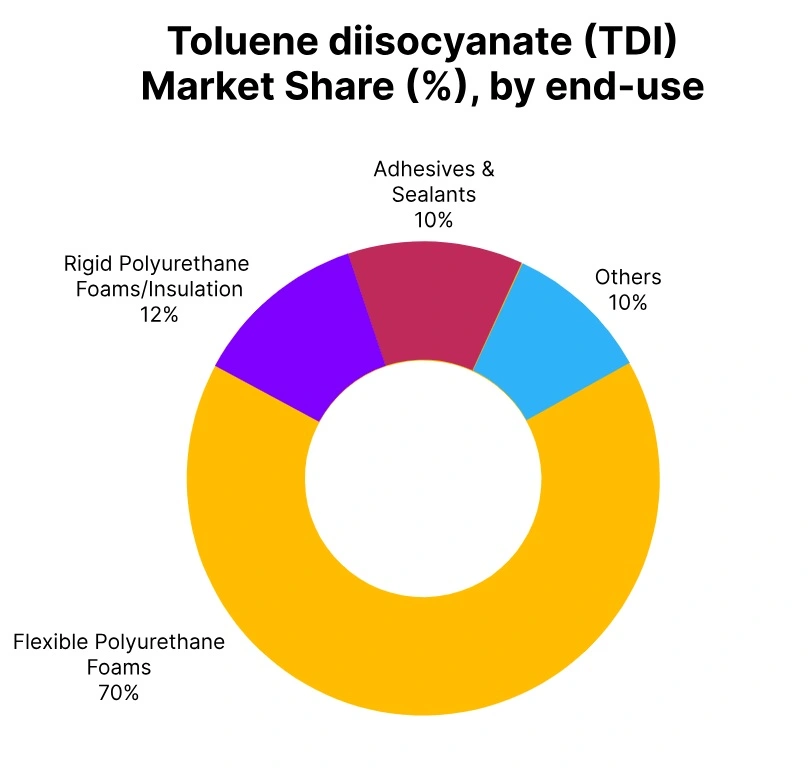
    Toluene Diisocyanate, often called TDI, is a well-known chemical used mainly in the production of flexible polyurethane foams. These foams are commonly found in mattresses, sofas, car seats, and insulation materials. Because TDI is closely connected to everyday consumer products, its price trend reflects not only chemical market conditions but also broader economic activities. Over time, the Toluene Diisocyanate price trend has shown noticeable changes influenced by supply, demand, and global events.

    Please Submit Your Query for Toluene Diisocyanate Price Trend, suppliers, market analysis:https://www.price-watch.ai/book-a-demo/

    Basic Factors That Influence Toluene Diisocyanate Prices

    The price of Toluene Diisocyanate is largely shaped by raw material costs. TDI is produced from petrochemical derivatives, so fluctuations in crude oil prices play a major role. When crude oil prices rise, production costs usually increase, which often leads to higher TDI prices. On the other hand, when oil prices fall, manufacturers may get some cost relief, which can stabilize or lower prices.
    Another important factor is energy cost. Chemical manufacturing is energy-intensive, and any increase in electricity or fuel prices can directly affect TDI production expenses. Regions with high energy costs often see comparatively higher TDI prices, especially during periods of energy shortages or regulatory changes.

    Demand Trends and Their Impact on Prices

    Demand from end-use industries strongly affects the Toluene Diisocyanate price trend. The furniture and bedding industry is one of the largest consumers of TDI-based foam. When housing activity increases or consumer spending on home products rises, demand for flexible foam grows, pushing TDI prices upward. Similarly, growth in the automotive sector boosts TDI consumption, as vehicle seating and interior components rely heavily on polyurethane foam.
    During periods of economic slowdown, demand from these sectors usually weakens. This reduced consumption can put downward pressure on prices, especially if supply remains steady. Seasonal demand also plays a role, as certain industries experience higher production during specific times of the year, leading to short-term price movements.

    Supply Conditions and Production Challenges

    Supply availability is another major driver of the Toluene Diisocyanate price trend. TDI production is concentrated among a limited number of manufacturers, and any disruption can have a strong impact on prices. Plant shutdowns, maintenance activities, or unexpected technical issues can reduce supply and create price spikes in the market.
    Environmental regulations also affect supply. Chemical producers must comply with strict safety and emission standards. When new regulations are introduced, some plants may reduce operating rates or invest in upgrades, temporarily limiting output. This can tighten supply and lead to higher prices, even if demand remains unchanged.

    Global Trade and Regional Price Differences

    Toluene Diisocyanate is traded globally, and international trade conditions influence its price trend. Import and export policies, transportation costs, and currency exchange rates all contribute to regional price differences. For example, higher freight costs or port congestion can increase landed prices in importing regions.
    Regional demand patterns also matter. Fast-growing economies with expanding construction and manufacturing sectors often see stronger TDI demand, which can keep prices firm. In contrast, mature markets may experience stable or slower demand growth, leading to more balanced pricing.

    Please Submit Your Query for Toluene Diisocyanate Price Trend, suppliers, market analysis:https://www.price-watch.ai/book-a-demo/

    About Price Watch™ AI

    Price-Watch AI is an India-based, independent raw material price reporting agency that provides real-time price forecasts and data-driven insights into global raw material markets. Price-Watch AI specializes in tracking raw material prices, analyzing market trends, and delivering timely updates on plant shutdowns, supply disruptions, capacity expansions, and demand-supply dynamics. The Price-Watch AI platform empowers manufacturers, traders, and procurement professionals to make faster, smarter decisions. Leveraging AI-powered forecasting and over a decade of historical data, Price-Watch AI transforms market volatility into actionable opportunity.

    Futura Tech Park,
    C Block, 8th floor 334,
    Old Mahabalipuram Road,
    Sholinganallur, Chennai,
    Tamil Nadu, Pincode - 600119.

    LinkedIn: https://www.linkedin.com/company/price-watch-ai/
    Facebook: https://www.facebook.com/people/Price-Watch/61568490385598/
    Twitter: https://x.com/pricewatchai
    Website: https://www.price-watch.ai/
    Toluene Diisocyanate (TDI) Price Trend Report: Historical Data, Current Market Scenario, Regional Insights, and Forecast Analysis Toluene Diisocyanate, often called TDI, is a well-known chemical used mainly in the production of flexible polyurethane foams. These foams are commonly found in mattresses, sofas, car seats, and insulation materials. Because TDI is closely connected to everyday consumer products, its price trend reflects not only chemical market conditions but also broader economic activities. Over time, the Toluene Diisocyanate price trend has shown noticeable changes influenced by supply, demand, and global events. 👉 👉 👉 Please Submit Your Query for Toluene Diisocyanate Price Trend, suppliers, market analysis:https://www.price-watch.ai/book-a-demo/ Basic Factors That Influence Toluene Diisocyanate Prices The price of Toluene Diisocyanate is largely shaped by raw material costs. TDI is produced from petrochemical derivatives, so fluctuations in crude oil prices play a major role. When crude oil prices rise, production costs usually increase, which often leads to higher TDI prices. On the other hand, when oil prices fall, manufacturers may get some cost relief, which can stabilize or lower prices. Another important factor is energy cost. Chemical manufacturing is energy-intensive, and any increase in electricity or fuel prices can directly affect TDI production expenses. Regions with high energy costs often see comparatively higher TDI prices, especially during periods of energy shortages or regulatory changes. Demand Trends and Their Impact on Prices Demand from end-use industries strongly affects the Toluene Diisocyanate price trend. The furniture and bedding industry is one of the largest consumers of TDI-based foam. When housing activity increases or consumer spending on home products rises, demand for flexible foam grows, pushing TDI prices upward. Similarly, growth in the automotive sector boosts TDI consumption, as vehicle seating and interior components rely heavily on polyurethane foam. During periods of economic slowdown, demand from these sectors usually weakens. This reduced consumption can put downward pressure on prices, especially if supply remains steady. Seasonal demand also plays a role, as certain industries experience higher production during specific times of the year, leading to short-term price movements. Supply Conditions and Production Challenges Supply availability is another major driver of the Toluene Diisocyanate price trend. TDI production is concentrated among a limited number of manufacturers, and any disruption can have a strong impact on prices. Plant shutdowns, maintenance activities, or unexpected technical issues can reduce supply and create price spikes in the market. Environmental regulations also affect supply. Chemical producers must comply with strict safety and emission standards. When new regulations are introduced, some plants may reduce operating rates or invest in upgrades, temporarily limiting output. This can tighten supply and lead to higher prices, even if demand remains unchanged. Global Trade and Regional Price Differences Toluene Diisocyanate is traded globally, and international trade conditions influence its price trend. Import and export policies, transportation costs, and currency exchange rates all contribute to regional price differences. For example, higher freight costs or port congestion can increase landed prices in importing regions. Regional demand patterns also matter. Fast-growing economies with expanding construction and manufacturing sectors often see stronger TDI demand, which can keep prices firm. In contrast, mature markets may experience stable or slower demand growth, leading to more balanced pricing. 👉 👉 👉 Please Submit Your Query for Toluene Diisocyanate Price Trend, suppliers, market analysis:https://www.price-watch.ai/book-a-demo/ About Price Watch™ AI Price-Watch AI is an India-based, independent raw material price reporting agency that provides real-time price forecasts and data-driven insights into global raw material markets. Price-Watch AI specializes in tracking raw material prices, analyzing market trends, and delivering timely updates on plant shutdowns, supply disruptions, capacity expansions, and demand-supply dynamics. The Price-Watch AI platform empowers manufacturers, traders, and procurement professionals to make faster, smarter decisions. Leveraging AI-powered forecasting and over a decade of historical data, Price-Watch AI transforms market volatility into actionable opportunity. Futura Tech Park, C Block, 8th floor 334, Old Mahabalipuram Road, Sholinganallur, Chennai, Tamil Nadu, Pincode - 600119. LinkedIn: https://www.linkedin.com/company/price-watch-ai/ Facebook: https://www.facebook.com/people/Price-Watch/61568490385598/ Twitter: https://x.com/pricewatchai Website: https://www.price-watch.ai/
    0 Σχόλια 0 Μοιράστηκε 598 Views 0 Προεπισκόπηση
  • The Phosphoric Acid price trend has remained a key point of attention for fertilizer producers, food processors, and industrial buyers due to its strong link with agricultural cycles, phosphate rock availability, and global trade movements. Phosphoric Acid is a critical intermediate for phosphate fertilizers, animal feed additives, detergents, and food-grade applications, making its pricing highly sensitive to both upstream and downstream dynamics.

    Read full price analysis: https://www.price-watch.ai/phosphoric-acid-prices/
    The Phosphoric Acid price trend has remained a key point of attention for fertilizer producers, food processors, and industrial buyers due to its strong link with agricultural cycles, phosphate rock availability, and global trade movements. Phosphoric Acid is a critical intermediate for phosphate fertilizers, animal feed additives, detergents, and food-grade applications, making its pricing highly sensitive to both upstream and downstream dynamics. Read full price analysis: https://www.price-watch.ai/phosphoric-acid-prices/
    WWW.PRICE-WATCH.AI
    Phosphoric Acid
    Phosphoric acid price trend with weekly pricing forecasts, Index, supply and demand, production, historical data and market trends.
    0 Σχόλια 0 Μοιράστηκε 465 Views 0 Προεπισκόπηση
Αναζήτηση αποτελεσμάτων
Προωθημένο
Προωθημένο