

From Chaos to Control: Modern Systems Reshaping Heavy Equipment Operation
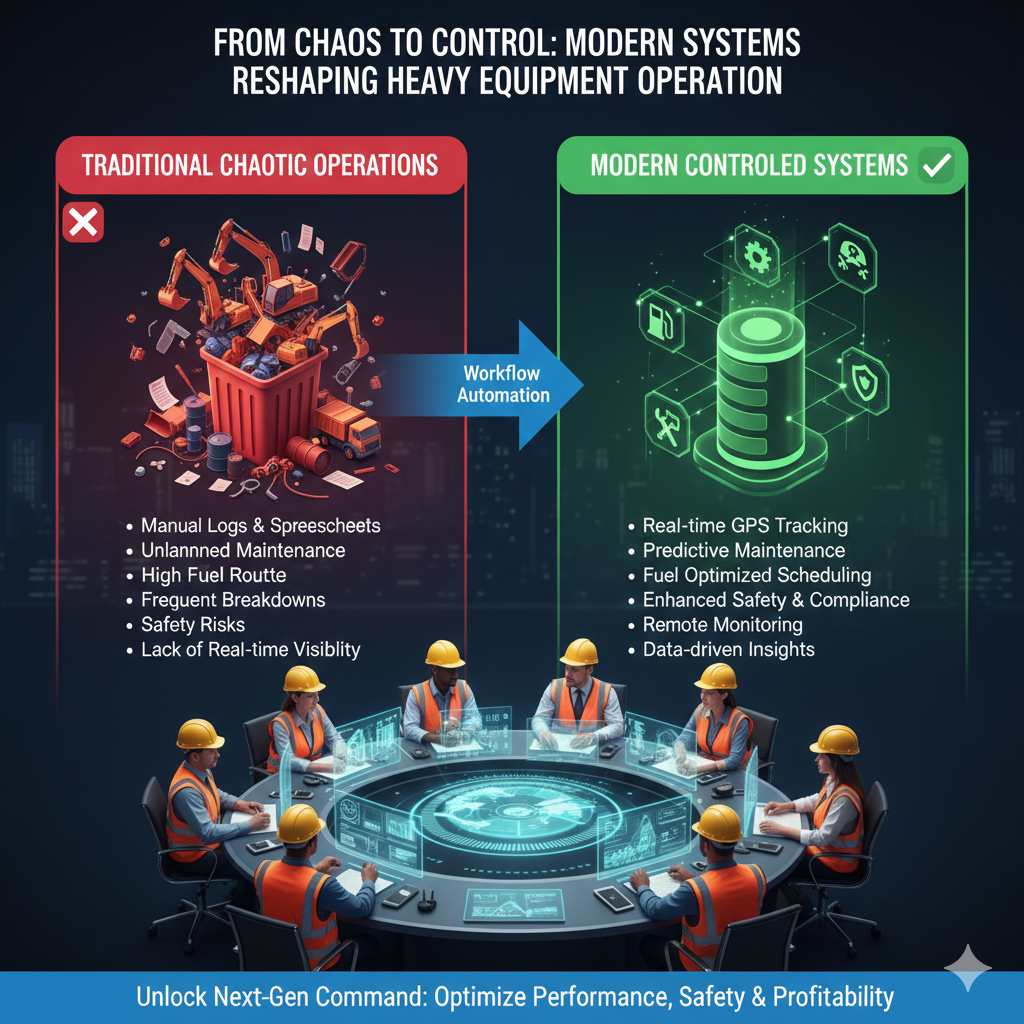
Heavy equipment operations have always been complex. Multiple machines move across different job sites. Operators rotate between shifts. Fuel consumption fluctuates. Maintenance schedules compete with production deadlines. When information lives in spreadsheets, notebooks, or disconnected systems, confusion builds quickly. Small inefficiencies stack up. Delays multiply. Costs rise.
The shift from manual coordination to digital oversight has changed that landscape. Today, construction equipment management software is reshaping how contractors track assets, schedule maintenance, monitor usage, and maintain accountability across fleets. What once required constant phone calls and guesswork can now be monitored in real time with clear operational visibility.
This transformation has taken heavy equipment operations from reactive decision making to structured, data-driven control.
The Reality of Operational Chaos
On an active job site, chaos rarely announces itself. It creeps in quietly. Equipment sits idle because no one knows it is available. A machine breaks down because preventive maintenance was delayed. Fuel usage spikes without explanation. Rental costs climb because owned equipment was overlooked.
These issues are not the result of poor effort. They are usually caused by limited visibility and disconnected processes.
Common operational challenges include:
-
Unclear equipment location across multiple sites
-
Inconsistent maintenance tracking
-
Duplicate rentals due to lack of asset awareness
-
Unverified operator usage patterns
-
Delayed reporting on breakdowns or performance issues
Without centralized insight, managers spend more time tracking information than improving performance. The administrative burden grows heavier as fleets expand.
The Shift Toward Digital Oversight
Modern heavy equipment operations demand speed, transparency, and coordination. Digital systems have stepped in to provide that structure. At the center of this shift is construction equipment management software, which consolidates tracking, reporting, scheduling, and analytics into a unified platform.
Instead of reacting to breakdowns, managers can monitor asset health continuously. Instead of estimating utilization, they can measure it precisely. Instead of searching for equipment, they can locate it instantly.
This shift has not simply improved reporting. It has changed how decisions are made.
Real-Time Visibility Across Every Job Site
One of the most immediate impacts of digital systems is real-time visibility. Equipment location, engine hours, idle time, and performance metrics can now be accessed from a central dashboard.
This level of transparency improves operational control in several ways:
-
Equipment allocation becomes more accurate
-
Idle machines are identified quickly
-
Underused assets can be reassigned
-
Theft risks are reduced through location tracking
When managers can see the full fleet in motion, they can respond to changes without delay. This responsiveness improves project flow and reduces unexpected disruptions.
Maintenance That Prevents Downtime
Unexpected breakdowns remain one of the most expensive problems in heavy equipment operations. Lost productivity, emergency repairs, and schedule delays quickly add up. Traditional maintenance systems often rely on manual logs or memory, which increases the likelihood of missed service intervals.
With structured digital tracking, maintenance schedules are automated based on engine hours or time intervals. Alerts notify managers before service deadlines are missed. Historical maintenance records remain accessible for audits and performance reviews.
The benefits extend beyond fewer breakdowns:
-
Equipment lifespan improves
-
Repair costs become more predictable
-
Warranty compliance is easier to document
-
Downtime is reduced
By integrating maintenance into daily oversight, construction equipment management software supports consistent equipment health and operational reliability.
Data That Supports Smarter Decisions
Heavy equipment represents a significant capital investment. Deciding whether to purchase, lease, rent, or retire equipment requires accurate data. Without measurable insights, decisions are based on assumptions.
Digital platforms provide structured reporting on:
-
Utilization rates
-
Fuel consumption patterns
-
Repair frequency
-
Operator performance trends
-
Asset lifecycle costs
This information supports strategic planning. Managers can determine which machines generate value and which create unnecessary expense. Budget forecasting becomes more accurate. Capital investments become more intentional.
Data-driven oversight transforms fleet management from a reactive function into a strategic advantage.
Operator Accountability and Performance Insight
Operators play a central role in equipment efficiency and longevity. Monitoring how machines are used provides insight into operational patterns that may otherwise go unnoticed.
Usage data highlights excessive idling, aggressive operation, or inconsistent performance. This information is not about surveillance; it is about improvement. When patterns are identified, training can be adjusted. Efficiency standards can be reinforced. Safety compliance can be strengthened.
Clear accountability creates a culture of responsibility. When operators understand that performance metrics are tracked, operational discipline improves naturally.
Cost Control in a Competitive Market
Construction margins are often tight. Equipment expenses, fuel consumption, and maintenance costs directly affect profitability. Small inefficiencies compound quickly across large fleets.
Structured oversight helps reduce waste in several measurable ways:
-
Eliminating duplicate rentals
-
Identifying underused assets
-
Reducing fuel waste from idle time
-
Preventing emergency repair costs
-
Extending equipment lifespan
By consolidating asset intelligence in one system, businesses gain clearer financial control. Operational efficiency translates into improved profitability.
Scaling Operations Without Losing Control
As construction companies grow, fleet complexity increases. Expanding into new regions or adding projects requires coordination across more assets and teams. Growth without structured oversight leads to fragmentation.
Digital systems allow operations to scale without sacrificing visibility. Multiple job sites can be monitored from a single interface. Standardized reporting ensures consistency. Data transparency reduces communication gaps between field teams and office leadership.
Scaling becomes manageable because systems replace guesswork with measurable insight.
Strengthening Compliance and Documentation
Regulatory requirements continue to evolve across construction sectors. Equipment inspections, safety documentation, and environmental reporting all require detailed record keeping.
Centralized digital tracking simplifies compliance by maintaining:
-
Service logs
-
Inspection records
-
Usage reports
-
Operator assignments
Having accessible documentation reduces administrative strain and improves audit readiness. Compliance becomes integrated into daily operations rather than treated as an afterthought.
The Cultural Shift Toward Structured Management
The introduction of construction equipment management software does more than digitize operations. It changes the culture of equipment oversight.
When teams rely on clear dashboards instead of fragmented spreadsheets, communication improves. When performance is measured, improvement becomes possible. When asset data is accessible, decision making becomes faster and more confident.
This cultural shift replaces operational chaos with structured coordination.
Preparing for the Future of Heavy Equipment Operations
Heavy equipment technology continues to evolve. Telematics, predictive analytics, and automation are shaping the next phase of construction efficiency. Digital management systems provide the foundation that supports these advancements.
Businesses that adopt structured oversight position themselves for long-term competitiveness. As project timelines tighten and labor shortages persist, operational efficiency becomes a differentiator.
Modern systems allow construction companies to:
-
Adapt quickly to shifting project demands
-
Maintain tighter financial control
-
Improve equipment performance
-
Strengthen safety standards
-
Enhance overall productivity
Conclusion
Heavy equipment operations no longer have to operate under fragmented processes and reactive management. Digital oversight has introduced clarity, structure, and measurable control into an industry long defined by complexity.
By centralizing asset tracking, maintenance scheduling, utilization data, and performance metrics, construction equipment management software helps companies move from disorganization to operational precision. The result is stronger accountability, improved profitability, and greater resilience in a competitive market.
The transition from chaos to control is no longer optional for growing construction operations. Modern systems provide the framework that transforms heavy equipment management into a strategic asset rather than an operational burden.

 English
 Arabic
 French
 Spanish
 Portuguese
 Turkish
 Dutch
Dutch
 Italiano
 Russian
 Romaian
 Portuguese (Brazil)
 Greek
Greek