

SaaS Security Posture Management: Improving Visibility and Control Across SaaS Applications
Organizations today rely heavily on Software-as-a-Service (SaaS) applications such as collaboration platforms, CRM systems, and productivity tools to drive digital transformation. While SaaS solutions offer flexibility, scalability, and cost efficiency, they also introduce new cybersecurity challenges. Managing security across multiple SaaS applications, users, and integrations can be complex. This is where SaaS Security Posture Management (SSPM) becomes essential.
SaaS Security Posture Management refers to a set of security tools and practices designed to continuously monitor, assess, and improve the security configuration of SaaS environments. SSPM platforms provide centralized visibility into SaaS applications, helping organizations detect misconfigurations, excessive user permissions, and compliance gaps that could expose sensitive data or create vulnerabilities.
As businesses increasingly adopt hundreds of interconnected SaaS applications, traditional security approaches often fail to keep pace with the growing complexity of cloud environments. Security teams must manage user identities, third-party integrations, and data access across multiple platforms. Without proper visibility, organizations may face risks such as unauthorized access, insecure sharing settings, and shadow IT—applications used without official approval.
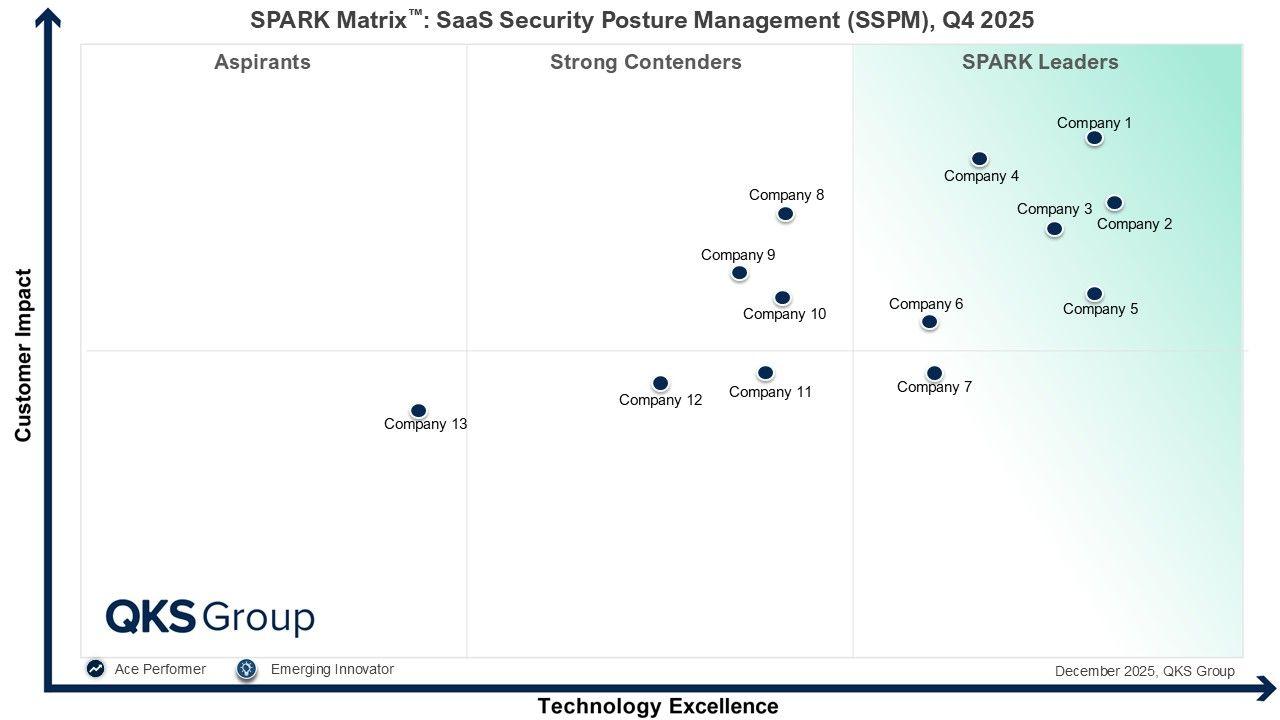
The SPARK Matrix™: SaaS Security Posture Management (SSPM), Q4 2025 report by QKS Group evaluates leading SSPM vendors based on two major parameters: technological excellence and customer impact. The report provides a comprehensive competitive analysis of the SSPM market and helps enterprises identify vendors that offer advanced capabilities for securing SaaS environments. Vendors in the SSPM space are assessed based on their innovation, product features, market presence, and ability to address evolving cybersecurity challenges.
Modern SSPM solutions deliver several key capabilities that help organizations strengthen their SaaS security posture. First, they provide complete visibility across SaaS applications, including both sanctioned and unsanctioned tools. This enables security teams to discover shadow SaaS usage and understand how data is being accessed and shared across the organization.
Second, SSPM platforms enable continuous monitoring of configurations and access controls. They automatically identify security misconfigurations, policy violations, or unusual user activities that could indicate potential threats. Security teams can then receive alerts and remediation guidance to address issues before they lead to data breaches or compliance violations.
Another critical feature is automated remediation and policy enforcement. Advanced SSPM solutions allow organizations to automatically correct risky configurations, revoke excessive permissions, or enforce security policies across multiple SaaS applications. Automation helps reduce manual workload while ensuring consistent security governance across the enterprise.
Additionally, SSPM tools support compliance monitoring with regulatory frameworks such as GDPR, HIPAA, ISO, and SOC 2. By continuously assessing SaaS environments against compliance standards, organizations can maintain regulatory readiness while reducing operational risk.
As SaaS adoption continues to expand across industries, the importance of SSPM will only increase. Enterprises need intelligent security solutions that can keep pace with dynamic cloud environments and rapidly evolving cyber threats. By providing visibility, automation, and continuous monitoring, SSPM platforms enable organizations to protect sensitive data, maintain compliance, and ensure a strong security posture in today’s SaaS-driven digital ecosystem.
In summary, the QKS Group SPARK Matrix analysis highlights how SaaS Security Posture Management (SSPM) solutions are becoming a critical component of modern cybersecurity strategies. Organizations that invest in advanced SSPM platforms can better manage SaaS risks, enhance operational resilience, and build a secure foundation for their digital transformation initiatives.

 Arabic
 French
 Spanish
 Portuguese
 Deutsch
 Turkish
 Dutch
Dutch
 Italiano
 Russian
 Romaian
 Portuguese (Brazil)
 Greek
Greek